
What’s Actually Airing on Radio in 2026
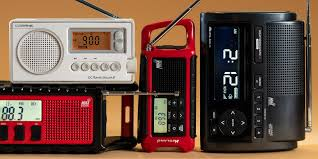
Here’s what commercial breaks actually sound like on radio in 2026.
If you’re making media buying decisions based on 2024 or 2025 data, you’re operating with an outdated understanding of the radio advertising landscape. The composition, frequency, and nature of radio commercials have shifted significantly in the past 18 months, and advertisers need current intelligence on what’s actually filling the airwaves. We analyzed 280 hours of commercial radio broadcasts across 47 stations in 12 markets during March 2026 to provide media buyers with actionable data on today’s radio advertising environment.
The Current State of Commercial Load
Radio stations in 2026 are walking a tightrope between revenue generation and listener retention, and the numbers tell a specific story about where that balance has landed.
Our analysis found that commercial radio stations are currently running between 14 and 18 minutes of advertising per hour, with the average settling at 16.2 minutes. This represents a slight increase from the 15.1-minute average documented in late 2024, suggesting that radio’s revenue pressures continue to push inventory limits upward despite concerns about audience tolerance.
The distribution of these commercial minutes, however, has become more strategic. Rather than spreading ads evenly throughout the hour, stations are clustering commercial breaks at predictable intervals. The most common pattern places major breaks at :20 and :50 past each hour, with shorter “transition breaks” at :10 and :40. Morning drive time (6-9 AM) shows the heaviest concentration, averaging 18.4 minutes per hour, while midday programming (10 AM-3 PM) drops to 14.7 minutes per hour.
Break length has standardized around specific durations. The typical commercial break in 2026 runs between 4.5 and 6 minutes, containing 8-12 individual spots. Stations rarely exceed 6 minutes in a single break, having apparently identified this as a threshold where listener abandonment accelerates. The 30-second spot remains the dominant unit, comprising 64% of all commercials, while 60-second spots account for 28% and 15-second spots make up the remaining 8%.
FM stations carry slightly lighter loads than AM stations (15.8 minutes versus 17.1 minutes per hour), and music-intensive formats maintain lower commercial densities than talk formats. Classic rock and country stations average 15.2 minutes per hour, while news/talk stations push to 17.8 minutes per hour.
The Local-National Split Has Reversed
One of the most significant shifts in radio advertising over the past two years is the resurgence of local advertising, fundamentally changing the revenue composition for stations across most markets.
Our March 2026 analysis found that local advertising now comprises 62% of commercial inventory, with national advertising accounting for the remaining 38%. This represents a dramatic reversal from 2023-2024, when national advertising dominated many stations’ commercial breaks at approximately 55-60% of inventory.
This shift reflects several converging factors. First, national advertisers have continued diversifying into digital audio platforms and podcasts, reducing their traditional radio spending. Second, regional businesses have rediscovered radio’s effectiveness for targeted geographic reach, particularly as digital advertising costs have climbed and attribution has become more complex. Third, station consolidation has matured to the point where ownership groups have built sophisticated local sales operations that can effectively serve multi-location regional businesses.
The local advertising filling today’s radio breaks looks different from the local advertising of five years ago. Single-location “mom and pop” businesses comprise only 23% of local inventory. Instead, the local category is dominated by regional chains with 5-30 locations (41% of local spots) and franchise operations (36% of local spots). These advertisers bring professional creative, consistent messaging, and reliable budgets—essentially functioning as “quasi-national” advertisers operating at a regional scale.
Local advertising is particularly concentrated in specific dayparts. Morning drive (6-9 AM) runs at 68% local, as businesses target commuters in their immediate geographic area. Evening drive (4-7 PM) is 64% local. Overnight programming (midnight-5 AM), conversely, runs as high as 75% national, filled with direct response marketers and national brands buying remnant inventory at discounted rates.
The local-national split varies significantly by market size. Major markets (top 10) still run closer to 50-50, with stronger national advertiser presence. Medium markets (ranked 25-75) show the most dramatic local tilt at 67% local. Smaller markets (ranked 100+) average 58% local, with the lower percentage reflecting less robust local sales operations and more reliance on national networks and syndicated programming with embedded national spots.
For media buyers, this shift has important implications. Local inventory on strong-performing stations has become more competitive and expensive, with less “distressed inventory” available at discount rates. National buyers need to book further in advance and may face more limited availability, particularly in desirable dayparts. The flip side: radio stations are more motivated to accommodate national advertisers with premium positioning and creative flexibility to ensure they maintain revenue balance.
Who’s Actually Buying Radio in 2026
The advertiser composition on radio in 2026 reveals both continuity and evolution, with traditional heavy users maintaining presence while new categories have emerged as significant players.
Auto Dealerships remain the single largest advertising category, comprising 16.8% of all commercial spots in our analysis. Every market we monitored featured heavy auto advertising, with local dealerships running consistent schedules that combine branding messages with specific promotional offers. The creative has evolved toward emphasizing EV inventory and hybrid options, but the fundamental approach—price-and-item advertising with urgency triggers—remains unchanged. Auto advertising peaks on Thursday through Saturday as dealerships drive weekend showroom traffic.
Healthcare Providers have emerged as the second-largest category at 12.4% of spots. This includes hospital systems, urgent care chains, specialized medical practices (particularly orthopedics, dermatology, and dental), and outpatient surgery centers. Healthcare advertising clusters in morning and midday dayparts, targeting decision-makers during working hours. The creative typically emphasizes convenience (location, hours, same-day appointments) and expertise credentials. Medical tourism providers advertising elective procedures have become a noticeable subcategory, particularly on AM talk stations.
Legal Services account for 9.7% of spots, with personal injury attorneys dominating this category. The creative remains aggressive and direct-response oriented, with clear calls to action and specific phone numbers. Firms are increasingly running Spanish-language spots on bilingual stations. The legal category concentrates heavily on AM talk radio and sports radio formats, with relatively light presence on music stations.
Cryptocurrency Exchanges and Services represent one of the genuinely new categories in 2026 radio, comprising 6.3% of spots. These advertisers were essentially absent from radio in 2023 but have built significant presence, particularly among younger-skewing formats. The creative emphasizes legitimacy, security, and ease of use, working to normalize crypto investing for mainstream audiences. This category is highly volatile, with weekly spending fluctuating dramatically based on market conditions.
AI-Powered Services have emerged as another new category at 4.8% of spots. This includes AI assistants for businesses, automated customer service platforms, AI-enhanced security systems, and AI-powered financial services. The creative typically focuses on time-saving and efficiency gains. This advertising appears almost exclusively as local spots from regional providers and franchisees rather than national campaigns from the core technology companies.
Home Services (HVAC, roofing, windows, solar, pest control, landscaping) collectively account for 11.2% of spots. This category has grown as consolidators have rolled up local providers into regional platforms with professional marketing operations. Home services advertising is highly seasonal, with category composition shifting quarterly. Solar installation advertising has become particularly prominent, often featuring financing offers and tax incentive messaging.
Insurance (auto, home, health, life) represents 8.4% of spots, split roughly evenly between national carriers and local independent agents. Insurance advertising has shifted toward emphasizing digital shopping tools and app functionality while maintaining traditional messaging around rates and coverage.
Restaurants and Fast Food account for 7.9% of spots, with local franchisees of national chains comprising the bulk of this category. QSR advertising emphasizes limited-time offers and app-based promotions. Full-service restaurant chains advertise more sporadically, concentrating around lunch and dinner dayparts.
Financial Services (banks, credit unions, investment firms, lending) represent 6.8% of spots. This category has grown as regional banks compete aggressively for deposits in a higher-interest-rate environment. Cryptocurrency services are tracked separately from this category.
Retail (furniture, mattresses, jewelry, general merchandise) accounts for 6.2% of spots, down from higher levels in previous years as retail advertising has shifted toward digital channels and connected TV.
Education (colleges, universities, trade schools, online programs, tutoring services) represents 4.1% of spots, with for-profit institutions and specialized training programs (particularly in technology and healthcare fields) making up the majority.
The remaining categories include entertainment and events (3.8%), telecommunications (2.6%), and a long tail of miscellaneous categories (less than 2% each).
Notably absent or significantly reduced: traditional department stores, travel and tourism (except medical tourism), and consumer electronics retailers have minimal presence in 2026 radio advertising.
What This Means for Media Buyers

The 2026 radio advertising landscape presents both challenges and opportunities for media planners working to optimize campaign performance and efficiency.
Inventory availability has tightened in prime dayparts, particularly morning drive, as local advertising has absorbed capacity that was previously available to national buyers. Media buyers should expect to negotiate harder for preferred positioning and may need to accept wider rotations or less desirable dayparts to achieve target GRP levels within budget.
Pricing has stabilized after several years of volatility, with most markets showing flat to 3-5% increases year-over-year. However, the pricing curve has steepened, meaning premium inventory commands a larger premium over run-of-station rates than in previous years. Political advertising in election years continues to create capacity constraints and rate pressure in affected markets.
Production quality has improved across both local and national spots, with fewer obviously low-budget commercials. The gap between local and national production values has narrowed as local advertisers access better production resources. For national advertisers, this means your spots compete in a more professional-sounding environment but also face less stark contrast with surrounding commercials.
Creative length is standardizing around 30-second units. If you’re producing 60-second spots, recognize that you’re paying a premium and consider whether the additional message time delivers proportional value. The 15-second unit has gained limited traction despite early predictions that radio would follow television’s shift toward shorter-form advertising.
Digital integration has become table stakes, with most advertisers coordinating radio spots with display retargeting, search campaigns, and social media to create cross-platform impact. Advertisers running radio in isolation are likely underperforming those who integrate radio into broader campaigns with measurement frameworks that capture cross-channel effects.
The Bottom Line
Radio in 2026 remains a viable advertising channel, but it’s a channel that has evolved significantly in composition and execution. The medium carries more advertising per hour than two years ago, that advertising is increasingly local in character, and the advertiser mix reflects both traditional categories with enduring commitment to radio and emerging categories discovering the medium’s effectiveness.
For media buyers, the key insight is that radio requires more strategic planning than in the past. The days of easily accessing large amounts of distressed inventory at favorable rates have largely ended in most markets. Success requires earlier booking, more sophisticated negotiation, and realistic expectations about availability and pricing.
The advertisers filling radio breaks in 2026 are largely those with clear attribution, strong unit economics, and proven track records of radio effectiveness. Auto dealers keep advertising because they can track showroom visits. Personal injury attorneys keep advertising because they can track case acquisition. Healthcare providers keep advertising because they can track appointment bookings. The categories that have reduced radio presence are those that struggle to attribute results or have found more efficient alternatives.
If you’re considering radio for 2026, the data suggests the medium works best for advertisers with clear calls to action, trackable response mechanisms, and the ability to maintain consistent presence over time. Radio has become less effective for pure brand building and more effective for performance marketing, reflecting broader shifts in how advertisers allocate budgets across all media.
The most successful radio advertisers in our analysis shared common characteristics: frequency over reach (maintaining consistent presence in fewer markets rather than thin presence across many), creative that gets to the point quickly, clear differentiation from competitors in the same category, and integrated campaigns that reinforce radio messages through other channels. Advertisers who approach radio with these principles are likely to find the medium remains effective in 2026 and beyond.
Frequently Asked Questions
Q: How many minutes of commercials per hour are radio stations running in 2026?
A: Radio stations in 2026 average 16.2 minutes of advertising per hour, with typical ranges between 14-18 minutes. Morning drive time runs heaviest at 18.4 minutes per hour, while midday programming averages 14.7 minutes. FM stations carry slightly lighter loads (15.8 minutes) compared to AM stations (17.1 minutes).
Q: What is the current split between local and national advertising on radio?
A: As of March 2026, local advertising comprises 62% of radio commercial inventory, with national advertising accounting for 38%. This represents a significant reversal from 2023-2024 when national advertising dominated at 55-60%. The shift reflects regional businesses rediscovering radio’s targeted reach while national advertisers have diversified into digital audio platforms.
Q: What industries are advertising most heavily on radio in 2026?
A: Auto dealerships remain the largest category at 16.8% of spots, followed by healthcare providers (12.4%), legal services (9.7%), and home services (11.2%). New categories that have emerged include cryptocurrency exchanges (6.3%) and AI-powered services (4.8%), representing significant shifts from previous years.
Q: How long are typical commercial breaks on radio now?
A: Commercial breaks in 2026 typically run 4.5-6 minutes in length, containing 8-12 individual spots. Stations rarely exceed 6 minutes in a single break. The 30-second spot remains dominant at 64% of all commercials, with 60-second spots at 28% and 15-second spots comprising 8%.
Q: Has radio advertising pricing increased in 2026?
A: Radio pricing has stabilized in 2026 with most markets showing flat to 3-5% year-over-year increases. However, the pricing curve has steepened, meaning premium dayparts like morning drive command larger premiums over run-of-station rates than in previous years. Inventory availability has tightened in prime dayparts as local advertising has absorbed more capacity.