
Results-Driven Marketing Strategy: Beyond Vanity Metrics to Real Business Impact
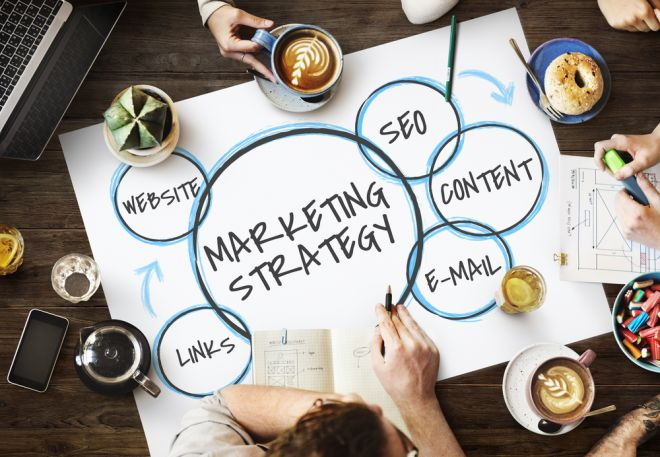
What if your marketing looks good but delivers nothing? This is where a good marketing strategy comes in
This isn’t a rhetorical flourish—it’s the uncomfortable reality facing thousands of marketing teams right now. Dashboards glow with impressive numbers: 10,000 new followers, 500,000 impressions, 12% engagement rate. The CMO presents these figures to the board. Everyone nods approvingly. Yet three months later, when revenue targets aren’t met, the marketing budget gets slashed.
Welcome to the fundamental problem plaguing modern marketing: the disconnection between activity and outcomes. Today’s lecture examines why this happens, how to fix it, and what separates marketing that looks successful from marketing that is successful.
Why Vanity Metrics Mislead Marketing Teams
The Psychology of Vanity Metrics
Vanity metrics are measurements that make you feel good but don’t help you make decisions. They’re the marketing equivalent of stepping on a scale that only shows you’ve stood on it, not what you weigh.
Common vanity metrics include:
– Total social media followers
– Page views and impressions
– Email list size (without engagement data)
– Downloads (without activation or retention data)
– Likes, shares, and comments (in isolation)
These metrics are seductive because they satisfy three psychological needs simultaneously:
1. Social proof: Large numbers validate our work to colleagues and superiors
2. Progression illusion: Always-increasing counts create the appearance of momentum
3. Ease of measurement: Unlike revenue attribution, these metrics are simple to track and report
But here’s the critical insight from behavioral economics: humans are pattern-seeking creatures who confuse correlation with causation. We see follower count rising and assume business health is improving. This cognitive bias creates what I call the “vanity metric trap.”
The Disconnect: When Good Metrics Go Bad
Consider this scenario from a real SaaS company (details anonymized): Their content marketing team celebrated hitting 100,000 monthly blog visitors—a 400% increase year-over-year. The metrics looked phenomenal:
– Average time on page: 3:47 minutes
– Bounce rate: 42%
– Social shares: 2,300+ per month
Yet when the CFO analyzed contribution to revenue, the reality was stark: of those 100,000 visitors, only 127 became qualified leads, and just 4 converted to paying customers. The customer acquisition cost through this channel was $8,200—while customer lifetime value was $6,500.
The marketing was losing money.
What went wrong? The content team optimized for engagement metrics rather than business outcomes. They created viral, shareable content that attracted the wrong audience—people interested in free information, not potential buyers. The metrics looked impressive in isolation but told a misleading story about business impact.
This pattern repeats across industries:
– E-commerce brands with millions of Instagram followers but declining conversion rates
– B2B companies generating thousands of whitepaper downloads from tire-kickers
– Mobile apps with high download numbers but 90-day retention rates under 5%
The common thread? Teams measured activity instead of outcomes.
Setting Up Proper KPIs That Connect to Revenue
The Activity-Outcome Framework
To escape the vanity metric trap, we need to distinguish between two metric categories:
Activity Metrics measure what you do:
– Emails sent
– Content published
– Ads run
– Events hosted
Outcome Metrics measure what you achieve:
– Revenue generated
– Customers acquired
– Lifetime value increased
– Market share captured
Activity metrics aren’t worthless—they’re diagnostics. Like checking your car’s RPM gauge, they help you understand if the engine is running. But you don’t drive by watching RPMs; you navigate by tracking your destination progress.
Here’s the framework for results-driven KPI selection:
The Revenue Connection Model
Every marketing KPI should answer: “How does this number connect to revenue?”
Let’s apply this to common marketing channels:
Content Marketing:
– Vanity metric: Total pageviews
– Revenue-connected KPI: Qualified leads generated from content → SQL conversion rate → Revenue influenced
Social Media:
– Vanity metric: Follower count
– Revenue-connected KPI: Click-through rate to product pages → Conversion rate → Customer acquisition cost vs. LTV
Email Marketing:
– Vanity metric: List size
– Revenue-connected KPI: Email-attributed revenue / Engaged subscriber segment / Revenue per email sent
Paid Advertising:
– Vanity metric: Impressions or CTR
– Revenue-connected KPI: Return on ad spend (ROAS) / Cost per acquisition / Contribution margin per channel
SMART KPIs for Marketing Outcomes
The SMART framework (Specific, Measurable, Achievable, Relevant, Time-bound) becomes exponentially more powerful when applied to outcome metrics:
Poor KPI: “Increase social media engagement”
SMART Outcome KPI: “Generate $50,000 in attributed revenue from LinkedIn organic content by Q2, with a customer acquisition cost under $200”
Notice the difference? The second version forces you to:
– Define success in business terms (revenue)
– Set efficiency standards (CAC limit)
– Create accountability (timeframe)
– Require attribution tracking
Attribution: The Technical Foundation
Revenue-connected KPIs require proper attribution models. At minimum, implement:
1. UTM parameter discipline: Tag every campaign consistently
2. Multi-touch attribution: Understand the customer journey, not just last-click
3. CRM integration: Connect marketing activities to closed deals
4. Cohort analysis: Track how different audience segments convert over time
Without attribution infrastructure, you’re flying blind. With it, you can make evidence-based decisions about what’s working.
Case Studies of Results-Focused Campaigns vs Awareness Campaigns
Case Study 1: The Awareness Campaign
Company: B2C fitness app
Strategy: Partner with macro-influencers for a brand awareness campaign
Metrics that looked good:
– 15 million impressions
– 450,000 engagements
– 12,000 app downloads in campaign week
– Cost per impression: $0.003
Business reality:
– 7-day retention: 8%
– 30-day retention: 2%
– Conversion to paid: 0.3%
– Actual new paying customers: 36
– Cost per acquisition: $347
– Customer LTV: $89
Verdict: The campaign generated impressive awareness metrics but catastrophic unit economics. The company burned $12,500 to acquire customers worth $3,204.
What went wrong: The influencers had large followings but wrong audience fit. People downloaded out of curiosity, not genuine need. No activation strategy existed beyond the download.
Case Study 2: The Results-Focused Campaign
Company: B2B SaaS for HR departments
Strategy: Targeted LinkedIn content series addressing specific pain points, with conversion-optimized landing pages
Metrics that looked modest:
– 23,000 content views
– 340 engaged followers added
– 15 pieces of content published
– Cost per click: $4.20
Business reality:
– 340 MQLs generated
– 89 SQLs (26% qualification rate)
– 12 closed deals
– Average contract value: $18,000
– Total revenue: $216,000
– Cost per acquisition: $1,420
– Customer LTV: $54,000 (3-year average)
Verdict: Modest awareness metrics concealed exceptional business performance. 38:1 LTV:CAC ratio with $199,000 in profit contribution.
What worked:
– Precise audience targeting (HR directors at 100-500 employee companies)
– Content addressed specific, expensive problems
– Clear conversion path from content to demo
– Sales enablement materials aligned with content themes
– Follow-up nurture sequences for non-converters
Comparative Analysis
These cases illustrate a crucial principle: The size of your megaphone doesn’t determine business impact—the precision of your message does.
| Dimension | Awareness Campaign | Results Campaign |
| Audience reach | Massive | Targeted |
| Content style | Entertaining/viral | Problem-solving |
| Metrics emphasized | Impressions, engagement | Pipeline, revenue |
| Success definition | “People saw us” | “We acquired profitable customers” |
| Strategic approach | Top-of-funnel only | Full-funnel optimization |
When Each Approach Is Appropriate
This analysis doesn’t mean awareness campaigns are always wrong. Context matters:
Awareness campaigns make sense when:
– Launching a new category where education precedes demand
– You have capital to invest in brand building with 18-24 month payback horizons
– Attribution models show awareness efforts contribute to later conversion
– You’re competing against established players and need mental availability
Results campaigns are essential when:
– Operating with limited budgets
– Demonstrating marketing ROI is critical for organizational credibility
– Clear demand already exists in market
– Business needs revenue growth in near-term (0-6 months)
The key insight: even awareness campaigns should be measured against eventual business outcomes, just with longer attribution windows.
Conclusion: Building Your Results-Driven Framework
Let’s synthesize today’s lecture into an actionable framework:
Step 1: Audit your current metrics
– List everything you currently measure
– Ask for each: “If this number doubles, does revenue increase?”
– Eliminate or demote metrics that fail this test
Step 2: Define your outcome hierarchy
– Primary: Revenue, profit contribution, LTV:CAC
– Secondary: Conversion rates at each funnel stage
– Tertiary: Engagement metrics that correlate with conversion
Step 3: Build attribution infrastructure
– Implement tracking across all marketing touchpoints
– Connect your marketing automation to CRM to financial reporting
– Create monthly revenue attribution reports
Step 4: Realign team incentives
– Shift KPIs in job descriptions and bonuses from activity to outcomes
– Celebrate revenue wins, not just campaign launches
– Create accountability for business impact
Step 5: Iterate based on contribution
– Monthly: Review what’s driving revenue
– Quarterly: Reallocate budget toward highest-performing channels
– Annually: Assess strategic fit of entire marketing approach
The uncomfortable truth is this: marketing is easier when you optimize for vanity metrics. They’re always available, always growing, and always impressive in slide decks. But easy isn’t valuable.
Results-driven marketing requires harder questions, more sophisticated measurement, and the courage to kill campaigns that look good but perform poorly. It demands that we stop asking “How many people saw this?” and start asking “How much value did this create?”
Because at the end of the day, businesses don’t run on impressions. They run on revenue. And marketing’s job is to drive it—measurably, accountably, and consistently.
That’s the difference between marketing that looks good and marketing that delivers.
Frequently Asked Questions
Q: What exactly are vanity metrics and how do I identify them?
A: Vanity metrics are measurements that look impressive but don’t help you make business decisions or connect to revenue. To identify them, ask: ‘If this number doubles tomorrow, will revenue or profit increase?’ If the answer is unclear or ‘no,’ it’s likely a vanity metric. Common examples include total follower counts, raw page views, and impressions without conversion data. The key distinction is that vanity metrics measure activity while actionable metrics measure outcomes tied to business goals.
Q: How do I convince my team or boss to focus on revenue metrics instead of engagement metrics?
A: Present a side-by-side analysis of a recent campaign showing engagement metrics alongside business outcomes (leads generated, conversion rate, revenue attributed, CAC vs. LTV). The disconnect often speaks for itself. Frame the conversation around efficiency: ‘We can make our budget work harder by optimizing for what drives revenue rather than what looks good in reports.’ Propose a pilot where one campaign is measured purely on business outcomes, then compare ROI against engagement-focused campaigns. Executive stakeholders respond to profit contribution data, not engagement rates.
Q: What if I work in brand marketing where results are harder to measure?
A: Brand marketing absolutely can and should be measured against business outcomes—just with different timeframes and attribution models. Use brand lift studies to correlate awareness with purchase intent. Track aided and unaided brand recall, then analyze how these correlate with conversion rates over 6-12 month periods. Measure share of voice against market share changes. Implement brand tracking pixels to see if users exposed to brand campaigns convert at higher rates later. The key is establishing lagging indicator frameworks rather than expecting immediate direct response metrics.
Q: What are the most important KPIs for different marketing channels?
A: For paid advertising: Return on Ad Spend (ROAS) and Customer Acquisition Cost vs. Lifetime Value. For content marketing: Leads generated, SQL conversion rate, and revenue influenced by content. Email marketing: Revenue per email sent and engaged subscriber conversion rate. For social media: Click-through to conversion rate and attributed revenue. For SEO: Organic traffic to conversion rate and revenue from organic channels. The critical principle across all channels: measure the complete path from initial touchpoint to revenue, not just the activity in the channel itself.
Q: How long should I run a campaign before judging its results?
A: This depends on your sales cycle and attribution model. For e-commerce with immediate purchases, you can assess performance within 7-14 days. For B2B with 6-month sales cycles, you need at least 90-180 days to see meaningful conversion data, though you can track leading indicators (MQL volume, SQL conversion rate) much sooner. Best practice: establish leading indicators you can monitor weekly (click-to-lead conversion), intermediate metrics monthly (lead-to-opportunity rate), and lagging indicators quarterly (revenue attributed). Never judge a campaign solely on immediate metrics if your business has longer consideration cycles.
Q: What tools do I need to implement results-driven marketing measurement?
A: At minimum: Google Analytics with goal tracking and e-commerce enabled, a CRM system (HubSpot, Salesforce, etc.) integrated with your marketing automation, and UTM parameter discipline for campaign tagging. For more sophisticated measurement: multi-touch attribution platforms (Bizible, HockeyStack, or similar), data visualization tools (Tableau, Looker, or Data Studio), and cohort analysis capabilities. Don’t let tools become an excuse—you can start with free tools and spreadsheets. The critical component isn’t expensive software; it’s the discipline to consistently tag campaigns, track conversions, and connect marketing activities to revenue in your CRM.