
Cross Platform Advertising: Maximize Impact with Radio + TV
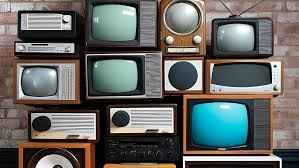
Why running the same ad on radio and TV is costing you conversions.
Every quarter, media buyers pour millions into coordinated radio and TV campaigns, assuming that consistent messaging across channels will amplify their reach. The logic seems sound: hit audiences with the same creative on multiple platforms, and you’ll burn your brand into their consciousness. But here’s the uncomfortable truth—when you simply port your TV commercial audio to radio stations without strategic adaptation, you’re not maximizing impact. You’re wasting budget on underperforming creative that audiences tune out.
The problem isn’t cross-platform advertising itself. It’s the fundamental misunderstanding of how radio and TV function as distinct psychological and contextual experiences. TV viewers are leaning back, passively absorbing visual and audio information simultaneously. Radio listeners are often driving, working, or multitasking—they’re in an active, imagination-driven state where audio must work harder to create mental imagery and emotional connection.
For media buyers, advertising agencies, and multi-channel marketers, understanding how to coordinate radio and TV campaigns requires more than synchronized flight dates and consistent taglines. It demands a sophisticated approach to creative adaptation, strategic frequency planning, and message architecture that leverages each medium’s unique strengths. Let’s examine how to actually make cross-platform advertising work.
Act 1: How to Adapt TV Commercial Scripts for Radio-Only Effectiveness
The most common mistake in cross-platform campaigns is treating radio as TV’s cheaper cousin—a place to run the audio track from your television spot with minimal modification. This approach ignores fundamental differences in how audiences process information across these channels.
The Visual Information Gap
When you strip visuals from a TV commercial, you lose 50-70% of your message’s information density. That smiling family enjoying your product? Gone. The distinctive product packaging that builds shelf recognition? Invisible. The emotional resonance of a perfectly-timed visual metaphor? Completely absent.
Effective radio adaptation requires reconstructing these visual elements through strategic audio techniques:
Verbal description that feels natural: Rather than literal scene descriptions (“A family sits around a dinner table”), successful radio adaptations weave visual context into dialogue and narration organically. “Nothing brings my family together like Sunday dinner” accomplishes the same scene-setting while feeling conversational rather than descriptive.
Sound design that creates mental imagery: Radio’s superpower is theater of the mind. Strategic sound effects—a car door closing, coffee pouring, children laughing—create richer mental imagery than visual footage because listeners customize these scenes with their own experiences and preferences. Production quality matters enormously here; cheap sound effects signal low brand value.
Pacing adjustments for comprehension: TV commercials can convey multiple messages simultaneously through visual and audio channels. Radio requires sequential information delivery. If your TV spot mentions three product benefits in 15 seconds (one visual, one verbal, one shown in text), your radio adaptation needs to either extend the runtime, reduce the message density, or risk overwhelming listeners who can’t process that information stream without visual support.
The Brand Recall Challenge
Television builds brand recall through repeated visual exposure to logos, products, and brand colors. Radio lacks these visual anchors, making verbal branding elements absolutely critical.
Successful radio adaptations amplify:
Brand name frequency: While your TV commercial might show the logo for 20 of its 30 seconds but only mention the brand name twice, effective radio spots mention the brand 3-5 times in the same timeframe. This feels excessive to advertisers reviewing scripts in quiet offices, but it’s necessary for distracted listeners who might tune in mid-spot.
Sonic branding consistency: Audio logos, distinctive music beds, and signature voice talent create stronger brand recall on radio than generic production music. If your TV campaign uses a distinctive audio signature, preserving it on radio creates cross-platform recognition even when creative differs.
Distinctive language and phrasing: Verbal brand assets—taglines, catchphrases, or unique descriptive language—carry more weight on radio. If your TV spot describes your product as “the weeknight dinner hero,” that exact phrase should appear in radio creative, not a paraphrased version.
Message Architecture for Audio-Only
TV commercials can structure messages non-linearly. A opening scene establishes emotional context, a product demonstration provides rational support, and a closing shot reinforces the emotional payoff. Radio’s linear nature requires different architecture.
The most effective radio adaptations follow these structural principles:
Front-load relevance: Radio listeners decide whether to pay attention in the first 3 seconds. Lead with a provocative question, relatable problem, or unexpected statement that demands attention. Save brand names and product details for after you’ve earned engagement.
One core message: While TV spots can layer multiple messages, radio performs best with singular focus. If your TV campaign addresses three audience segments with different value propositions, consider creating three distinct radio adaptations rather than one spot attempting all three messages.
Clear call-to-action repetition: TV can display URLs, phone numbers, and store locations on-screen for the entire spot duration. Radio requires verbal CTA repetition—ideally twice, once mid-spot and once at the close. For complex URLs, consider creating vanity domains or simplifying to branded search terms.
Act 2: Frequency and Timing: Coordinating Radio and TV Buys for Brand Lift

Once you’ve solved the creative adaptation challenge, the next layer of cross-platform effectiveness is strategic frequency and timing coordination. How you schedule radio and TV campaigns relative to each other dramatically impacts their combined effectiveness.
The Sequencing Strategy Decision
Media buyers face a fundamental question: Should radio and TV campaigns run simultaneously, or should one medium lead the other? Research suggests different approaches serve different campaign objectives.
Simultaneous deployment maximizes reach and frequency during compressed campaign periods. This approach works best for:
– Product launches where rapid awareness is essential
– Seasonal campaigns with fixed selling windows
– Brand campaigns focused on message saturation
– Advertisers with substantial budgets who can achieve effective frequency on both channels simultaneously
The challenge with simultaneous deployment is attribution ambiguity and potential frequency waste. When audiences receive the same message on multiple channels within hours, you’re not necessarily increasing persuasion—you might just be paying twice for the same impression.
TV-lead sequencing uses television to establish visual brand assets and emotional narratives, then deploys radio to maintain presence and reinforce messages at lower cost. This approach delivers:
– More efficient reach extension after TV achieves core audience saturation
– Reduced radio production complexity since audiences have visual reference points
– Lower overall campaign costs with sustained presence
– Better attribution clarity for conversion lift
TV-lead strategies typically run television campaigns for 2-4 weeks to establish visual memory, then layer radio for 4-8 weeks of reinforcement and reminder. The radio creative assumes audience familiarity with TV elements, using abbreviated references to visual scenes or characters.
Radio-lead sequencing is less common but strategically powerful for specific scenarios. Radio establishes narrative intrigue or problem awareness, then TV provides the visual payoff and deeper product storytelling. This approach works for:
– Challenger brands building curiosity before big reveals
– Product innovations requiring explanation that benefits from visual demonstration
– Campaigns using mystery or teaser strategies
– Budget-conscious advertisers who want sustained presence before concentrated TV investment
Frequency Planning Across Channels
Effective frequency—the number of exposures required to drive awareness, consideration, or action—varies by channel and audience context. The fatal mistake in cross-platform planning is adding TV and radio frequency together without considering how they interact.
The frequency multiplication effect: When coordinated properly, cross-platform campaigns don’t just add reach—they multiply effectiveness. An audience member who sees your TV spot twice and hears your radio adaptation three times hasn’t received five equivalent exposures. They’ve received five reinforcing exposures across different contexts (visual-emotional on TV, audio-imagination on radio) that encode memory through multiple pathways.
Research from Nielsen and MarketShare suggests optimally coordinated radio-TV campaigns achieve 15-30% greater brand lift than either channel alone at equivalent spend, but only when frequency is deliberately coordinated rather than coincidentally overlapping.
The frequency planning framework:
1. Determine channel-specific effective frequency: TV typically requires 3-5 exposures for awareness campaigns, 6-10 for consideration or action. Radio requires 5-8 exposures for awareness, 10-15 for consideration, given its lower-attention environment.
2. Calculate cross-channel frequency discount: Exposures on the second channel deliver stronger impact than additional exposures on a single channel. A planning rule of thumb: count each exposure on the secondary channel as 1.5x when calculating total effective frequency if creative is properly adapted.
3. Optimize for cost-per-effective-reach: Model different frequency combinations to find the lowest-cost path to effective frequency targets. Often this means heavier TV weight during launch, transitioning to radio-dominant maintenance.
Daypart and Programming Coordination
Beyond flight dates, strategic coordination of dayparts and programming environments enhances cross-platform effectiveness.
Contextual alignment: If your TV campaign runs in morning news programming reaching professionals, coordinate radio in morning drive time and midday when those same professionals are commuting and working. Sequential exposure within similar contextual mindsets (news and information consumption) creates stronger memory encoding than random daypart distribution.
Competitive separation: Monitor competitors’ cross-platform strategies. If competitors dominate specific TV dayparts, use radio to own alternative listening occasions where you face less message clutter.
Digital integration points: Smart media buyers coordinate broadcast campaigns with digital activation windows. Run concentrated TV and radio during weekends or evenings, driving audiences to digital channels when they’re most likely to research and transact.
Attribution and Measurement
Coordinating campaigns means nothing if you can’t measure their combined impact. Multi-channel attribution remains advertising’s persistent challenge, but several approaches provide actionable insight:
Geographic testing: Run TV-only in some DMAs, radio-only in others, and coordinated campaigns in a third set. This clean-room approach provides clear lift data, though it requires significant scale and DMAs with similar characteristics.
Promo code differentiation: Use channel-specific promo codes or vanity URLs to track direct response, though be aware this only captures the final attribution touch, not the full influence journey.
Matched market analysis: Compare sales or web traffic in markets with similar characteristics but different media strategies. Statistical modeling can isolate TV vs. radio vs. coordinated campaign effects.
Brand lift studies: Conduct control-vs-exposed surveys to measure awareness, consideration, and preference shifts. Online panels now allow for real-time tracking as campaigns progress.
The key insight: coordinated campaigns should outperform the sum of their parts. If your attribution shows additive rather than multiplicative effects, your coordination strategy needs refinement.
Act 3: Case Study Analysis: Retail Brands Using Radio to Reinforce TV Campaign Messages
Theory matters less than results. Let’s examine how three retail brands have successfully deployed coordinated radio-TV strategies, what they did right, and what media buyers can learn from their approaches.
Case Study 1: Regional Furniture Chain—The TV-Lead Maintenance Strategy
A mid-sized furniture retailer with 22 locations across three states faced a classic retail challenge: driving consistent foot traffic without the budget for year-round television advertising. Their solution was a coordinated TV-radio approach that maximized efficiency while maintaining constant market presence.
The strategy: The retailer concentrated TV spending into four annual “event” periods—Presidents Day, Memorial Day, Labor Day, and Black Friday. Each event received 3 weeks of TV support at 1,200-1,500 weekly GRPs in their core demos (Adults 25-54), establishing emotional narratives around life transitions (new home, growing family, empty nest) that their furniture could serve.
Between these TV flights, they maintained radio presence at 400-600 weekly GRPs, running 60-second spots that referenced the TV campaign’s visual elements and characters while focusing on specific product categories and limited-time offers.
The creative approach: TV spots featured a continuing cast of characters—a young couple, a growing family, empty nesters—navigating life’s furniture needs. These 30-second emotional narratives established visual memory and brand personality.
Radio adaptations featured voice actors from the TV spots reprising their roles, creating audio-only vignettes that referenced TV scenes (“Remember when we couldn’t agree on that sofa? Turns out [Brand] had 47 styles we both loved”) while driving specific promotional messages and urgency.
The results: Compared to their previous strategy of continuous low-level TV, the coordinated approach delivered:
– 23% higher unaided brand awareness despite 35% lower total media spend
– 41% increase in website traffic during radio-only periods compared to previous dark periods
– 18% improvement in sales conversion rates during TV-supported periods, attributed to radio maintaining consideration between TV flights
– Sustained foot traffic levels during radio-only periods that previously showed 30-40% declines when TV went dark
Key lessons: Radio’s role as a cost-effective maintenance channel is most powerful when it can reference and build on visual memory created by TV. Character continuity and voice talent consistency created strong cross-platform recognition. The strategy also generated better attribution data—website traffic spikes during radio-only periods provided clear evidence of radio’s independent driving power.
Case Study 2: Fast Fashion Retailer—The Simultaneous Saturation Play
A fast-fashion retailer entering new markets needed to build rapid awareness among their core audience (Women 18-34) in a compressed 8-week window before store openings. They deployed simultaneous TV and radio at high frequency to achieve immediate market presence.
The strategy: The retailer ran coordinated TV and radio for 8 weeks pre-launch at very high weight—2,000 weekly TV GRPs and 800 weekly radio GRPs. The aggressive frequency aimed to create immediate top-of-mind awareness and position the brand as an established player before doors opened.
The creative approach: Rather than adapting TV for radio, they created complementary creative designed for simultaneous consumption. TV spots showcased visual fashion statements—rapid-cut montages of outfits, styling, and confident women in various settings, all without dialogue except a final tagline.
Radio spots took a completely different approach: unscripted conversations between friends discussing style dilemmas, shopping frustrations with existing retailers, and discovering the new brand. These felt like eavesdropped authentic moments rather than traditional advertising.
The strategic logic: TV built visual aspiration and brand identity through style and tone. Radio built problem-solution frameworks and word-of-mouth credibility through authentic conversation. Neither medium attempted to fully replicate the other’s message—instead, they presented different facets of the brand that together created a more complete picture.
The results:
– 67% aided awareness in target demo by week 4, rising to 81% by week 8
– Opening week foot traffic 34% above pro forma expectations
– Post-campaign surveys showed radio-exposed audiences cited “authenticity” and “understanding my needs” 28% more often than TV-only exposed audiences
– TV-exposed audiences showed 43% stronger visual brand recognition and premium perception
– The combined exposure group showed highest intent to visit and highest expected spend per trip
Key lessons: Simultaneous deployment works when channels deliver complementary rather than duplicative messages. The fashion retailer smartly used TV for aspiration and style, radio for relatability and problem-solving—each playing to channel strengths. High frequency was justified by the compressed timeline and new market entry needs. This approach requires larger budgets but delivers rapid market establishment.
Case Study 3: Home Improvement Chain—The Radio-Lead Teaser Campaign
A national home improvement retailer launching a revolutionary new service offering used radio to build curiosity before revealing details on television, reversing the typical TV-lead model.
The strategy: Four weeks of radio-only teaser campaign hinting at “the biggest change in home improvement in 50 years,” followed by two weeks of coordinated TV and radio revealing and explaining the new service (a comprehensive project management offering connecting customers with vetted contractors, project tracking, and guaranteed completion).
The creative approach: Radio teasers featured homeowners expressing frustrations with renovation projects—contractor no-shows, miscommunication, budget overruns—then hints at a coming solution from the retailer. The spots deliberately withheld details, building curiosity and driving audiences to a microsite for early access information.
TV spots provided the payoff—detailed explanation of how the service works, visual demonstration of the app interface, emotional payoff of completed projects and satisfied families. Radio spots during the reveal phase focused on specific service benefits and local contractor availability.
The strategic rationale: The new service required education and explanation that TV’s visual demonstration capabilities handled better than radio alone. But building curiosity first made audiences more receptive to the detailed TV messaging. Radio’s lower cost allowed extended awareness building before expensive TV spend.
The results:
– The teaser microsite received 140,000 visitors before TV launch, creating a ready audience for conversion
– Post-TV launch, service sign-ups exceeded targets by 57%
– Brand tracking showed 31% of target audience recalled the radio teaser campaign and actively anticipated the TV reveal
– Cost per service acquisition was 22% lower than projected, attributed to the radio pre-selling
– Social media mentions and engagement spiked 340% during the reveal period, suggesting the curiosity-payoff structure created conversation
Key lessons: Radio-lead strategies work when you have complex offerings that benefit from pre-awareness and curiosity building. The teaser approach made the TV campaign feel like an event rather than just another ad. The retailer also smartly used the radio period to build an owned audience (microsite visitors) before major TV investment, improving conversion efficiency.
Common Success Factors Across Cases
While these three retailers used different sequencing strategies, several common factors drove their cross-platform success:
Strategic creative differentiation: None simply ported TV audio to radio. Each recognized that radio serves different purposes—maintenance, relatability, curiosity building—that require distinct creative approaches.
Clear measurement frameworks: All three established baseline metrics and control groups to isolate cross-platform effects rather than assuming success.
Audience-first planning: Rather than planning radio as an afterthought to TV, all three considered audience behavior and channel roles simultaneously in the initial strategy.
Consistent brand signatures: Even when creative differed significantly, brand voice, audio logos, and key messaging phrases remained consistent, creating cross-platform recognition.
Budget flexibility: Each retailer allocated meaningful budget to both channels rather than token radio spend. The minimum effective radio investment was roughly 25-30% of TV spend.
Implementing Your Cross-Platform Strategy
For media buyers and agencies developing coordinated radio-TV campaigns, these frameworks provide a starting point:
Step 1: Define channel roles clearly
– What is TV uniquely suited to accomplish? (Visual storytelling, emotion, demonstration, aspiration)
– What is radio uniquely suited to accomplish? (Frequency, intimacy, imagination, maintenance, specific targeting)
– How will these roles complement rather than duplicate each other?
Step 2: Choose your sequencing strategy
– Simultaneous: High-impact launches, compressed timelines, large budgets
– TV-lead: Visual brand building followed by cost-effective maintenance
– Radio-lead: Curiosity building before complex explanations or visual reveals
Step 3: Plan frequency coordinately, not separately
– Model total effective frequency across both channels
– Account for cross-channel reinforcement effects
– Optimize for cost-per-effective-reach, not cost-per-point
Step 4: Adapt creative thoughtfully
– Resist the urge to simply strip visuals from TV
– Reconstruct key visual elements through audio techniques
– Amplify verbal branding elements on radio
– Consider complementary messaging rather than duplicative messaging
Step 5: Build measurement into planning
– Establish baseline metrics before campaign launch
– Use geographic, temporal, or audience-based control groups
– Track both channel-specific and combined effects
– Measure efficiency gains, not just absolute performance
Step 6: Test and optimize mid-flight
– Cross-platform campaigns allow for mid-flight optimization
– If attribution shows one channel significantly outperforming, adjust weight
– If coordination isn’t delivering multiplicative effects, revisit creative alignment
– Use early results to refine frequency ratios and sequencing
The fundamental insight driving successful cross-platform advertising is this: Radio and TV are not interchangeable channels that happen to use different delivery mechanisms. They’re different psychological and contextual experiences that require strategic coordination, not simple replication.
When you strip the audio from your TV commercial and run it on radio without adaptation, you’re not extending your campaign—you’re weakening it. You’re presenting an incomplete message to audiences in the wrong context for that message to land effectively.
But when you thoughtfully adapt creative for each channel’s strengths, coordinate frequency and timing to maximize reinforcement, and measure their combined impact rather than evaluating channels in isolation, cross-platform advertising becomes significantly more powerful than the sum of its parts.
For media buyers facing pressure to stretch budgets and prove ROI, and for agencies challenged to deliver breakthrough creative across expanding channel options, the coordinated radio-TV strategy offers a proven path to efficiency and effectiveness. The retailers who’ve mastered this approach aren’t spending more—they’re spending smarter, leveraging each channel’s unique capabilities to create compound effects that drive measurable business results.
The question isn’t whether your brand should advertise on radio and TV. It’s whether you’re coordinating those channels strategically or just hoping that presence on multiple platforms will somehow accumulate into success. The difference between those approaches is the difference between maximizing conversions and simply checking channel boxes on your media plan.
Frequently Asked Questions
Q: Should I run the same exact ad on radio and TV?
A: No. Simply running your TV audio on radio without adaptation significantly reduces effectiveness. TV commercials rely on visual information that comprises 50-70% of the message. Radio adaptations need to reconstruct visual elements through strategic sound design, natural verbal descriptions, and adjusted pacing. The most successful cross-platform campaigns use complementary creative that leverages each channel’s unique strengths rather than duplicating the same message.
Q: What’s the optimal budget split between radio and TV in a coordinated campaign?
A: While it varies by campaign objectives, most successful coordinated campaigns allocate 60-75% of budget to TV and 25-40% to radio. Radio requires meaningful investment (at least 25% of TV spend) to achieve effective frequency and drive measurable results. The exact split depends on your sequencing strategy—TV-lead maintenance approaches may use more radio over time, while simultaneous saturation requires heavier TV weight to build visual brand assets.
Q: Should radio and TV campaigns run at the same time or in sequence?
A: It depends on your objectives. Simultaneous deployment works best for product launches and compressed timelines when you need rapid awareness. TV-lead sequencing (2-4 weeks of TV followed by 4-8 weeks of radio) provides cost-effective maintenance and is ideal for brand campaigns with sustained timelines. Radio-lead sequencing builds curiosity before TV reveals and works well for complex new offerings requiring explanation. Most retail brands find TV-lead sequencing delivers the best efficiency.
Q: How do I measure whether my coordinated campaign is working better than single-channel?
A: Use geographic testing (TV-only in some markets, radio-only in others, coordinated in a third set), implement channel-specific promo codes, conduct brand lift studies comparing control and exposed groups, and analyze matched markets with similar characteristics but different media strategies. The key metric is whether coordinated campaigns deliver multiplicative effects (15-30% greater brand lift than either channel alone) rather than just additive reach. If you’re not seeing multiplication, your coordination strategy needs refinement.
Q: How many times should I mention my brand name in a radio ad compared to TV?
A: Radio spots should mention brand names 3-5 times in a 30-second spot, compared to 2-3 mentions in a TV commercial. This increased frequency compensates for the lack of visual logo exposure and helps distracted listeners recall your brand. While this may feel excessive when reviewing scripts, it’s essential for building brand recall with audiences who often tune in mid-spot or are multitasking. Combine verbal mentions with distinctive sonic branding (audio logos, signature music) for maximum impact.