Facebook Ads That Generate Quality Leads (Not Junk): The Campaign Structure That Filters Out Tire-Kickers

Stop getting trash leads from Facebook ads – this campaign structure changes everything.
You’ve been there: 50 leads came through your Facebook campaign overnight. Your notification sounds like a slot machine. Then you start calling. Half the numbers are fake. A quarter don’t remember filling out your form. The rest aren’t even remotely qualified for what you’re selling. You just spent $500 to collect contact information for people who will never buy.
The problem isn’t Facebook’s algorithm. It’s not that your targeting is wrong or your creative needs work. The fundamental issue is that most Facebook lead generation campaigns are structurally designed to maximize volume, not quality. Facebook’s optimization pushes your ads to people most likely to complete a form*, not people most likely to *become customers. There’s a massive difference.
The Quality-Volume Paradox in Facebook Lead Gen
Facebook’s machine learning is frighteningly good at finding people who will take the action you’re optimizing for. Tell it you want leads, and it will flood you with leads. The algorithm identifies users with “form-filling behavior” – people who habitually enter their information into lead forms across the platform. These are often the same people who download every free guide, enter every giveaway, and ghost every sales call.
This creates what I call the “lead gen death spiral”: You launch a campaign optimized for leads. Facebook finds the path of least resistance – users who will easily convert on your form. These users are, by definition, the least discriminating. They say yes to everything, which means your yes means nothing. You get terrible leads, adjust your targeting, but keep the same campaign structure. The cycle repeats.
The solution isn’t to stop using Facebook ads. It’s to fundamentally restructure your campaigns to introduce friction, pre-qualify prospects, and signal to Facebook’s algorithm that you want expensive, difficult-to-convert users – because those are often your best customers.
ACT 1: The Fundamental Shift – Optimizing for Quality Signals
Before we dive into campaign structure, you need to understand the conceptual shift that separates quality-focused campaigns from volume-focused ones.
Friction is your friend. Every marketer has been trained to remove friction from the conversion process. Fewer form fields. Simpler copy. Easier path to conversion. This works beautifully for maximizing quantity, but it’s poison for quality. When you make it too easy to become a lead, you attract people who aren’t serious.
Quality-focused campaigns intentionally introduce strategic friction – not to frustrate users, but to filter them. This looks like longer forms, qualifying questions, and copy that actually explains what you do and who it’s for. You’ll get fewer leads, but dramatically higher conversion rates on the back end.
Teach Facebook what quality looks like. Facebook’s algorithm learns from conversion data. If you optimize for “Lead” events, Facebook learns to find form-fillers. But if you optimize for “Purchase” or “Qualified Lead” (a custom conversion based on lead scoring),
learns to find buyers. This requires a longer learning phase and more initial investment, but the payoff is substantial.
For service businesses without immediate purchases, create a custom conversion that fires when a lead meets specific quality criteria: showed up for a call, had a minimum budget, met your ideal customer profile criteria, or reached a certain lead score. Name this event something like “QualifiedLead” and optimize your campaigns for it instead of the standard Lead event.
Value-based targeting over demographic targeting. Facebook’s detailed targeting has become less effective with iOS privacy changes, but interest-based and behavior-based targeting still work. The shift is moving from “who they are” (demographics) to “what they value” (interests and behaviors).
For real estate agents, don’t just target “likely to move.” Layer in interests that indicate financial sophistication: investment publications, wealth management, home improvement shows, luxury lifestyle interests. For B2B marketers, target people who engage with advanced marketing content, follow industry thought leaders, and show behaviors indicating they’re decision-makers, not just browsers.
ACT 2: The Three-Layer Campaign Architecture
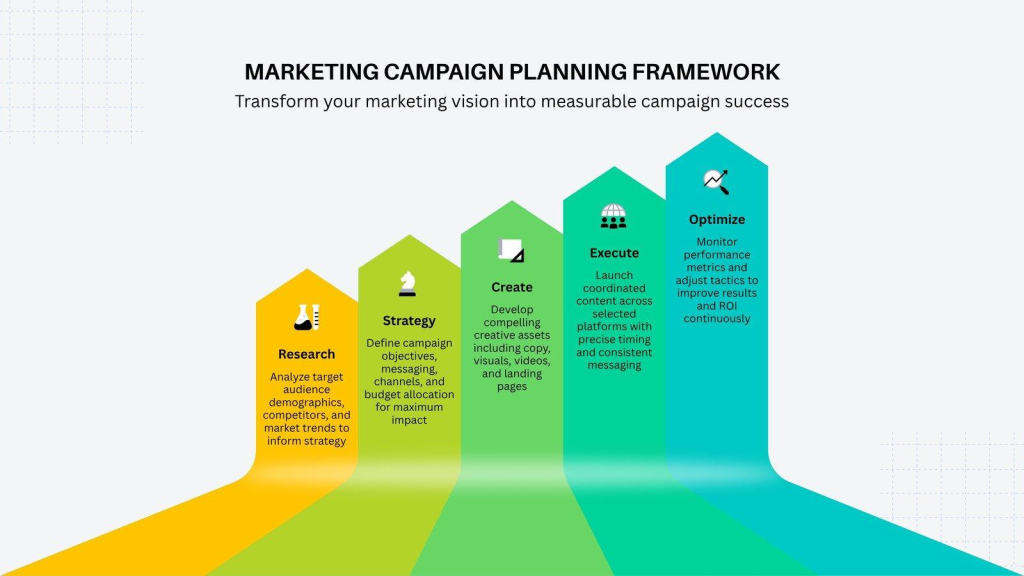
Now let’s get tactical. The campaign structure that consistently generates quality leads has three distinct layers, each serving a specific purpose in the filtering process.
Layer 1: The Awareness Filter
This is a cold traffic campaign designed to identify people who engage with your content and messaging. Instead of sending cold traffic directly to a lead form, you’re creating a pool of engaged users who’ve demonstrated actual interest.
Campaign objective: Video Views or Engagement (not Leads)
Creative strategy: Educational or value-based content that addresses your ideal customer’s specific pain point. For real estate agents, this might be “5 Things Sellers Do That Cost Them $50K+” or “How to Know if Now Is the Right Time to Sell.” For B2B marketers, it could be “Why Your Lead Gen Campaigns Attract Tire-Kickers.”
The key is that your content should be genuinely valuable but also somewhat sophisticated or specific. You want it to resonate deeply with your ideal customer while being less interesting to casual browsers. A generic “How to Sell Your Home Fast” attracts everyone. “How to Maximize Your Net Proceeds in a Transitional Market” attracts serious sellers.
Budget allocation: 30-40% of your total lead gen budget
Success metric: Not views or engagement rate, but the size and quality of your retargeting audience. You’re building a pool of people who’ve watched significant portions of your video (50%+) or spent meaningful time with your content.
Layer 2: The Intent Filter
This is where you convert your engaged audience into leads, but with strategic friction built in.
Campaign objective: Leads (or Conversions if optimizing for qualified lead events)
Audience: Retargeting people who engaged with Layer 1 content. Specifically, target users who watched 50%+ of your video or engaged with your content in the past 7-14 days. Don’t extend the window to 30 days – recency indicates higher intent.
Creative strategy: Direct response ads that speak to the specific problem addressed in your awareness content. Reference what they learned: “If you watched our video on maximizing net proceeds, here’s your next step…”
Your offer should require a micro-commitment that signals real interest. Instead of “Get Your Free Home Valuation,” try “Request Your Personalized Net Proceeds Analysis.” Instead of “Download Our Marketing Guide,” offer “Get Your Custom Marketing Plan.”
Form strategy: This is where most advertisers mess up. They use 2-3 form fields to maximize conversions. You need 5-7 fields that include qualifying questions.
For real estate agents:
– Name, phone, email (standard)
– Property address (shows they’re serious)
– Ideal timeline (filters urgency)
– “Have you already interviewed other agents?” (indicates stage)
For B2B/services:
– Name, phone, email, company (standard)
– Current monthly/annual budget or investment level (critical filter)
– Biggest current challenge (open-ended; quality answers indicate quality leads)
– “Have you worked with [service provider type] before?” (indicates sophistication)
Yes, more fields will reduce your conversion rate. That’s the point. You want people to self-select out if they’re not qualified.
Budget allocation: 40-50% of total lead gen budget
Layer 3: The Commitment Filter
This optional third layer is for high-ticket services or complex B2B sales where lead quality is paramount.
Campaign objective: Conversions (for qualified leads or bookings)
Audience: People who became leads in Layer 2 but haven’t yet qualified (if you’re tracking this with CRM integration) OR a lookalike audience of your best customers (1% lookalike of purchasers or 5-star clients)
Creative strategy: Testimonials, case studies, and results-focused content. Social proof from people similar to your target audience. For real estate, video testimonials from sellers in similar markets. For B2B, specific ROI case studies.
Offer: Direct call booking, strategy session, or consultation. You’re asking for a calendar commitment, not just information. This is the highest friction offer, which means only serious prospects will convert.
Form strategy: Fewer fields (since you’re asking for more commitment), but include one critical qualifier: “What’s your biggest goal/challenge/priority?” The quality of their written answer tells you everything about lead quality.
Budget allocation: 20-30% of total budget
ACT 3: Advanced Implementation Tactics
The three-layer structure is your foundation, but these advanced tactics will further optimize for quality.
Negative Targeting
As your campaigns run, you’ll identify patterns in bad leads. Create exclusion audiences:
– Exclude people who’ve filled out forms but never answered calls (3+ attempts). These are serial form-fillers.
– Exclude zip codes or regions that consistently produce low-quality leads
– Exclude age ranges that don’t convert to customers (analyze your CRM data)
– Use detailed targeting exclusions to remove deal-seekers: exclude “coupon” interests, extreme bargain-shopping behaviors, and freebie-seeking patterns
Price Anchoring in Copy
Mention price ranges or investment levels in your ad copy. “Our listing packages start at $X” or “Typical investment is $X-$Y.” This scares away people who can’t afford your services before they become leads. Yes, this may violate the “never talk about price in marketing” rule. That rule exists to maximize leads, not quality.
The Question Sequence Method
Instead of a standard lead form, use Facebook’s conditional logic to create a question sequence. Start with easy questions, then progressively ask qualifying questions. People who bail out weren’t serious. People who complete all steps are pre-qualified.
Example for real estate:
1. “Are you thinking of selling in the next 12 months?” → (Only “Yes” continues)
2. “What’s your primary reason?” → (Open-ended)
3. “What’s your approximate home value?” → (Ranges: under 300K, 300-500K, 500K-1M, 1M+)
4. “Have you spoken with an agent yet?”
5. Contact information
Each question filters. By question 5, you have highly qualified leads.
Budget Allocation for Quality
Most advertisers allocate budget daily or weekly. For quality-focused campaigns, think in terms of cost-per-qualified-lead (CPQL), not cost-per-lead. If your CPQL target is $50 and you need 10 qualified leads per month, your budget is $500 – regardless of how many total leads that generates.
Set your Facebook campaign budget, but calculate success based on qualified leads. You might get 20 total leads for your $500 budget (terrible CPL of $25), but if 12 of them are qualified, your CPQL is $42 – excellent performance.
Lookalike Refinement
Create lookalike audiences from your best customers, not all customers. Upload a customer list to Facebook with only your top 20% of clients (by revenue or satisfaction). Create a 1% lookalike audience from this list. This audience will be smaller but dramatically more qualified than a lookalike of all customers.
Layer this lookalike with interest targeting that matches your ideal customer’s values and sophistication level. A 1% lookalike of best customers + interests indicating financial capacity + behaviors showing they research thoroughly = your highest-quality cold audience.
The Micro-Commitment Sequence
For very high-ticket services, create a sequence of micro-commitments:
1. Engagement with content (Layer 1)
2. Download a valuable resource (requires email only)
3. Attend a webinar or watch a training (requires time investment)
4. Apply for service or book consultation (full lead form)
Each step filters for increasing levels of intent. By step 4, you’re only talking to highly qualified prospects. This extends your funnel but dramatically improves quality.
Lead Scoring Integration
Use Facebook’s Conversions API to send lead score data back to Facebook. When a lead reaches a certain score in your CRM (based on behavior, engagement, and qualification criteria), trigger a “Qualified Lead” conversion event. Over time, Facebook’s algorithm learns the characteristics of leads who reach this threshold and finds more like them.
This requires technical setup (connecting your CRM to Facebook via Zapier or native integration), but it’s the single most powerful way to teach Facebook what quality looks like for your specific business.
Creative Testing for Quality
Test ad creative not just for conversion rate, but for lead quality. Track which images, videos, and copy angles produce the highest percentage of qualified leads. You might find that your “best performing” ad (most leads) actually produces the worst quality, while an ad with 50% fewer conversions produces 3x more qualified leads.
Create a spreadsheet tracking:
– Ad creative variant
– Total leads
– Qualified leads (meeting your criteria)
– Qualification rate (qualified/total)
– Cost per qualified lead
Optimize for qualification rate and CPQL, not total leads or standard CPL.
Implementing the Structure: Your First 30 Days
Week 1: Set up your awareness campaign (Layer 1). Create 3-4 educational video ads that address specific pain points. Target broad audiences matching your ideal customer profile. Focus on building your retargeting pool.
Week 2: Launch your intent campaign (Layer 2) targeting people who engaged with Week 1 content. Implement longer forms with qualifying questions. Expect lower volume – that’s success, not failure.
Week 3: Analyze lead quality from Week 2. Adjust form questions based on patterns in bad leads. Create negative targeting audiences to exclude low-quality lead sources. Increase budget on best-performing creative.
Week 4: If you have sufficient quality leads, create a lookalike of qualified leads only. Launch Layer 3 (commitment campaign) if appropriate for your business. Begin teaching Facebook’s algorithm by setting up custom conversion events for qualified leads.
The Mindset Shift Required
The hardest part of implementing this structure isn’t technical – it’s psychological. You’ll get fewer leads. Your cost per lead will increase. Your boss or client might freak out when they see the CPL jump from $8 to $35.
You need to reframe the conversation around the metrics that actually matter:
– Cost per qualified lead (not total cost per lead)
– Lead-to-customer conversion rate
– Customer acquisition cost (total ad spend / customers acquired)
– Return on ad spend
A campaign that generates 100 leads at $10 CPL ($1,000 spend) with a 2% conversion rate produces 2 customers at $500 CAC.
A campaign that generates 20 leads at $50 CPL ($1,000 spend) with a 25% conversion rate produces 5 customers at $200 CAC.
Same budget. Half the customer acquisition cost. 2.5x more customers. That’s the power of optimizing for quality.
Final Thoughts
Facebook ads can generate high-quality leads, but only if you structurally design your campaigns to filter for quality over quantity. The three-layer architecture – awareness filter, intent filter, and commitment filter – creates multiple qualification checkpoints that ensure only serious prospects become leads.
This approach requires more sophisticated setup, longer optimization periods, and the courage to accept fewer total leads. But for businesses where lead quality dramatically impacts sales efficiency and customer lifetime value – which includes real estate, B2B services, and most local businesses – it’s the difference between a profitable advertising channel and an expensive lead list.
The question isn’t whether you can afford to implement this structure. It’s whether you can afford not to.
Frequently Asked Questions
Q: Why do I get so many fake or low-quality leads from Facebook ads?
A: Facebook’s algorithm optimizes for the action you tell it to optimize for. When you optimize for ‘Leads,’ it finds people most likely to fill out forms – not people most likely to become customers. These ‘serial form-fillers’ habitually enter information across the platform, making them easy conversions but terrible prospects. To fix this, you need to introduce strategic friction, use qualifying questions in forms, and teach Facebook what a quality lead looks like by creating custom conversion events for qualified leads rather than just form submissions.
Q: Should I use short forms with 2-3 fields or longer forms with more qualifying questions?
A: For quality lead generation, use longer forms with 5-7 fields including qualifying questions. While this reduces total conversion volume, it dramatically improves lead quality. Include questions that filter for budget, timeline, urgency, and genuine interest. For example, real estate agents should ask for property address and timeline, while B2B businesses should ask about current budget and specific challenges. The people who complete longer forms are pre-qualified and significantly more likely to become customers.
Q: What’s the ideal campaign structure for generating quality leads on Facebook?
A: Use a three-layer campaign architecture: Layer 1 (Awareness Filter) runs engagement or video view campaigns with educational content to build a pool of interested users – allocate 30-40% of budget here. Layer 2 (Intent Filter) retargets engaged users with lead generation campaigns using longer forms with qualifying questions – allocate 40-50% of budget. Layer 3 (Commitment Filter) targets qualified leads or lookalikes of best customers with direct booking or consultation offers – allocate 20-30% of budget. This structure filters prospects at multiple stages rather than pushing cold traffic directly to lead forms.
Q: How can I teach Facebook’s algorithm to find better quality leads?
A: Create a custom conversion event called ‘Qualified Lead’ that fires when a lead meets your quality criteria (showed up for appointment, met minimum budget, matched ideal customer profile, or reached a certain lead score). Use Facebook’s Conversions API to send this data from your CRM back to Facebook. Then optimize your campaigns for this custom conversion instead of standard ‘Lead’ events. Over time, Facebook learns the characteristics of people who become qualified leads and finds more prospects with similar attributes. Also create lookalike audiences from only your top 20% of customers, not all customers.
Q: What should my cost per lead be for quality lead generation campaigns?
A: Stop focusing on cost per lead (CPL) and start tracking cost per qualified lead (CPQL). Quality-focused campaigns typically have higher CPLs ($30-75) but much better conversion rates. The important metric is customer acquisition cost (CAC) – total ad spend divided by customers acquired. A campaign with $50 CPL that converts 25% of leads to customers ($200 CAC) dramatically outperforms a campaign with $10 CPL that converts 2% of leads ($500 CAC). Measure success by CPQL, lead-to-customer conversion rate, and return on ad spend, not total lead volume or standard CPL.