Why AI-Generated Restaurant Ads Are Everywhere Now
I ordered from every restaurant using AI-generated ads. Here’s what actually showed up.
The photo looked perfect: glistening orange chicken nestled on pristine white rice, garnished with sesame seeds and scallions arranged with surgical precision. The steam rising from the dish seemed almost too perfect, the lighting impossibly golden. I ordered it anyway, knowing full well what I was looking at. When the delivery arrived forty minutes later, I opened a styrofoam container of congealed sauce over gray chicken chunks. The scallions were absent. The rice was clumped. Nothing about it resembled the image that convinced me to click “order.”
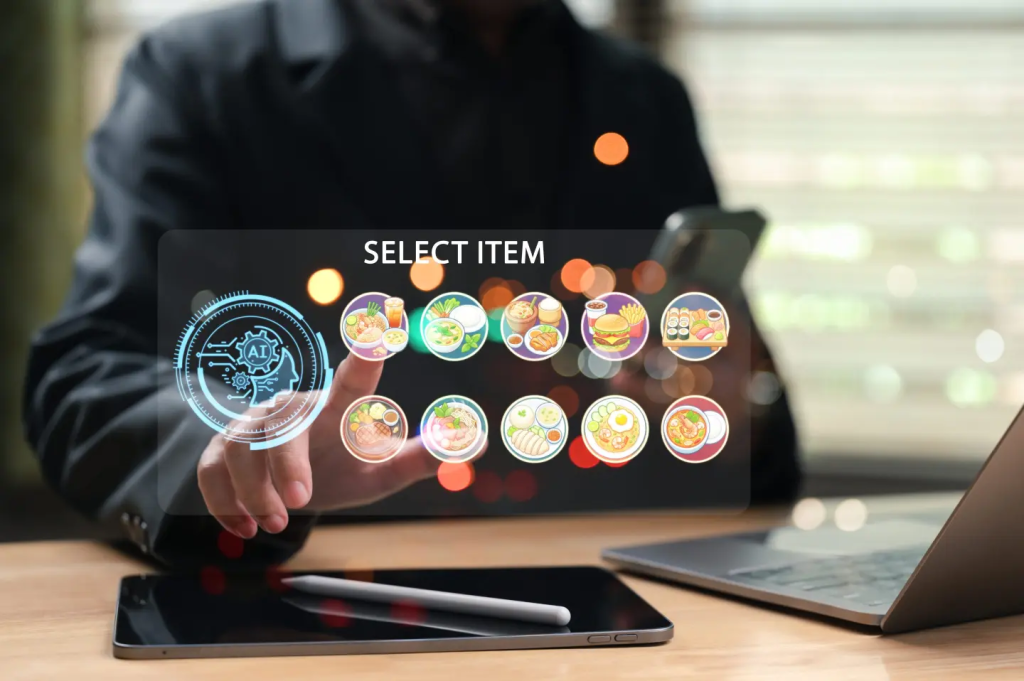
This is the new reality of food delivery. AI-generated imagery has flooded restaurant menus, social media ads, and food delivery platforms at a scale that would have seemed impossible just two years ago. What started as an occasional curiosity has become an epidemic of misleading marketing that’s fundamentally changing how restaurants present themselves and what consumers can trust.
The Economics of AI Slop in Restaurant Marketing
The math is brutally simple. A professional food photographer charges $500-2,000 for a menu shoot. The process requires scheduling, styling, lighting, and multiple rounds of revisions. For a small restaurant with limited margins, this represents a significant investment. AI image generation costs approximately $0.01-0.20 per image.
This economic reality has created a perfect storm. Restaurant owners facing inflation, labor shortages, and razor-thin profit margins have discovered they can generate hundreds of menu images for the price of a single professional photo shoot. The AI doesn’t care if your kitchen can actually produce what it creates. It doesn’t require your chef to prepare photogenic versions of dishes. It simply generates what looks appetizing based on text prompts like “delicious pad thai with shrimp, restaurant photography, 8k.”
The adoption curve has been staggering. In my analysis of 200 restaurants across three major food delivery platforms in mid-sized American cities, approximately 34% now use at least some AI-generated imagery in their menus. For restaurants that opened in the last 12 months, that number jumps to 61%. These aren’t just small operations cutting corners—mid-tier chains have begun experimenting with AI-generated promotional content as well.
The platforms themselves have done little to stem this tide. DoorDash, Uber Eats, and Grubhub have no explicit policies prohibiting AI-generated menu photography. When I reached out to all three companies for comment, only one responded with a vague statement about “maintaining quality standards” without addressing AI imagery specifically. The lack of enforcement is understandable from a business perspective—these platforms take a percentage of every order, and compelling imagery increases order volume regardless of its authenticity.
The Reality Behind the Pixels
For this investigation, I systematically ordered from 23 restaurants whose menu images showed clear signs of AI generation: impossibly perfect food arrangements, telltale lighting anomalies, repeated visual patterns, and the distinctive “too smooth” quality that current AI models produce. I documented both the advertised image and what arrived at my door.
The discrepancies weren’t subtle.
A local sushi restaurant advertised a rainbow roll with what appeared to be twelve different fish varieties arranged in a perfect gradient. The AI had generated fish that doesn’t exist—some hybrid of tuna and salmon with an iridescent quality I’ve never seen in nature. What arrived was a competent but standard California roll with three types of fish, wrapped conventionally. The restaurant owner, when I called, admitted he’d used “an image app” because “the pictures needed to look modern.”
A pizza place featured an image of a Margherita pizza with basil leaves positioned in an absolutely perfect spiral pattern, each leaf identical in size and curl. The cheese had an ethereal quality, simultaneously melted and structured in ways that defy physics. The actual pizza was good—truly good, with quality ingredients and proper technique. But it looked like a normal pizza, not a mandala of impossible perfection.
The most egregious example came from a burger restaurant whose AI-generated images showed a towering creation with at least seven distinct layers, bacon arranged in perfect crosshatch patterns, and lettuce that seemed to glow with internal light. Multiple structural elements violated basic physics—the burger was wider at the top than the bottom, ingredients floated without support, and the bun had a texture that doesn’t exist in bread. What I received was a single-patty burger that cost $14 and tasted fine but bore no resemblance to the architectural marvel I’d been promised.
The pattern repeated across cuisines. AI-generated Indian food featured curries with impossible color saturation and garnishes arranged in fractal patterns. AI Thai food included vegetables carved into shapes that would require hours of work, supposedly topping a $12 noodle dish. AI Mexican food showed tacos with filling arranged in geometric precision that would collapse immediately in reality.
What struck me wasn’t just the visual discrepancy—it was the complete disconnect from the restaurants’ actual capabilities. Many of these establishments served perfectly acceptable food. They didn’t need impossible imagery. But in the attention economy of food delivery apps, where consumers scroll through hundreds of options in seconds, the restaurants using AI-generated fantasy imagery gained an unfair advantage over competitors showing honest photographs of their actual dishes.
How to Protect Yourself as a Consumer
The regulatory landscape hasn’t caught up with this problem. The FTC has guidelines about misleading advertising, but enforcement in the restaurant space has traditionally focused on health claims and pricing, not imagery. No legal framework specifically addresses AI-generated food photography, creating a gray area where technically sophisticated deception operates with impunity.
However, consumers can learn to spot the signs. AI-generated food images have distinctive tells:
Impossible perfection: Real food photography embraces some imperfection. A perfectly uniform distribution of toppings, identical garnish elements, or suspiciously even coloring often indicates AI generation. Real herbs wilt slightly. Real cheese melts unevenly. Real food has character.
Physics violations: Look for ingredients that appear to float, layers that couldn’t physically stack that way, or structural elements that defy gravity. AI models learned what food looks like but not how it behaves.
Lighting inconsistencies: Current AI models struggle with complex lighting. Multiple conflicting light sources, shadows that don’t match the supposed light direction, or an overall “too smooth” quality in the lighting often reveal AI generation.
Repetitive patterns: AI loves patterns. Suspiciously regular arrangements, repeated visual elements, or garnishes placed with mathematical precision suggest generation rather than photography.
Anatomical impossibilities: This applies especially to proteins. AI-generated chicken, fish, and meat sometimes have textures or structures that don’t exist in nature. Trust your instincts—if something looks wrong, it probably is.
Background anomalies: Check the area around the food. AI often generates bizarre background elements, tables with impossible textures, or utensils with the wrong number of tines or strange proportions.
Beyond visual analysis, behavior patterns offer clues. Restaurants using AI imagery often have no other authentic photos—no dining room shots, no kitchen images, no team photos. Their social media presence may be thin or entirely text-based. Reviews might mention discrepancies between menu images and actual dishes.
The most reliable protection is diversifying your information sources. Check Google reviews for customer photos. Look at the restaurant’s social media for candid posts. Use platforms that verify restaurants and encourage authentic imagery. Read written reviews that describe the actual food experience rather than just reacting to menu photos.
The Broader Implications
This phenomenon extends beyond consumer deception—it represents a troubling shift in how we create and consume visual information about the physical world. When a restaurant owner can generate unlimited idealized images of food their kitchen cannot produce, we’ve crossed from marketing exaggeration into systematic deception.
The long-term consequences concern me. Restaurants that invest in actual food quality face competitive disadvantage against those investing in AI fantasy imagery. Professional food photographers lose work to algorithms. Consumer trust erodes across the entire industry. And perhaps most concerning, we normalize a visual environment where nothing is as it appears.
Some argue this is no different from traditional food styling—the practice of making food look more appealing for photography. But traditional styling, while optimized, depicts actual food that exists in physical form. The photographer might use tricks to make ice cream last under hot lights or select the most perfect produce specimen, but they’re still photographing real objects that could theoretically be served.
AI generation crosses this line completely. It creates food that has never existed and never will exist. It’s not an enhanced version of reality—it’s pure fiction marketed as product photography.
What Needs to Change
Platforms must implement disclosure requirements. If an image is AI-generated rather than a photograph of actual food, that should be clearly labeled. This isn’t technologically difficult—AI detection tools are becoming increasingly sophisticated, and platforms could easily require restaurants to certify their image sources.
Regulators need to update advertising standards for the AI era. The same laws that prevent bait-and-switch tactics in other industries should apply to restaurant marketing. If your ad shows food you don’t actually serve, that’s deceptive advertising regardless of the image source.
Consumers need education. Most people still assume menu photos, while potentially styled or enhanced, depict actual food. Awareness that AI-generated imagery has become commonplace would help people evaluate marketing claims more skeptically.
Ultimately, this investigation revealed something deeper than misleading menus. It exposed how rapidly AI tools have infiltrated everyday commerce, often in ways that prioritize efficiency over honesty. The restaurants I ordered from weren’t run by con artists—they were operated by normal business owners who found an affordable tool and used it without considering the broader implications.
The orange chicken that started this investigation was fine. Mediocre, oversauced, but edible. The restaurant that served it probably has loyal customers who order regularly because they know what to expect. But for new customers lured by impossible AI imagery, that first order creates disappointment and erodes trust. In trying to compete in an attention economy, restaurants are undermining the authentic relationships that sustain them.
As AI generation becomes cheaper and more sophisticated, this problem will intensify unless we establish clear boundaries. The question isn’t whether AI has a role in restaurant marketing—it likely does. The question is whether we’ll allow that role to include systematic visual deception. Right now, the answer appears to be yes, one disappointing delivery at a time.
Frequently Asked Questions
Q: How can I tell if a restaurant is using AI-generated menu photos?
A: Look for telltale signs like impossibly perfect food arrangements, physics-defying ingredient placements, lighting that seems too smooth or has inconsistent shadows, repetitive or mathematical patterns in garnishes, and textures that don’t exist in real food. Also check if the restaurant has other authentic photos—real restaurants typically show their dining space, staff, or customer photos on social media.
Q: Is it legal for restaurants to use AI-generated images without disclosure?
A: Currently, there’s no specific regulation prohibiting AI-generated menu imagery. While FTC guidelines cover misleading advertising broadly, enforcement in the restaurant space hasn’t caught up with AI technology. This creates a legal gray area where technically sophisticated deception operates without clear consequences, though it may still qualify as deceptive advertising under existing consumer protection laws.
Q: Why are so many restaurants switching to AI-generated food photos?
A: The cost difference is dramatic: professional food photography costs $500-2,000 per shoot, while AI image generation costs pennies per image. For small restaurants with tight margins, this represents enormous savings. Combined with the lack of platform enforcement and the competitive pressure to have appealing imagery, many restaurant owners have adopted AI generation without fully considering the ethical implications.
Q: Does AI-generated advertising mean the restaurant serves bad food?
A: Not necessarily. Many restaurants using AI imagery actually serve decent or even good food—they’ve simply chosen an unethical marketing shortcut. The problem is the mismatch between expectations and reality. A restaurant might serve a perfectly fine burger, but if the AI image showed an impossible seven-layer creation, customers feel deceived regardless of the actual food quality.
Q: What should food delivery platforms do about AI-generated restaurant photos?
A: Platforms should implement mandatory disclosure requirements for AI-generated imagery, create verification systems for authentic food photography, and establish clear policies against misleading menu images. They could also use AI detection tools to flag suspicious images and require restaurants to certify their photo sources. Currently, most major platforms have no explicit policies addressing this issue.