
How Backflip AI Is Transforming 3D Printing and Manufacturing in 2025
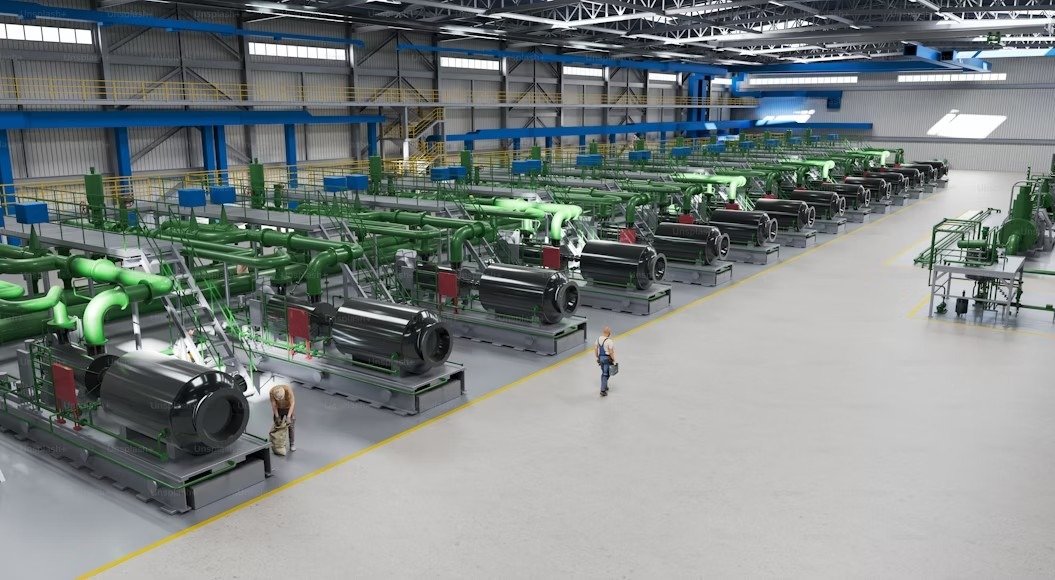
Smart manufacturing technologies are redefining how products move from concept to creation and at the center of this evolution is Backflip AI.
Backflip AI is a pioneering force in AI-driven 3D printing innovations that is streamlining every stage of the manufacturing process.
It helps designers and manufacturers turn simple ideas or text prompts into detailed 3D models ready for production in just minutes..
What makes Backflip AI remarkable is its efficiency optimization on a new level.
The platform intelligently refines designs for material usage, structural performance, and printability, reducing production time and waste.
Its ability to combine design goals with data-driven manufacturing helps industries create faster, greener, and more affordable workflows..
As AI-driven manufacturing becomes the new standard, Backflip AI stands out as a key player transforming how we design, prototype, and produce.
Revolutionizing Design: From Text to 3D Models
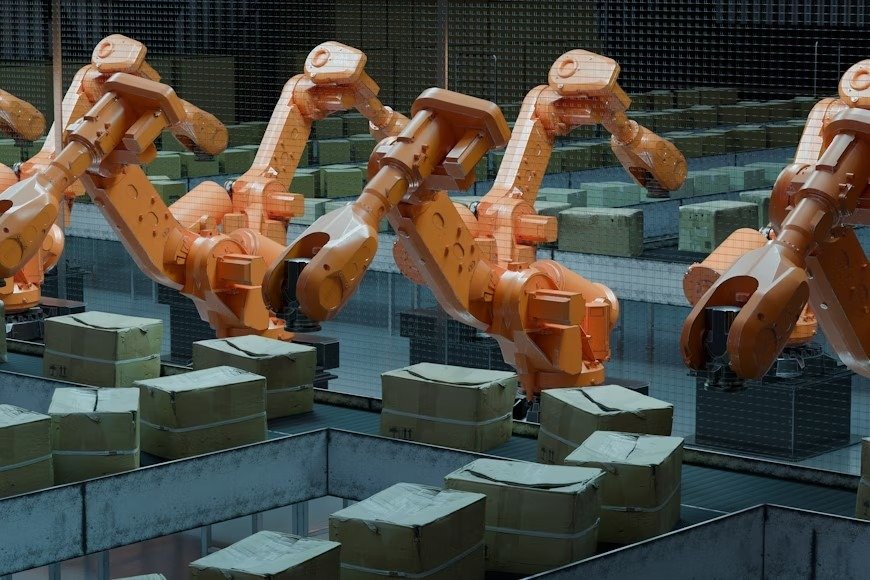
In the past, creating 3D models required deep technical knowledge of CAD software, complex geometry handling, and hours of manual design work.
Backflip AI is breaking that barrier with its ability to transform text prompts into detailed 3D models in just minutes.
Using large-scale generative models trained on millions of design and manufacturing datasets, Backflip AI interprets descriptive language.
This capability not only accelerates concept generation but also empowers teams to experiment freely without worrying about technical modeling constraints.
The real magic lies in Backflip AI’s smart manufacturing technology backbone.
It automatically refines each model for mechanical strength, printability, and efficiency, resulting in Backflip AI efficiency optimization across the entire workflow.
Designers can iterate rapidly, manufacturers can validate designs faster, and businesses can move from idea to prototype in a fraction of the usual time.
Backflip AI is democratizing industrial design, making creative expression and engineering precision accessible to everyone, from startups to global manufacturers.
Automating the Manufacturing Workflow
One of the most powerful ways Backflip AI is transforming 3D printing and manufacturing in 2025 is through its ability to automate the entire production workflow.
Traditionally, moving from design to manufacturing involves multiple disconnected steps such as CAD modeling, simulation, material analysis, and print setup with each requiring manual intervention and specialized expertise.
Backflip AI eliminates much of this complexity through its AI-driven 3D printing innovations and smart manufacturing technologies.
The platform integrates directly with leading CAD tools and additive manufacturing systems, creating a seamless bridge between design intent and production readiness.
Through Backflip AI efficiency optimization, it can automatically detect design flaws, adjust tolerances, select suitable materials, and prepare optimized print files without human oversight.
This process saves time and ensures consistency, precision, and reduced material waste.
For manufacturers, it translates into shorter production cycles, lower operational costs, and greater scalability.
Engineers can now focus on creativity and problem solving rather than repetitive setup tasks.
In a nutshell, Backflip AI is changing how ideas become real products by transforming complicated manufacturing tasks into smooth, AI-powered processes that deliver faster and more efficient results.
Boosting Efficiency and Reducing Production Costs
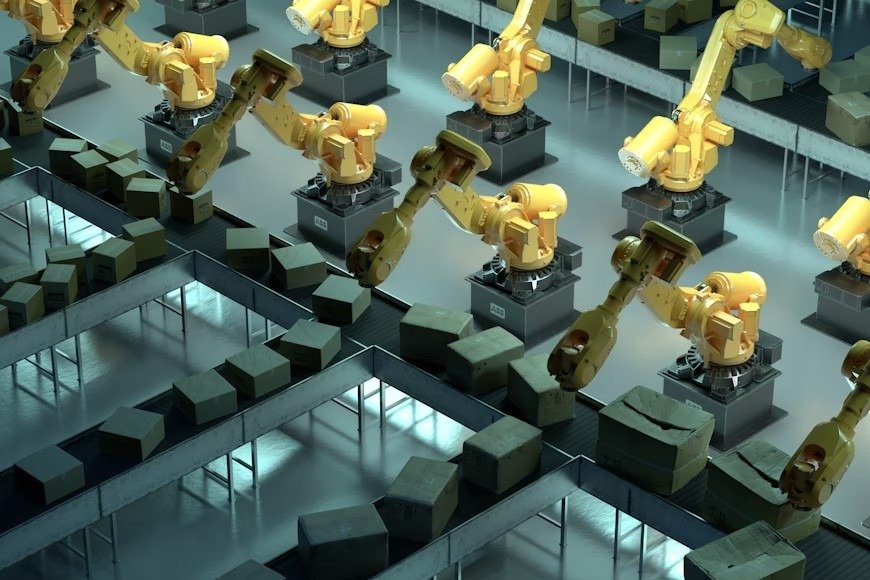
Manufacturers are constantly under pressure to produce more while spending less. Backflip AI addresses this challenge through advanced efficiency optimization and AI-driven 3D printing innovations that enhance every stage of the production process.
With its smart manufacturing technologies, Backflip AI continuously analyzes design data, material behavior, and machine performance to identify opportunities for improvement.
The result is often an automated system that minimizes waste, optimizes print paths, and improves energy efficiency while maintaining uncompromising accuracy.
Manufacturers benefit from reduced material consumption, fewer failed prints, and faster turnaround times, leading to substantial cost savings and higher profitability.
Backflip AI’s adaptive algorithms also ensure that designs are not only functional but cost effective. For instance, the software can automatically suggest lighter geometries, alternative materials, or improved support structures that lower production costs without sacrificing quality.
These intelligent adjustments form the foundation of Backflip AI efficiency optimization, helping businesses scale operations sustainably and remain competitive in an increasingly data-driven manufacturing environment.
Real-World Applications in Industry
The real impact of Backflip AI becomes most evident in its diverse industrial applications, where AI-driven 3D printing innovations are reshaping how products are conceived, prototyped, and produced.
Across sectors like aerospace, automotive, healthcare, and consumer goods, Backflip AI’s integration of smart manufacturing technologies is enabling faster innovation cycles and higher production agility.
In aerospace and defense, Backflip AI helps engineers design lightweight, structurally optimized components that meet strict performance and safety requirements.
By automatically simulating load distribution and stress factors, the platform ensures parts are ready for additive manufacturing with minimal post-processing.
In the automotive industry, Backflip AI accelerates prototyping and custom part fabrication, enabling rapid iteration of designs for electric vehicles and autonomous systems.
The platform’s efficiency optimization reduces material waste and print time, making small batch production economically viable.
For healthcare manufacturers, Backflip AI’s precision modeling capabilities support the creation of custom prosthetics, dental implants, and surgical tools tailored to individual patients.
Its AI-powered mesh refinement ensures biocompatibility and structural accuracy, bridging the gap between digital design and real world application.
Even in consumer product design, Backflip AI empowers smaller brands to compete with established players by providing access to high-quality, production ready 3D models without costly CAD expertise.
Challenges and Ethical Considerations
While Backflip AI is driving remarkable progress in AI-driven 3D printing innovations and smart manufacturing technologies, it also introduces new challenges that must be addressed responsibly.
One major concern lies in data ownership and design authenticity. Since Backflip AI learns from vast datasets of existing models and engineering patterns, determining who owns AI-generated designs can be complex.
Manufacturers must navigate issues of copyright, attribution, and proprietary data protection to ensure fair use and compliance.
Another challenge involves quality assurance and reliability. While Backflip AI’s algorithms excel at efficiency optimization, automated design suggestions may not always meet safety or regulatory standards without human validation.
A balance must be maintained between AI autonomy and expert oversight, especially in high stakes industries such as aerospace or medical device manufacturing.
Ethical considerations also extend to workforce adaptation. As automation accelerates, organizations must invest in upskilling human workers to collaborate with intelligent systems rather than being displaced by them.
This shift represents not just a technological evolution but a cultural one which redefines how humans and machines co-create in modern manufacturing.
In the end, Backflip AI’s success will rely on clear governance, responsible use of AI, and a collective effort to keep innovation sustainable and ethically driven.
Final Thoughts
In the near future, Backflip AI is expected to play a pivotal role in fully autonomous production pipelines where AI systems handle everything from conceptual design to real-time production monitoring and predictive maintenance.
Through ongoing efficiency optimization, manufacturers will be able to achieve greater flexibility, lower energy consumption, and near-zero material waste.
The long-term vision goes beyond faster production. Backflip AI represents a shift toward adaptive, data-informed manufacturing, where every product design benefits from cumulative learning across industries and use cases.
This evolution could enable truly mass customized production, where unique, high quality parts are manufactured at scale without compromising cost or precision.
Frequently Asked Questions
- What is Backflip AI?
Backflip AI is an advanced artificial intelligence platform that converts ideas, sketches, or text prompts into detailed 3D models ready for manufacturing.
It integrates with CAD tools and 3D printers, streamlining design-to-production workflows through AI-driven 3D printing innovations.
- How is Backflip AI transforming 3D Printing?
Backflip AI is redefining 3D printing by introducing smart manufacturing technologies that automate modeling, optimize print parameters, and reduce material waste.
This results in faster prototyping, higher precision, and greater production efficiency.
- What Industries Are Using Backflip AI?
Backflip AI is being adopted across aerospace, automotive, healthcare, and consumer product manufacturing.
Its efficiency optimization tools help these industries produce lighter, stronger, and more sustainable parts with shorter turnaround times.
- How Does Backflip AI Improve Manufacturing Efficiency?
Backflip AI enhances productivity through efficiency optimization algorithms that automatically refine designs for performance, cost, and material usage.
It identifies areas where energy and resources can be saved, leading to lower production costs and minimal waste.
- Is Backflip AI Compatible With Existing Manufacturing Systems?
Yes. Backflip AI integrates seamlessly with major CAD platforms and additive manufacturing systems. Its API allows for smooth data transfer and workflow automation within existing production environments.