Domain Rating Explained – What It Means for Your Website
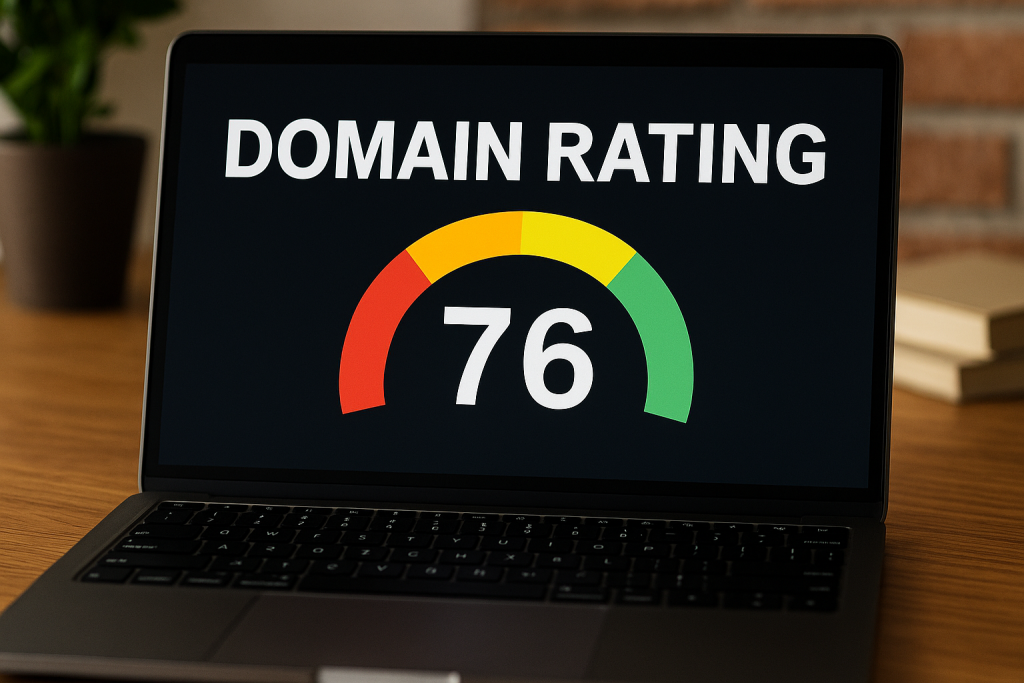
Your website’s Domain Rating is more than a number; it’s a reflection of how much other sites trust you. At RoarEye, we use Domain Rating (DR) to gauge how strong a website’s backlink profile is. A higher DR usually signals that your site has earned quality backlinks from trusted sources.
If you’ve heard of Domain Authority vs Domain Rating, you might be wondering which matters more. Both are essential for understanding site credibility, but Domain Rating is Ahrefs’ way of scoring your backlink power. In this guide, we’ll show you how these scores differ, how to improve your Domain Rating, and how to use a Domain Rating Checker to monitor growth.
Domain Authority vs Domain Rating – Which One Matters More?
When it comes to SEO metrics, Domain Authority (DA) and Domain Rating (DR) are the two most referenced. They may look similar, but they aren’t identical.
The Origins of Both Metrics
Ahrefs introduced Domain Rating to measure the quality and quantity of backlinks a website receives. Moz, on the other hand, created Domain Authority to predict how likely a site is to rank in search results. While both use a 0–100 scale, the way they’re calculated is very different.
Key Differences in How They’re Calculated
- Domain Rating (DR) looks purely at backlinks. It measures how many unique domains link to your site and how authoritative those linking sites are.
- Domain Authority (DA) considers several factors, including link quality, site structure, and machine-learning predictions of ranking potential.
For example, a site with a DR of 70 might have stronger backlinks but a lower DA if Moz interprets its internal links or spam score differently.
Quick Comparison Table
| Metric | Tool | Focus | Factors Considered |
| Domain Rating (DR) | Ahrefs | Link strength | Referring domains, link authority |
| Domain Authority (DA) | Moz | Ranking potential | Links, content, on-page SEO, spam score |
Which Metric Should You Track?
If you’re running link-building or outreach campaigns, focus on DR. If you’re benchmarking search visibility, DA works too. At RoarEye, we track both because they give a balanced view of a site’s authority. The key is consistency; pick one main metric and track it over time.
How to Improve Domain Rating with Smart SEO
Improving your Domain Rating takes strategy, patience, and a focus on link quality. Here’s how you can start strengthening your site authority.
Build High-Quality Backlinks
Backlinks from reputable sites are the backbone of a strong DR. Reach out to websites in your industry for guest posts, partnerships, or mentions. One backlink from a high-authority site can often make more difference than dozens of low-value ones.
Publish Shareable Content That Earns Links
Create content that adds value. This could be a detailed guide, a data-driven article, or a useful resource. When people reference your work, they naturally link back to it, raising your DR over time.
For example, at RoarEye, we’ve seen clients boost their DR by 10–15 points in six months after publishing original research that others cited in their blogs.
Avoid Spammy or Irrelevant Links
Avoid buying bulk backlinks or joining link farms. While these might temporarily raise your DR, they harm your long-term SEO health. Focus on genuine, relevant connections instead.
Leverage RoarEye’s SEO Services
Our team at RoarEye helps businesses increase their Domain Rating through ethical link building, content promotion, and regular backlink audits. We prioritize sustainable growth that aligns with Google’s standards.
Domain Rating Checker – How to Measure Your Site’s Strength
Before you improve your Domain Rating, you need to know where you stand. Tools like Ahrefs’ Domain Rating Checker, Moz’s DA Checker, and Semrush’s Authority Score give you quick insights.
Free and Paid Tools to Use
Ahrefs’ checker is one of the most accurate for DR. Simply enter your domain to see your current score and the number of referring domains. For context:
- DR 0–30: new or weak site
- DR 30–60: growing websites
- DR 60+: strong and well-established sites
How to Track DR Growth Over Time
Track your DR monthly and note trends alongside organic traffic growth. A steady increase means your backlink efforts are paying off. If your DR drops, investigate lost backlinks or check for spammy referrals.
Why RoarEye Monitors These Metrics
At RoarEye, we integrate Domain Rating tracking into every SEO campaign. This helps us evaluate backlink quality, identify growth opportunities, and refine outreach strategies.
Conclusion
Your Domain Rating tells a story about how well your website earns trust from others. While it’s not a direct Google ranking factor, it’s a reliable indicator of your backlink strength and SEO progress.
At RoarEye, we believe building authority is about earning respect through valuable content and authentic connections. Focus on improving your link profile, create content worth linking to, and use a Domain Rating Checker to measure your growth. Over time, your DR will rise, along with your visibility and traffic.
FAQs
1. What is a good Domain Rating score?
A score above 60 is considered strong, showing that your site has earned quality backlinks from authoritative websites.
2. How often should I check my Domain Rating?
Once a month is enough. Frequent checks won’t show meaningful changes, as DR evolves slowly with new backlinks.
3. Can I improve Domain Rating without backlinks?
Not significantly. Since DR depends on backlinks, improving it requires earning links from other websites.
4. Does Domain Rating affect Google rankings?
Not directly. DR is an Ahrefs metric, but a high DR often correlates with better rankings because strong backlinks improve visibility.
5. What tools show Domain Rating for free?
Ahrefs’ Website Authority Checker is the best free tool. It gives you your DR, number of backlinks, and referring domains.