
Building a $60K/Month AI Marketing Agency Solo: The 4-Hour Workweek Blueprint

12 years of marketing experience compressed into a 4-hour workweek generating $60K per month.
This isn’t another AI hype story. It’s a documented case study of how one experienced marketer restructured their agency to leverage artificial intelligence, eliminate team overhead, and build a sustainable one-person operation that generates serious revenue with minimal time investment.
If you’re an experienced marketer or agency owner tired of managing teams, endless client calls, and the soul-crushing grind of cold outreach, this framework will show you exactly how to scale revenue while dramatically reducing working hours.
Act 1: Automating Client Delivery with Claude and AI Tools
The bottleneck in most marketing agencies isn’t client acquisition—it’s delivery. Every client requires hours of research, content creation, campaign optimization, and reporting. But here’s what 12 years of experience teaches you: 80% of marketing execution follows predictable patterns.
That’s where AI becomes transformative.
The SEO Automation Stack
For SEO clients paying $3,000-$5,000 monthly, the traditional delivery model requires 15-20 hours of work per client. Content research, keyword analysis, content briefs, article writing, and technical audits consume entire workdays.
The AI-powered approach compresses this to under 2 hours per client monthly:
Step 1: Keyword Research Automation
Instead of manually analyzing search volumes and competition, create a Claude project with your client’s industry context, competitor websites, and business goals. Feed it raw keyword export data from tools like Ahrefs or SEMrush (which take 5 minutes to generate).
Prompt Claude to analyze keyword opportunities based on business relevance, search intent alignment, and competitive gaps. The AI identifies patterns humans miss—semantic clusters, question-based opportunities, and commercial intent keywords that traditional metrics overlook.
Time saved: 3-4 hours monthly per client.
Step 2: Content Brief Generation
Traditional content briefs require analyzing top-ranking pages, extracting topics, and structuring outlines. With Claude, upload the top 10 ranking URLs for your target keyword as text extracts.
Your prompt framework: “Analyze these ranking pages for [keyword]. Identify content gaps, unique angles not being covered, and create a comprehensive brief that would outperform these by providing more value to [specific audience]. Include semantic keyword clusters and internal linking opportunities.”
Claude produces briefs that rival those from experienced strategists—in 3 minutes instead of 90 minutes.
Step 3: Content Creation Pipeline
Here’s the controversial part: AI can now write content that ranks, but only if you feed it proprietary expertise. The solo operator advantage is you’re not a content mill—you’re leveraging years of marketing knowledge.
Create “expertise documents” in Claude Projects—your insights on industry trends, case studies, unique methodologies. When generating content, Claude draws from both its training data and your proprietary knowledge base.
The result? Content that sounds like it came from an experienced marketer (because it did—AI is simply the execution layer).
One crucial rule: Always run output through originality checks and add client-specific examples manually. This 20-minute human touch is what separates rankable content from AI spam.
The Paid Ads Automation Framework
Paid ads clients typically pay $2,500-$4,000 monthly for management. Traditional delivery requires daily monitoring, weekly optimization, creative testing, and reporting.
The AI approach maintains performance while cutting management time by 75%:
Campaign Intelligence with Claude
Export campaign data weekly (clicks, conversions, cost-per-acquisition by ad group). Upload to Claude with this context: “You’re managing a paid ads account for [business type]. Here’s last week’s performance data. Identify underperforming ad groups, recommend budget reallocation, and suggest new targeting angles based on what’s working.”
Claude spots patterns across hundreds of data points instantly—identifying, for example, that mobile traffic from 6-9 PM converts 40% better, or that certain audience segments have rising CPAs indicating auction saturation.
Creative Testing Automation
Use ChatGPT or Claude to generate 20 ad variations based on your top performers. Prompt: “Here are my three best-performing ad creatives [paste copy]. Generate 20 variations testing different emotional triggers, value propositions, and calls-to-action while maintaining the core elements that make these effective.”
Upload to platform, let algorithm optimize. Review winners weekly.
Automated Reporting
Create Claude Projects with each client’s business context and KPIs. Each week, upload raw analytics data and prompt: “Create an executive summary of this week’s performance, highlighting wins, concerns, and recommended actions in client-friendly language.”
Edit for 10 minutes, send. Clients receive strategic insights, not data dumps.
The Real Game-Changer: Time Consolidation
With this stack, a client requiring 15-20 hours monthly now requires 3-4 hours. At 10 clients ($40K monthly revenue minimum), you’re working 30-40 hours monthly, not 150-200.
That’s the difference between a job and a lifestyle business.
Act 2: Client Acquisition Without Cold Outreach
Here’s what nobody talks about: Cold outreach doesn’t scale for premium positioning. When you’re charging $3,000-$5,000 per client, cold emails make you look desperate.
The $60K monthly operation uses three acquisition channels that attract pre-qualified clients:
Content Authority Positioning
Publish one in-depth piece of content weekly demonstrating your methodology. Not surface-level tips—deep strategic frameworks that showcase 12 years of experience.
The solo operator advantage: You’re not creating content for content’s sake. You’re documenting your actual processes, making creation fast because you’re simply explaining what you already know.
Publish on LinkedIn, your website, and Medium. Each piece includes a simple CTA: “I work with 10 companies implementing this strategy. If you’d like to discuss fit, book a call.”
This generates 3-5 qualified leads monthly. Conversion rate from call to client: 40-50% because they’re pre-sold on your expertise.
Strategic Referral Partnerships
Identify complementary service providers targeting the same client profile—web developers, brand strategists, business consultants. They have clients who need marketing but don’t want to hire in-house.
The pitch: “I run a boutique marketing operation working with 10 select clients. I don’t take on everyone, but if you have clients needing strategic SEO or paid ads support, I offer a 20% referral fee for qualified introductions that convert.”
Two solid partnerships generate 2-3 clients monthly. Because they’re referred by trusted advisors, close rates exceed 60%.
Past Client Reactivation
With 12 years in marketing, you’ve worked with 50+ clients. Many have since grown, changed agencies, or brought marketing in-house only to realize they need external support again.
Quarterly, send personalized video messages to past clients: “Saw you launched [new product/service]. Congrats. I’ve been refining my approach to [their core challenge], now working with just 10 companies but seeing remarkable results. Would love to catch up if you’re open to exploring what strategic support could look like.”
Reactivation rate: 10-15%. Three reactivated clients in six months.
These three channels combined generate 8-10 qualified leads monthly. You need 1-2 new clients monthly to maintain a 10-client roster (accounting for churn).
No cold email. No outbound spam. Just authority and relationships.
Act 3: The 4-Hour Workweek Time Management Framework
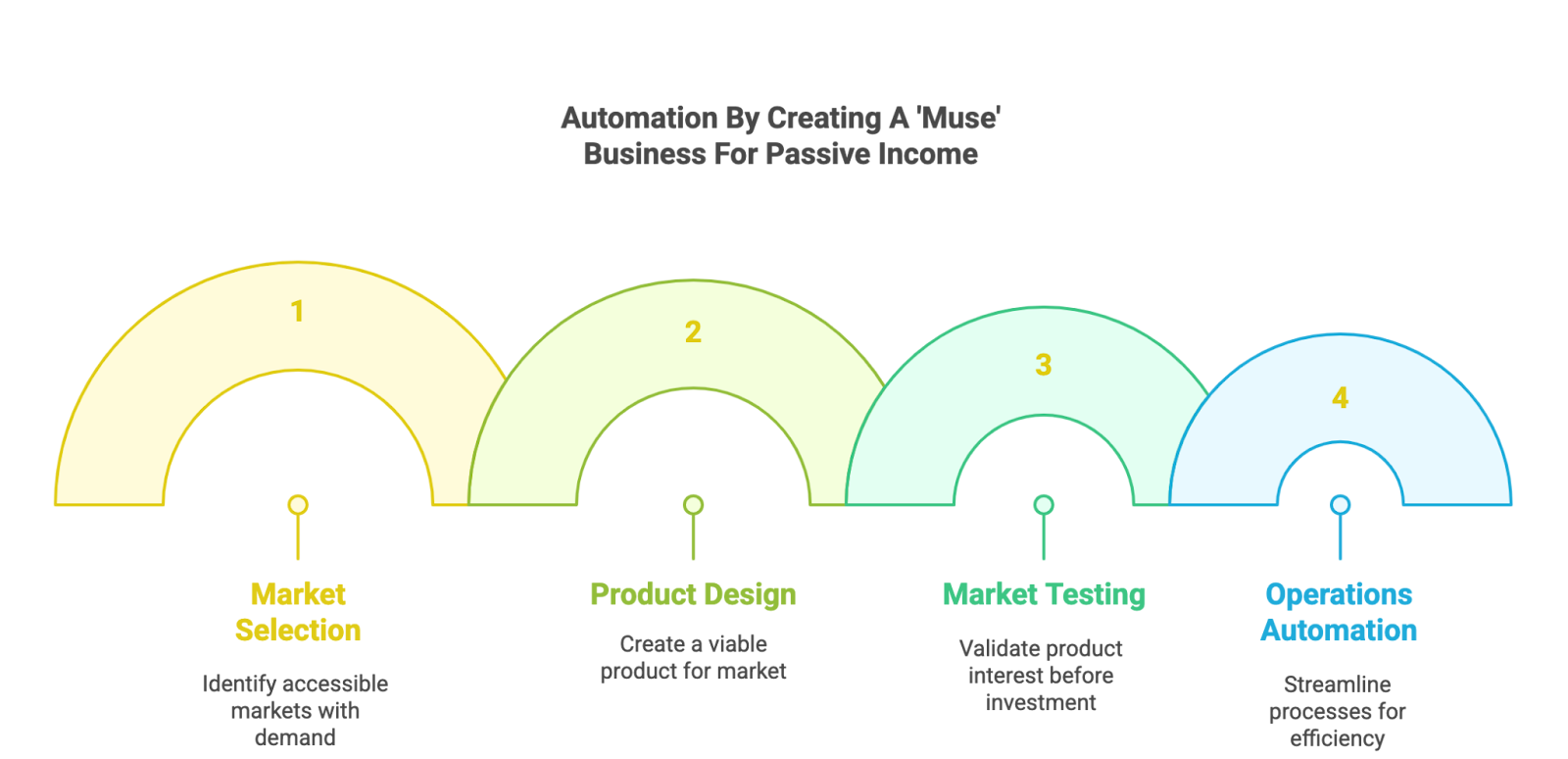
Here’s the truth: You can’t run a $60K monthly operation in 4 hours weekly from day one. But with ruthless systems and AI leverage, you can within 6-12 months.
The Time Allocation Blueprint
Client Delivery: 2 hours weekly
Batch all client work into one 2-hour block. With AI automation handling execution, you’re reviewing outputs, adding strategic insights, and approving delivery.
This requires upfront investment—building Claude Projects for each client, creating prompt libraries, and establishing workflows. But once built, maintenance is minimal.
Client Communication: 1 hour weekly
Schedule all client check-ins on the same day. With strong delivery and proactive reporting, most clients need only 15-20 minutes monthly. Four clients back-to-back = 1 hour.
For the other six clients, async communication via Loom videos works perfectly. Record weekly updates in 5 minutes each.
Business Development: 1 hour weekly
Publish one authority content piece (30 minutes—remember, you’re documenting what you know, not researching).
Partnership outreach or past client touchpoints (30 minutes).
The Systems That Make This Possible
Standard Operating Procedures in Claude
Every repeatable process lives in a Claude Project as a documented SOP. When executing, you’re following your own playbook, not reinventing delivery each time.
Templatized Everything
Client onboarding, reporting, communication—all follow templates refined over months. This eliminates decision fatigue and ensures consistency.
Strategic Client Selection
You can’t work 4 hours weekly with high-maintenance clients. The solo operator filters for:
– Businesses with existing traction (not startups needing hand-holding)
– Decision-makers who trust expertise (not micromanagers)
– Industries you deeply understand (reducing learning curves)
Saying no to bad-fit clients is how you protect the 4-hour workweek.
The Reality Check
Some weeks require more than 4 hours. Client emergencies happen. New client onboarding takes extra time initially. But the 4-hour average is achievable once systems mature.
The key mindset shift: You’re not selling hours. You’re selling outcomes backed by 12 years of experience and AI-powered efficiency. Clients pay for results and strategic guidance, not time tracking.
The Path Forward
Building a $60K monthly solo AI marketing agency isn’t about working less from day one—it’s about working smarter toward a sustainable model.
The experienced marketer advantage is you already have the strategic knowledge AI needs to be effective. You’re not learning marketing while learning AI. You’re augmenting expertise you’ve spent over a decade building.
Start by automating one service line completely. Master the AI tools for either SEO or paid ads before expanding. Build your content authority positioning while refining delivery systems.
Within 6 months, a 10-client roster generating $40K-$50K monthly is realistic. Within 12 months, optimized systems bring that to $60K+ while dropping your working hours below 20 weekly.
The future of marketing agencies isn’t about team size. It’s about leveraging AI to deliver exceptional results efficiently, allowing experienced marketers to finally build businesses that serve their lives instead of consuming them.
The technology exists. The demand exists. The only question is whether you’ll restructure your approach to capture both.
Frequently Asked Questions
Q: Can AI really deliver marketing results comparable to human experts?
A: AI alone cannot replace human expertise, but when used by experienced marketers as an execution layer, it dramatically improves efficiency without sacrificing quality. The key is feeding AI your proprietary knowledge, strategic insights, and industry expertise through tools like Claude Projects. AI handles research, first drafts, and data analysis while you provide strategic direction and quality control. This combination delivers expert-level results in a fraction of the time.
Q: How long does it take to build the automation systems for client delivery?
A: Expect 2-3 months to build robust automation systems for your first service offering (SEO or paid ads). This includes creating Claude Projects with client context, developing prompt libraries, establishing workflows, and refining outputs. The initial time investment is significant—potentially 20-30 hours—but pays dividends immediately. Each subsequent client added to your system requires only 2-3 hours of setup rather than building from scratch.
Q: What’s the realistic timeline to reach $60K monthly revenue as a solo operator?
A: For experienced marketers with existing industry connections, reaching $40K-$50K monthly within 6 months is realistic. Scaling to $60K+ typically takes 9-12 months as you optimize systems, refine client selection, and establish authority positioning. The path isn’t linear—early months focus on building automation infrastructure while maintaining existing clients, then growth accelerates as systems mature. Starting from zero in marketing would take considerably longer since you need both expertise and systems.
Q: How do you maintain quality control when AI is handling most execution?
A: Quality control happens through strategic review checkpoints rather than hands-on execution. For SEO content, review AI outputs for accuracy, add client-specific examples, and run originality checks before publishing. For paid ads, review AI recommendations against your strategic knowledge before implementing. The time savings from AI execution allow you to focus energy on strategic quality checks rather than manual creation. Most solo operators spend 20-30 minutes per deliverable on quality control—enough to ensure excellence without recreating everything manually.
Q: Is cold outreach really unnecessary, or do you still need some outbound?
A: Cold outreach is genuinely unnecessary when positioning as a premium, specialized expert. The three-channel approach (content authority, strategic partnerships, past client reactivation) generates 8-10 qualified leads monthly, requiring only 1-2 new clients monthly to maintain a full roster. This works specifically because you’re limiting client capacity to 10-12 companies, not trying to scale to 50+ clients. The boutique positioning makes inbound and referral strategies effective where they’d be insufficient for volume-based agencies.