How Google Integrates AI Into Advertising Platforms: A Behind-the-Scenes Look
Inside Google’s headquarters: how AI actually powers modern advertising—and it’s far more sophisticated than most marketers realize.
If you’re running Google Ads campaigns, you’re already using artificial intelligence whether you know it or not. But understanding exactly how Google’s AI infrastructure works can mean the difference between average performance and exceptional results. The search giant has quietly transformed its advertising platforms into AI-powered machines that make billions of micro-decisions every day, fundamentally changing how digital marketing works.
Understanding Google’s AI Advertising Infrastructure
Before diving into specific capabilities, it’s essential to understand what’s happening behind the login screen. Google’s advertising AI isn’t a single system—it’s a complex ecosystem of machine learning models, neural networks, and algorithmic processes working in concert.
At the core sits Google’s proprietary machine learning infrastructure, which processes trillions of signals across billions of searches, websites, and user interactions daily. This infrastructure feeds into specific advertising products, each with its own AI-powered capabilities designed to solve distinct marketing challenges.
Act 1: AI-Driven Targeting and Audience Segmentation
How Google’s AI Identifies Your Ideal Customers
The first major transformation AI brings to Google Ads is in targeting precision. Traditional advertising required marketers to manually select keywords, demographics, and interests. Google’s AI now analyzes hundreds of signals simultaneously to identify who’s most likely to convert.
Google’s Smart Bidding uses machine learning to evaluate user intent in real-time. When someone conducts a search, the system instantly analyzes:
– Search context and query language: Not just the words, but the semantic meaning and implied intent
– Device and location signals: Understanding how these factors correlate with conversion likelihood
– Time and day patterns: Learning when specific user segments are most likely to take action
– Browser and historical behavior: Analyzing past interactions across Google’s ecosystem
– Competitive landscape: Assessing auction dynamics and advertiser competition
This happens in the milliseconds between a user hitting “search” and ads appearing on screen.
Audience Segmentation Beyond Demographics
Google’s AI has moved far beyond basic demographic targeting. The system now creates dynamic audience segments based on behavioral patterns and predicted intent.
Similar Audiences and Customer Match leverage machine learning to find patterns among your existing customers, then identify new prospects who share those characteristics. The AI doesn’t just look at surface-level similarities—it identifies subtle behavioral patterns that indicate purchase propensity.
In-Market Audiences use AI to detect users actively researching products or services. Google’s algorithms analyze browsing patterns, search behavior, and content engagement to determine when someone has moved from casual browsing to active consideration. This isn’t based on a single signal, but rather a complex scoring system that weighs dozens of factors.
Affinity Audiences go deeper, using machine learning to understand long-term interests and habits. The AI builds comprehensive user profiles based on sustained behavior across Google properties, creating segments that reflect genuine interests rather than momentary curiosity.
Dynamic Search Ads and Responsive Creativity
Perhaps most impressively, Google’s AI now generates ad content dynamically. Dynamic Search Ads analyze your website content and automatically create relevant ad headlines and landing page pairings based on user searches.
Responsive Search Ads take this further. Marketers provide multiple headlines and descriptions, and Google’s AI tests different combinations in real-time, learning which variations perform best for different queries and audiences. The system doesn’t just A/B test—it conducts multivariate testing across millions of impressions, optimizing at a scale impossible for human marketers.
Act 2: Machine Learning Optimization of Bidding and Placement
The Evolution of Automated Bidding
Bidding strategy is where Google’s AI delivers its most measurable impact. Manual bidding—where marketers set maximum cost-per-click—has largely been superseded by automated strategies powered by machine learning.
Target CPA (Cost Per Acquisition) bidding uses historical campaign data to predict which clicks are most likely to convert, then automatically adjusts bids to maintain your target cost per conversion. The AI considers:
– Time of day and day of week patterns
– Device performance differences
– Geographic conversion rates
– Audience segment behavior
– Seasonal trends and emerging patterns
What makes this powerful is the system’s ability to identify non-obvious patterns. The AI might discover that mobile searches from specific locations during evening hours convert at higher rates, automatically increasing bids for that precise combination of signals.
Target ROAS (Return on Ad Spend) takes this further for e-commerce advertisers. The system optimizes not just for conversions, but for conversion value, learning to bid more aggressively on searches likely to result in high-value purchases.
Maximize Conversions bidding gives the AI full control to spend your budget in whatever way generates the most conversions. This strategy uses predictive modeling to forecast conversion probability for each auction, allocating budget to opportunities with the highest expected return.
Placement Optimization Across Networks
Google’s AI doesn’t just optimize individual keyword bids—it determines the optimal placement for your ads across Search, Display, YouTube, and partner networks.
The Display Network uses computer vision and natural language processing to understand webpage content, placing your ads on pages contextually relevant to your offer. The AI analyzes images, text, and even video content to determine topical relevance and brand safety.
YouTube advertising leverages Google’s video intelligence AI to understand video content beyond simple tags. The system analyzes visual elements, audio, and context to place your ads alongside relevant content and identify audiences most likely to engage.
Performance Max campaigns represent Google’s most advanced AI integration, allowing machine learning to automatically optimize across all Google properties simultaneously. You provide creative assets and conversion goals; the AI determines where, when, and how to display your ads for maximum performance.
Attribution and Multi-Touch Analysis
Google’s AI revolutionizes how marketers understand the customer journey. Data-driven attribution uses machine learning to analyze conversion paths, assigning credit to each touchpoint based on its actual contribution to conversions.
This moves beyond simple last-click attribution, recognizing that conversions typically involve multiple interactions across different channels and devices. The AI identifies patterns in successful conversion paths, helping marketers understand which combinations of touchpoints drive results.
Act 3: Future Implications for Digital Advertising Strategy
The Shift from Tactics to Strategy
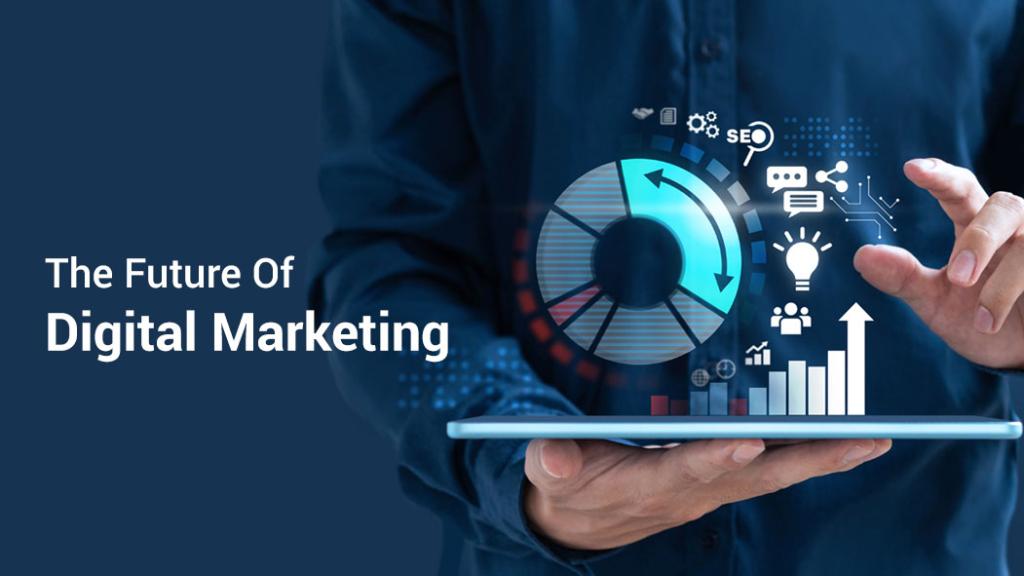
As AI handles more tactical execution, the role of digital marketers is fundamentally changing. The future isn’t about manual bid adjustments or keyword research—it’s about strategic direction and creative differentiation.
Strategic implications include:
1. Quality input becomes paramount: AI systems are only as good as the data they’re trained on. Marketers must focus on providing high-quality conversion tracking, comprehensive customer data, and diverse creative assets.
2. Creative differentiation matters more: When everyone has access to the same AI optimization, creative excellence becomes the primary competitive advantage. Your message, offer, and brand positioning matter more than technical tactics.
3. First-party data is critical: As privacy regulations limit third-party tracking, Google’s AI increasingly relies on first-party data. Marketers who build robust customer data platforms will see superior AI performance.
4. Testing and learning accelerates: AI enables rapid experimentation at scale. Future marketing success depends on embracing a test-and-learn culture, constantly feeding new hypotheses into AI systems.
Privacy-First AI Advertising
Google is rebuilding its advertising AI for a post-cookie world. The Privacy Sandbox initiative aims to maintain effective targeting while protecting user privacy.
Federated Learning of Cohorts (FLoC)* and its successor *Topics API use on-device AI to segment users into interest groups without tracking individual behavior. Advertisers target cohorts rather than individuals, with AI optimizing within privacy-preserving constraints.
This shift requires marketers to think differently about targeting. Success will come from broader strategic positioning rather than micro-targeting individual users.
Generative AI and Advertising Content
Google is integrating generative AI into advertising platforms, enabling automated creation of ad copy, images, and even video content. Early implementations suggest AI will soon generate entire campaign variations based on strategic parameters provided by marketers.
This doesn’t replace human creativity—it amplifies it. Marketers provide strategic direction and brand guidelines; AI generates countless variations optimized for different audiences and contexts.
Predictive Analytics and Forecasting
Future Google Ads AI will move from reactive optimization to predictive strategy. Machine learning models are increasingly capable of forecasting market trends, competitive dynamics, and seasonal patterns before they fully emerge.
Imagine campaign planning tools that predict demand shifts weeks in advance, automatically adjusting budget allocation and creative messaging to capitalize on emerging opportunities. This level of strategic AI assistance is closer than most marketers realize.
The Human-AI Partnership
The future of Google Ads isn’t full automation—it’s intelligent collaboration between human creativity and machine precision. Successful marketers will:
– Set strategic direction: Define target audiences, positioning, and business objectives
– Provide creative excellence: Develop compelling messages and innovative offers AI can’t generate
– Interpret AI insights: Translate machine learning outputs into actionable business strategy
– Maintain ethical oversight: Ensure AI systems operate within brand values and regulatory requirements
Practical Implications for Your Google Ads Strategy
Preparing for an AI-First Advertising World
To maximize the benefits of Google’s AI integration:
Invest in conversion tracking excellence: AI optimization depends on clear, accurate conversion signals. Implement comprehensive tracking across all customer touchpoints.
Embrace automated bidding strategies: Manual bidding increasingly underperforms machine learning. Transition to Smart Bidding strategies aligned with your business goals.
Feed the algorithm diverse creative: Provide multiple headlines, descriptions, images, and videos. Give the AI options to test and optimize.
Build audience data assets: Implement Customer Match, collect first-party data, and create detailed audience segments the AI can leverage.
Think in campaigns, not keywords: Focus on strategic campaign objectives rather than individual keyword performance. Let AI handle tactical optimizations.
Allow sufficient learning time: Machine learning models need data to optimize. Give new campaigns adequate time and budget to learn before making judgments.
The Bottom Line
Google’s AI integration represents the most significant shift in digital advertising since the introduction of search ads themselves. The platforms you’re using today bear little resemblance to those from just five years ago—and they’ll be radically different five years from now.
Success in this new landscape requires understanding not just what AI does, but how to work alongside it effectively. The marketers who thrive will be those who embrace AI as a strategic partner, focusing their energy on the uniquely human elements of marketing—creative thinking, strategic positioning, and deep customer understanding—while leveraging machine learning for precision execution at scale.
The future of Google Ads is already here. The question isn’t whether to adopt AI-powered advertising strategies, but how quickly you can adapt your approach to maximize their potential.
Frequently Asked Questions
Q: How does Google’s AI actually improve ad performance compared to manual optimization?
A: Google’s AI processes hundreds of signals simultaneously in real-time—including device type, location, time of day, search intent, browsing history, and competitive dynamics—to optimize bids and placements at a scale impossible for human marketers. Studies show Smart Bidding typically delivers 10-20% better conversion rates while maintaining or reducing costs, because the AI identifies non-obvious patterns in conversion data that manual optimization misses.
Q: Should I still use manual bidding or switch completely to automated strategies?
A: For most advertisers, automated bidding strategies like Target CPA or Target ROAS significantly outperform manual bidding because Google’s machine learning analyzes billions more data points than any human could process. Manual bidding only makes sense in very specific scenarios: brand campaigns with extremely high conversion rates, campaigns with insufficient conversion data (less than 30 conversions per month), or situations requiring strict bid caps. Otherwise, automated strategies consistently deliver better results.
Q: How much conversion data does Google’s AI need to work effectively?
A: Google recommends at least 30 conversions in the past 30 days for Smart Bidding strategies to work effectively, though the system can function with less data. Performance Max and Target ROAS strategies work best with 50+ monthly conversions. Below these thresholds, the machine learning models lack sufficient data to identify meaningful patterns, and you may see volatile performance as the AI attempts to learn from limited signals.
Q: What happens to Google Ads AI with increased privacy regulations and cookie deprecation?
A: Google is rebuilding its advertising AI using privacy-preserving technologies like the Topics API and on-device machine learning. Instead of tracking individual users, the AI will segment people into interest cohorts based on browsing patterns, then optimize within those groups. This means targeting becomes broader and more strategic rather than hyper-specific. First-party data from your own customer relationships becomes increasingly valuable, as it can be used (with proper consent) to train AI models without relying on third-party cookies.
Q: How can I tell if Google’s AI is actually working for my campaigns?
A: Monitor your optimization score in Google Ads (aim for 80%+), which indicates how well you’re leveraging available AI features. Compare performance periods before and after implementing Smart Bidding or automated strategies, focusing on cost per conversion and conversion rate rather than just click costs. Check the ‘Insights’ section for AI-generated recommendations. Most importantly, ensure conversion tracking is accurate—if the AI is optimizing toward poor conversion data, it will deliver poor results regardless of how sophisticated the algorithms are.