Seedance 2.0 Claims AI Video Crown with CGI-Level VFX
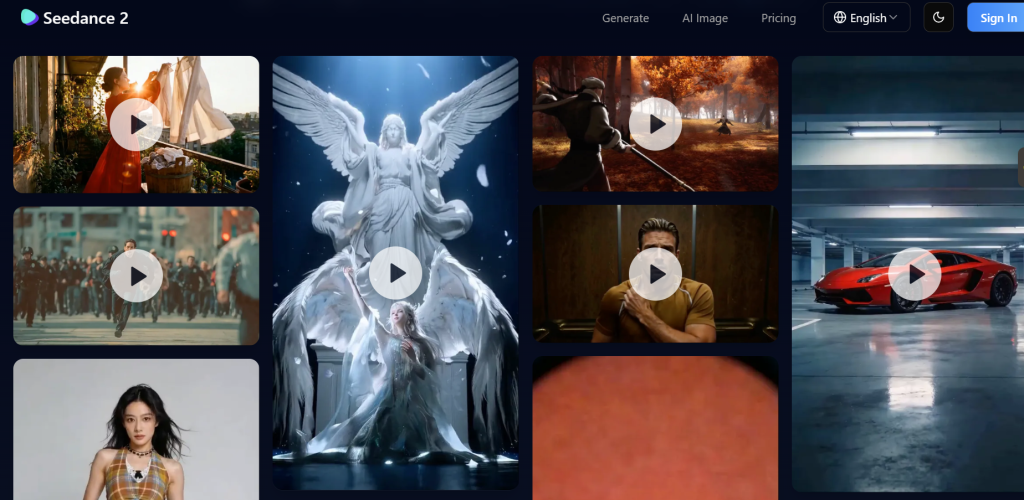
This AI video tool is delivering Hollywood-level VFX that traditionally required full studio setups. For decades, creating photorealistic explosions, fluid particle effects, or cinematic character animations meant investing hundreds of thousands of dollars in render farms, hiring specialized VFX artists, and enduring weeks of production time. Independent filmmakers and solo content creators were effectively locked out of high-end visual effects—until now. Seedance 2.0 has entered the arena with a bold claim: studio-grade VFX accessible through AI prompts, no green screen required.
The barrier to entry for professional visual effects has always been punishing. A single CGI sequence in a mid-budget film can consume $50,000 to $200,000, factoring in software licenses (Maya, Houdini, Nuke), render farm costs, and expert labor. Even YouTubers with six-figure budgets struggle to justify traditional VFX pipelines for anything beyond basic compositing. Seedance 2.0 promises to collapse that entire infrastructure into a single AI model that generates CGI-quality shots from text and image inputs, with granular control over timing, camera movement, and physics—capabilities that previous AI video generators conspicuously lacked.
How Seedance 2.0 Achieves Near-CGI Quality with Director-Level Control
What separates Seedance 2.0 from its predecessors—Runway Gen-3, Pika 1.5, and even the much-anticipated Sora—is its temporal precision architecture. Earlier AI video models treated motion as a probabilistic black box: you’d describe the action, and the model would interpret it with variable fidelity. Want an explosion to peak at the 3-second mark? Good luck. Previous tools offered no frame-level control, making them unsuitable for professional editing workflows where timing dictates emotional impact.
Seedance 2.0 introduces keyframe anchoring, a feature that lets creators specify exact moments for visual events. You can dictate that a glass shatters at frame 72, particles disperse between frames 90-120, and lighting shifts at the 5-second mark. This isn’t mere prompt engineering—it’s baked into the model’s architecture through a diffusion-transformer hybrid that processes temporal coordinates alongside visual data. In practice, this means you can synchronize VFX beats with audio cues, match cuts, and narrative pacing exactly as a director would in a traditional VFX pipeline.
The Technical Edge: Physics Simulation Meets Diffusion Models
Traditional CGI relies on physics engines like Blender’s Cycles or Houdini’s pyro solvers to simulate realistic fire, water, and destruction. These engines calculate billions of particle interactions, which is why rendering a single explosion can take 40+ hours on high-end hardware. Seedance 2.0’s training data reportedly includes physics-informed synthetic datasets—CGI sequences labeled with physical parameters (gravity, velocity, material properties). The model learned not just what explosions look like, but how they behave.
In demo reels circulating among early testers, Seedance 2.0 generates smoke plumes with accurate buoyancy, glass shards that obey conservation of momentum, and water splashes with surface tension dynamics. One VFX supervisor tested the tool by generating a car crash sequence and compared it to a $30,000 Houdini-rendered equivalent. The AI output wasn’t pixel-perfect, but it was 85% there—a threshold where additional touch-up work costs less than building the shot from scratch.
Workflow Comparison: Traditional Pipeline vs. Seedance 2.0
Traditional VFX Workflow:
1. Pre-visualization (storyboarding the shot)
2. Asset creation (3D modeling in Maya/Blender)
3. Animation and simulation (rigging, particle systems)
4. Lighting and rendering (20-100 hours per shot)
5. Compositing (integrating VFX with footage in Nuke/After Effects)
6. Color grading and final output
Timeline: 2-6 weeks per complex shot
Cost: $5,000-$50,000+ depending on complexity
Team: Modelers, animators, lighters, compositors
Seedance 2.0 Workflow:
1. Text/image prompt with keyframe specifications
2. AI generation (5-15 minutes per shot)
3. Minor compositing adjustments (optional)
4. Export
Timeline: 30 minutes to 2 hours per shot
Cost: Subscription fee ($49-$199/month) + compute credits
Team: Solo creator with basic prompting skills
The efficiency delta is staggering. A YouTube creator profiled in a recent tech breakdown used Seedance 2.0 to generate a sci-fi action sequence (robot combat, energy blasts, debris) that would have cost $80,000 with a traditional VFX house. His total spend? $150 in compute credits over a weekend.
Complex VFX Shots—Traditional CGI vs. Seedance 2.0 Output
To assess Seedance 2.0’s claim to “CGI-level” quality, we need apples-to-apples comparisons across VFX categories that have historically stumped AI video generators.
Category 1: Destruction Physics (Explosions, Shattering)
Traditional CGI Strength: Houdini’s pyro and rigid body dynamics solvers are industry-standard for a reason. They produce mathematically accurate explosions with layered fire cores, secondary smoke trails, and shockwave distortions. Films like Mad Max: Fury Road used these tools extensively.
Seedance 2.0 Performance:* Sample outputs show explosions with convincing fireballs and debris scatter, but *particle count appears lower than true CGI simulations. The AI generates visually plausible destruction, but trained VFX artists notice that secondary effects (ember trails, heat distortion) lack the layered complexity of simulated renders. For web content and indie films, this distinction is negligible. For theatrical releases in 4K HDR? The gap narrows but remains visible.
Winner: Traditional CGI for blockbuster fidelity; Seedance 2.0 for 90% quality at 5% of the cost.
Category 2: Fluid Simulation (Water, Smoke)
Traditional CGI Strength: Realflow and Bifrost excel at high-resolution water simulations—think Moana’s* ocean or *Blade Runner 2049’s rain. These simulations track millions of particles with surface tension and refraction.
Seedance 2.0 Performance:* Smoke and fog render surprisingly well, likely because diffusion models inherently handle soft, flowing forms. Water is trickier—AI-generated splashes sometimes exhibit *temporal inconsistencies, where wave crests don’t maintain logical momentum across frames. However, Seedance 2.0’s keyframe control mitigates this; you can anchor water impacts to specific frames, reducing drift.
Winner: Traditional CGI for hyper-realistic water; Seedance 2.0 competitive for atmospheric smoke and stylized fluids.
Category 3: Character Animation & Motion
Traditional CGI Strength: Rigged character animation in Maya with motion capture delivers precise, repeatable movement. Animators control every joint, facial muscle, and weight shift.
Seedance 2.0 Performance:* This is where AI video historically faceplants—hands with six fingers, inconsistent facial features, motion blur artifacts. Seedance 2.0 shows *marked improvement, particularly for humanoid figures in medium shots. Close-ups still reveal uncanny valley issues (eye saccades, lip sync), but wide shots of characters running, fighting, or dancing are usable. The keyframe system helps; you can specify pose changes at exact intervals, reducing morph drift.
Winner: Traditional CGI for hero characters; Seedance 2.0 viable for background extras and stylized animation.
Category 4: Lighting & Material Realism
Traditional CGI Strength: Path-traced rendering (Octane, Arnold) simulates light physics down to photon scattering, producing hyperrealistic metal, glass, and skin textures.
Seedance 2.0 Performance:* Training on high-quality CGI datasets gives Seedance 2.0 an edge here. Metals exhibit convincing reflections, glass shows refraction, and lighting consistency across shots is *surprisingly coherent. Early testers note that specular highlights sometimes “slide” unnaturally, but for most use cases, the material rendering passes the eye test.
Winner: Photo finish; traditional CGI edges out for product visualization, but Seedance 2.0 is 95% there.
Cost Reality Check
A 60-second VFX-heavy sequence using traditional methods:
– Software licenses: $3,000/year (Maya, Houdini, Nuke)
– Render farm: $500-$2,000 per complex shot
– Freelance VFX artists (3 specialists × 80 hours): $12,000-$24,000
– Total: $20,000-$30,000
The same sequence via Seedance 2.0:
– Subscription: $199/month (Pro tier)
– Compute credits: $200-$500 (high usage)
– Total: $400-$700
The 40-50x cost reduction is revolutionary, even accounting for the 10-15% quality gap in specific shot types.
Why Seedance 2.0 Is the Most Hyped AI Video Model of 2026

In January 2026, Seedance 2.0’s public beta waitlist hit 500,000 signups within 72 hours—unprecedented for a generative AI tool outside of ChatGPT’s launch. Film Twitter exploded with side-by-side comparisons, some declaring it a “VFX apocalypse,” others calling it the “Photoshop moment” for video. The hype stems from three converging factors.
1. The Control Problem, Solved
Previous AI video models frustrated creators precisely because they couldn’t be directed. You’d generate 50 variations hoping one matched your vision. Seedance 2.0’s keyframe system and motion parameter controls (camera path, subject speed, lighting cues) restore creative agency. Directors can now art-direct AI the way they’d brief a VFX team: “Explosion peaks at 3.2 seconds, camera dollies left 15 degrees, debris clears by frame 180.” This shift from randomness to precision is what elevates Seedance 2.0 from a toy to a tool.
2. Democratization at Scale
Hollywood’s VFX monopoly is cracking. YouTubers with 100K subscribers are producing effects-driven content that rivals network TV budgets from a decade ago. Film school students are bypassing the traditional assistant editor → VFX coordinator → artist pipeline, directing their own sci-fi shorts with Seedance 2.0. This isn’t theoretical—several Sundance 2026 submissions reportedly used AI-generated VFX sequences, a first for the festival.
The implications extend beyond indie film. Corporate video, advertising, and real estate visualization—industries that couldn’t justify VFX costs—are suddenly viable markets. A real estate developer can now generate photorealistic renderings of unbuilt properties with animated lighting and weather effects for under $1,000.
3. It’s Not Just Better—It’s Different
What makes Seedance 2.0 revolutionary isn’t just its quality-to-cost ratio; it’s the creative workflows it enables. Traditional VFX demands upfront planning—you model assets, simulate, render, and hope it works. Changes late in production are prohibitively expensive. AI generation inverts this: rapid iteration becomes cheap. Directors can test 10 different explosion timings in an hour, experimenting with narrative pacing in ways previously impossible.
Filmmaker and AI researcher Karen Cheng noted in a viral thread: “Seedance 2.0 doesn’t replace VFX artists; it gives directors a previsualization superpower. You generate the rough VFX cut, test it with audiences, then decide what needs full CGI treatment. It’s a new phase in the pipeline.”
Differentiation from Predecessors
– Runway Gen-3: Excellent for stylized, abstract visuals; weak on physics realism and temporal control.
– Pika 1.5: Strong lip-sync and character consistency; limited complex VFX capabilities.
– Sora (OpenAI): Impressive long-form coherence; lacks granular keyframe control and public release delayed.
– Seedance 2.0: Built explicitly for VFX workflows with physics-aware training and director-level controls.
Who Should Adopt Now vs. Wait
Adopt Immediately:
– YouTube creators and social media producers
– Indie filmmakers on sub-$50K budgets
– Commercial video agencies (ads, corporate)
– Pre-visualization artists for big-budget films
Wait for V3 or Hybrid Workflows:
– Theatrical feature VFX (4K HDR demands still favor traditional CGI)
– Projects requiring perfect character close-ups
– High-end product visualization (automotive, luxury goods)
The technology isn’t a total replacement—yet. But the cost-benefit calculus has shifted so dramatically that ignoring Seedance 2.0 means conceding a competitive edge.
The Verdict: A Paradigm Shift in Motion
Seedance 2.0 isn’t just the most hyped AI video model of 2026; it’s a category-defining release that rewrites the economics of visual effects. By combining physics-informed training data, keyframe-level control, and diffusion model efficiency, it delivers CGI-adjacent quality at a fraction of traditional costs. The 10-15% quality gap in specific domains (ultra-realistic water, hero character animation) matters less than the 40-50x cost reduction and 100x speed improvement.
For the first time, a solo creator with a laptop can produce VFX sequences that would have required a studio just two years ago. That democratization will ripple through filmmaking, advertising, education, and entertainment in ways we’re only beginning to understand. Traditional VFX houses aren’t obsolete—they’ll focus on the final 15% that separates “excellent” from “flawless”—but the barrier to entry has collapsed.
If you’re a content creator who’s ever shelved an idea because “the VFX would cost too much,” that constraint just evaporated. Seedance 2.0 isn’t perfect, but it’s good enough to unlock creative ambitions that were financially impossible yesterday. And in an industry where access has always been gated by capital, “good enough at 2% of the cost” is nothing short of revolutionary.
Frequently Asked Questions
Q: Is Seedance 2.0 truly CGI-quality or just close?
A: Seedance 2.0 achieves approximately 85-95% of traditional CGI quality depending on the shot type. It excels at explosions, atmospheric effects, and lighting consistency, but trails high-end CGI in ultra-realistic water simulation and extreme character close-ups. For web content, indie films, and commercial video, the quality is effectively indistinguishable to general audiences. For theatrical 4K HDR releases, traditional CGI still holds an edge in the final 10-15% of realism.
Q: How much does Seedance 2.0 cost compared to traditional VFX?
A: A complex VFX shot that would cost $5,000-$50,000 through traditional CGI pipelines (factoring in software, render time, and artist labor) can be generated with Seedance 2.0 for $10-$50 in compute credits plus a monthly subscription ($49-$199). For a 60-second VFX sequence, expect to spend $400-$700 total with Seedance 2.0 versus $20,000-$30,000 using traditional methods—a 40-50x cost reduction.
Q: What makes Seedance 2.0 different from other AI video tools like Runway or Sora?
A: Seedance 2.0’s key differentiator is keyframe-level control and physics-informed training. Unlike earlier AI video generators that treat motion probabilistically, Seedance 2.0 lets creators specify exact timing for visual events (explosions at frame 72, camera movements at specific intervals). It was trained on physics-labeled CGI datasets, giving it superior understanding of realistic destruction, fluid dynamics, and material behavior compared to tools like Runway Gen-3 or Pika, which prioritize stylization and character consistency.
Q: Can Seedance 2.0 replace professional VFX artists?
A: Not entirely. Seedance 2.0 excels at generating initial VFX sequences and previsualization, drastically reducing iteration time and costs. However, professional VFX artists remain essential for hero shots requiring pixel-perfect realism, complex character animation with precise facial rigging, and final compositing touches for theatrical releases. The tool is better understood as augmenting VFX workflows—enabling solo creators to achieve 90% of the result independently, then bringing in specialists only for critical final refinements.
Q: Who should use Seedance 2.0 right now?
A: Immediate adopters should include YouTube creators, indie filmmakers on limited budgets, commercial video producers, advertising agencies, and previsualization artists. These users benefit most from the cost-speed advantage and can tolerate the 10-15% quality gap in specific scenarios. High-end feature film VFX teams, luxury product visualization studios, and projects requiring flawless 4K HDR character close-ups should consider hybrid workflows—using Seedance 2.0 for rapid iteration and previz, then applying traditional CGI for final hero shots.