Zero Click Search: How to Adapt Your SEO Strategy

What happens when 50% of searches never result in a click to your site?
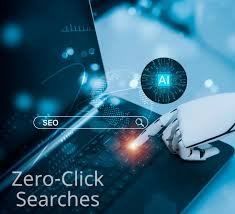
This isn’t a hypothetical nightmare—it’s the reality content creators and SEO professionals face today. As generative AI transforms search engines from directory services into answer engines, the fundamental exchange that powered the internet for decades is breaking down. Users ask questions and receive complete answers without ever leaving the search page. Your carefully crafted content fuels these responses, but your website remains invisible, your analytics flatline, and your conversion funnels run dry.
The zero-click search problem represents the most significant shift in digital visibility since Google’s algorithmic revolution. Understanding how to adapt isn’t optional—it’s existential.
Act 1: The Mechanics of the Zero-Click Reality
How Generative Engines Have Changed the Game
Traditional search engines operated on a simple principle: match queries with relevant pages, display links, collect clicks. Google’s business model depended on getting users to websites quickly, where they’d eventually return to search again. This created a symbiotic relationship—websites provided content, search engines provided traffic.
Generative AI engines like ChatGPT, Google’s AI Overviews, Bing’s Copilot, and Perplexity have fundamentally altered this exchange. These systems don’t just find information; they synthesize it. When someone asks “What are the best practices for email marketing in 2024?” the AI doesn’t display ten blue links—it generates a comprehensive answer by processing dozens of sources simultaneously, extracting relevant information, and presenting a coherent response.
The user gets their answer. The contributing websites get nothing.
The Data Behind the Crisis
Recent studies paint a stark picture. SparkToro’s analysis shows that Google zero-click searches—where users get their answer without clicking any result—accounted for approximately 58.5% of all searches in 2023. For mobile users, that number climbs even higher, approaching 65%.
Similcast research on AI-powered search platforms reveals even more dramatic patterns. Users of ChatGPT, Claude, and similar tools rarely ask follow-up questions that lead to external links. The conversation stays within the AI interface, with the system drawing from its training data rather than live web scraping.
For content creators, this creates a devastating paradox: your content must exist and be high-quality enough to train these AI systems and appear in their knowledge base, but you receive no traffic, brand exposure, or conversion opportunity when that content is used.
Why Traditional SEO Metrics Are Breaking Down
Click-through rate (CTR), once a cornerstone metric, becomes meaningless when there are no clicks to track. Bounce rate loses relevance when users never arrive at your page. Even rankings become ambiguous—does being “ranked first” matter if the AI synthesizes your content with nine other sources into a single answer?
The traditional SEO playbook—keyword optimization, meta descriptions, title tags optimized for CTR—was built for a world where visibility meant clickability. In the zero-click era, visibility might mean your brand or expertise is mentioned in an AI-generated response, but the user never knows your website exists.
Act 2: Strategic Adaptation for the AI Search Era
Strategy 1: Build Entity Authority, Not Just Page Rankings
Generative AI systems don’t think in terms of web pages—they think in terms of entities and relationships. An entity might be a person, a company, a concept, or a product. AI models build knowledge graphs connecting these entities based on how frequently and authoritatively they appear together in training data.
Your adaptation strategy must shift from “ranking for keywords” to “being recognized as an authoritative entity.”
Actionable tactics:
– Establish a consistent brand presence across platforms with unified NAP (Name, Address, Phone) information
– Earn mentions in authoritative publications, not just backlinks
– Create content that definitively answers questions within your domain, using clear, declarative statements AI models can extract
– Develop topic clusters where you comprehensively cover a subject area, signaling depth of expertise
– Leverage structured data (Schema markup) to explicitly tell AI systems what entities you represent and how they relate to queries
Strategy 2: Optimize for Citation and Attribution
Since AI-generated answers often synthesize multiple sources, focus on being the source that gets cited. Some AI systems (like Perplexity and Bing Copilot) provide source attribution. Others (like ChatGPT) generally don’t, but may in future iterations as regulations evolve.
Actionable tactics:
– Create definitive, citable content: original research, data studies, expert analysis that AI cannot replicate by synthesis alone
– Use clear, quotable language that AI systems can extract and attribute
– Publish content in formats AI systems prioritize: well-structured articles with clear headings, bulleted lists, and summary sections
– Include author bios with credentials that establish expertise, helping AI systems assess source authority
– Develop unique methodologies, frameworks, or terminology that require attribution when used
Strategy 3: Create Ungeneratable Value
The most powerful adaptation is creating content and experiences AI cannot replicate or summarize effectively.
Actionable tactics:
– Interactive tools and calculators that require direct website engagement
– Gated premium content that provides depth beyond what a summary can capture
– Community features where users need to visit to participate in discussions
– Real-time information (live data, current inventory, personalized recommendations) that AI training data cannot provide
– Multimedia experiences—video demonstrations, interactive infographics—that don’t reduce to text summaries
– Personalized services that require user input and custom outputs
Strategy 4: Diversify Beyond Search-Dependent Traffic
Relying exclusively on search traffic was always risky; in the AI era, it’s potentially fatal.
Actionable tactics:
– Build direct relationships through email lists and newsletters
– Invest in social media presence where you control the audience relationship
– Develop strategic partnerships and collaboration networks
– Create memorable brand experiences that drive direct navigation traffic
– Explore emerging platforms and channels before they become AI-mediated
Strategy 5: Embrace AI as Distribution, Not Destruction
The most sophisticated response isn’t to fight AI search but to leverage it differently. Consider AI-generated answers as top-of-funnel awareness rather than conversion opportunities.
Actionable tactics:
– Track brand mention volume in AI responses as a new awareness metric
– Include strong branding in all content so that even synthesized answers build name recognition
– Create content specifically designed to answer common questions, positioning your brand as the expert even if users don’t click through immediately
– Develop a content strategy where some content is optimized for AI synthesis (awareness) while other content is ungeneratable (conversion)
– Monitor AI platforms directly to understand how your content appears in generated responses
Act 3: Why AI Citation Is the New Currency
The Paradigm Shift in Digital Visibility
For two decades, digital marketing operated on an attention economy where clicks were currency. Businesses paid for visibility through ads or earned it through SEO, but the fundamental transaction remained: get the user to click, bring them to your property, convert them.
The AI-mediated internet operates on a credibility economy. The new currency isn’t clicks—it’s citations, mentions, and authoritative recognition within AI-generated content.
This shift mirrors the evolution of traditional media. Academic researchers don’t measure success by how many people visit their office; they measure citation counts. Experts don’t optimize for website traffic; they optimize for being quoted in articles, invited to podcasts, and recognized in their field.
Digital content is moving toward this model. Your success metrics must evolve from “How many people visited our site?” to “How often are we recognized as authoritative sources in our domain?”
Why This Isn’t Temporary
Some optimists believe zero-click search is a passing phase—that regulations will force AI companies to drive more traffic to source websites, or that users will reject AI answers in favor of traditional searching.
This is wishful thinking. The user experience of getting immediate, synthesized answers is too compelling. Once people experience the convenience of asking a question and receiving a comprehensive answer without clicking through five websites, comparing information, and synthesizing it themselves, they don’t go back.
Regulations might require attribution and citation, but they won’t eliminate the zero-click experience. At best, content creators will receive recognition; at worst, they’ll continue to be invisible contributors to AI knowledge bases.
The Strategic Imperative
Businesses that cling to click-based metrics and optimization strategies will find themselves optimizing for a shrinking channel. Those that adapt to the citation economy—that focus on entity authority, ungeneratable value, and diversified audience relationships—will maintain relevance.
This doesn’t mean traditional SEO dies completely. Direct navigation searches (“Amazon login”), transactional queries (“buy iPhone 15 Pro”), and specialized information needs will continue driving clicks. But informational search—the queries that fuel content marketing and top-of-funnel awareness—is increasingly zero-click.
The Action Plan
If you’re a content creator or SEO professional adapting to this reality, your 90-day action plan should include:
1. Audit your current traffic sources. What percentage comes from organic search? How vulnerable are you to continued zero-click growth?
2. Establish baseline metrics for AI visibility. Start tracking mentions in AI-generated responses, even if manually at first.
3. Identify your entity positioning. What specific expertise or authority does your brand represent? How can you strengthen that positioning?
4. Create one piece of definitive, citable content per month. Original research, comprehensive guides, or unique frameworks that demand attribution.
5. Develop one ungeneratable asset per quarter. A tool, interactive experience, or real-time resource that requires direct engagement.
6. Build direct audience relationships. Set aggressive goals for email list growth, social following, or community membership.
7. Experiment with AI platforms. Test content distribution directly through AI interfaces where appropriate.
The zero-click search problem isn’t coming—it’s here. The question isn’t whether to adapt, but how quickly you can evolve your strategy before your traditional traffic sources evaporate completely.
Visibility in the AI era looks different than it did in the algorithm era. Success belongs to those who recognize that being cited, mentioned, and recognized as authoritative sources is the new winning condition—even when it doesn’t generate a single click.
Frequently Asked Questions
Q: What exactly is a zero-click search?
A: A zero-click search occurs when a user gets their answer directly on the search results page or within an AI interface without clicking through to any website. This happens through featured snippets, AI-generated summaries, knowledge panels, or direct answers provided by generative AI systems like ChatGPT or Google’s AI Overviews.
Q: How big is the zero-click search problem?
A: Recent data shows approximately 58.5% of Google searches result in zero clicks, with the percentage even higher on mobile devices (around 65%). As AI-powered search tools become more prevalent, this trend is accelerating, fundamentally changing how users interact with search engines.
Q: Does this mean traditional SEO is dead?
A: Traditional SEO isn’t dead, but it’s evolving. Transactional searches, branded searches, and direct navigation queries still generate clicks. However, informational searches—which drive much of content marketing—are increasingly zero-click. SEO professionals must expand their focus from click optimization to entity authority and AI visibility.
Q: How can I track if my content appears in AI-generated answers?
A: Currently, tracking AI visibility is challenging since most platforms don’t provide analytics like traditional search engines. Manual methods include regularly querying AI systems with relevant questions in your domain and documenting when your brand or content is cited. Some emerging tools are beginning to offer AI visibility tracking, though the space is still developing.
Q: What is ‘entity authority’ and why does it matter?
A: Entity authority refers to how AI systems recognize your brand, company, or expertise as a credible source for specific topics. Unlike traditional page rankings, entity authority is about being identified as a definitive source across multiple contexts. It matters because AI models prioritize recognized entities when generating answers, making entity-building crucial for AI-era visibility.
Q: Should I stop creating blog content if it won’t generate clicks?
A: No, but you should reframe its purpose. Blog content still builds entity authority, provides material for AI training data, and establishes expertise that can lead to citations. However, complement this with ungeneratable content (tools, interactive experiences, real-time data) and focus on building direct audience relationships rather than depending solely on search traffic.
Q: What types of content are ‘ungeneratable’ by AI?
A: Ungeneratable content includes interactive calculators and tools, personalized recommendations based on user input, real-time data and inventory, community discussions and forums, multimedia experiences that don’t reduce to text, and proprietary methodologies that require hands-on application. These experiences require users to visit your site directly.
Q: How should I measure content success in the zero-click era?
A: Shift from click-based metrics to authority and awareness metrics. Track brand mention frequency in AI responses, citation rates in generated content, entity recognition strength, direct traffic growth, email list and community growth, and engagement depth rather than just volume. Success means being recognized as an authoritative source, even without immediate clicks.