Is Seedance 2.0 Actually Threatening Hollywood Production?
We spent way too long testing if Seedance 2.0 can actually replace Hollywood-level production.
The question isn’t whether AI video generation tools are impressive—they obviously are. The real question keeping industry professionals up at night is whether tools like Seedance 2.0 represent an existential threat to traditional film production, or just another hyped technology that will find its niche without upending the entire ecosystem.
After weeks of rigorous testing, conversations with industry professionals, and careful analysis of where this technology actually stands, the answer is more nuanced than the breathless headlines suggest.
The Real-World Test: Where Seedance 2.0 Shines and Where It Stumbles
What Actually Works
Let’s start with what Seedance 2.0 genuinely does well, because dismissing it entirely would be foolish.
Concept Visualization: For directors and cinematographers trying to communicate a visual idea, Seedance 2.0 is remarkably effective. Instead of spending hours explaining a shot composition or lighting setup, you can generate a reference image in minutes. We tested this with a complex sci-fi scene involving atmospheric lighting through fog, and the tool produced usable reference material that would have taken a concept artist several hours to sketch.
Rapid Iteration for Pre-Visualization: Traditional pre-viz involves 3D modeling, rigging, and animation—time-consuming even with experienced artists. Seedance 2.0 can generate alternative shot compositions, camera angles, and scene variations in a fraction of the time. For indie filmmakers working on tight schedules, this is genuinely valuable.
Texture and Environment Generation: When we needed to create background plates or environmental textures, Seedance 2.0 performed admirably. Rocky landscapes, cloudy skies, abstract backgrounds—these elements came out with enough quality to potentially use in composite shots or as references for set design.
Motion Studies: For choreographing complex camera movements or understanding how certain actions might look on screen, the tool provides a decent starting point. We tested several dolly shots and crane movements, and while not perfect, they gave us useful information about spatial relationships.
Where It Falls Catastrophically Short
Now for the uncomfortable truths that AI evangelists tend to gloss over.
Consistency Is a Nightmare: Try to maintain character appearance across multiple shots, and you’ll quickly understand why Hollywood isn’t panicking yet. We attempted to create a simple three-shot sequence of the same character—close-up, medium shot, wide shot. The character’s facial features, hair color, and even clothing details changed between generations. For any narrative work requiring continuity, this is a dealbreaker.
Physics Don’t Exist Here: Ask Seedance 2.0 to show realistic water interaction, cloth movement, or anything involving actual physics, and you’ll get dreamlike approximations that might work for surreal art projects but fall apart under scrutiny. We tested a simple scene of someone walking through rain, and the water behaved like it existed in a different gravitational field.
The Uncanny Valley Is Real: Human faces and movements remain deeply problematic. Close-ups of faces consistently produced unsettling results—eyes that don’t quite track correctly, skin textures that feel simultaneously over-detailed and artificial, expressions that don’t match emotional context. This isn’t a minor issue; it’s fundamental to narrative filmmaking.
Complex Movements Break Everything: Action sequences, fight choreography, or even something as simple as a character picking up an object often resulted in morphing, impossible body positions, or movements that defy anatomy. We attempted to generate a simple scene of two people shaking hands, and the results were… let’s just say you wouldn’t want to show them to a paying audience.
No Directorial Control: Professional filmmaking requires precise control over every element in the frame. With Seedance 2.0, you’re essentially negotiating with an AI that may or may not understand your intent. You can’t tell an actor to adjust their performance slightly, can’t ask the DP to move the key light two feet left, can’t make the micro-adjustments that separate great cinematography from mediocre output.
What the Industry Is Actually Saying
Professional Filmmakers: Cautious Interest, Not Panic
Contrary to the narrative that AI is about to replace directors and cinematographers, most professional filmmakers we spoke with view tools like Seedance 2.0 as potentially useful additions to their toolkit—not replacements for their expertise.
A veteran cinematographer with credits on multiple studio features told us: “It’s like when digital cameras first arrived. Some people panicked, some embraced it, but ultimately it became another tool. I can see using this for quick mockups when location scouting, but suggesting it could replace actual production is absurd with current capabilities.”
Independent filmmakers are more optimistic, particularly those working with minimal budgets. The ability to visualize complex scenes before committing resources is genuinely valuable when you can’t afford to shoot coverage you might not use.
VFX Artists: Threat or Opportunity?
Visual effects artists occupy an interesting position in this conversation. Their work is arguably most vulnerable to AI automation, yet the responses we heard were surprisingly measured.
A senior compositor at a major VFX house explained: “People think VFX is just making pretty pictures, but it’s really problem-solving. How do you make this element integrate seamlessly? How do you match lighting that doesn’t exist? AI can generate images, but it can’t solve the complex technical and creative problems that come up on every shot.”
That said, there’s legitimate concern about junior positions. Much of the learning in VFX comes from doing grunt work—rotoscoping, paint cleanup, basic compositing. If AI tools can handle these tasks, where do new artists develop their skills?
YouTube Creators: Embracing the Tool
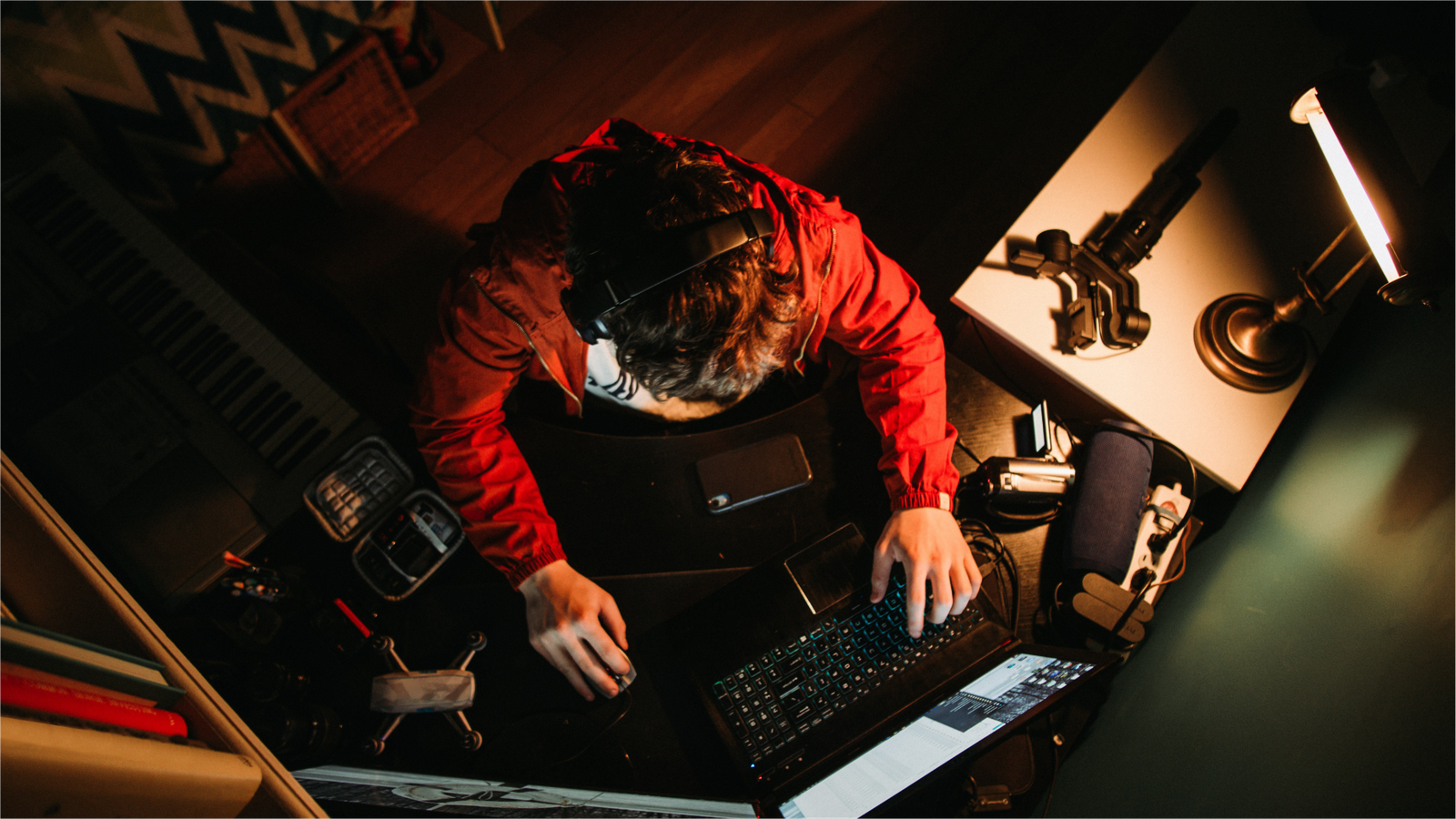
Content creators outside traditional Hollywood are enthusiastically adopting AI video tools, and this is where Seedance 2.0 might have the most immediate impact.
For YouTube channels that rely on visual storytelling but lack production budgets, AI-generated B-roll, backgrounds, and supplementary visuals are game-changers. We spoke with several creators who’ve integrated these tools into their workflow, using them to enhance videos that would otherwise be limited to talking head footage or stock imagery.
The quality bar for YouTube content is different from theatrical releases. Viewers are more forgiving of imperfections if the content is engaging. In this context, AI video generation is already proving valuable.
Studio Executives: Watching and Waiting
Conversations with studio executives reveal a wait-and-see approach. They’re aware of the technology, they’re running tests, but nobody’s restructuring production pipelines yet.
The calculation is simple: Can AI tools save money without sacrificing quality or creative control? Currently, the answer is “sometimes, for specific use cases.” That’s not nothing, but it’s not revolutionary either.
The Verdict: Threat, Opportunity, or Both?
Current Limitations Are Fundamental, Not Superficial
The problems with Seedance 2.0 aren’t minor bugs that will be fixed in the next update. Consistency, physics, human movement, and directorial control are foundational challenges in AI video generation. Progress is being made, but we’re talking about years of development, not months.
For narrative filmmaking—the core of Hollywood production—these tools simply cannot deliver production-ready footage yet. You can’t edit together a coherent scene, maintain continuity, or achieve the level of control that professional production demands.
New Opportunities in Pre-Production
Where Seedance 2.0 genuinely threatens existing workflows is in pre-production visualization. Storyboard artists and pre-viz studios should be paying attention, because AI tools are becoming genuinely competitive in this space.
The ability to rapidly iterate on visual concepts, explore different approaches, and communicate ideas visually will accelerate pre-production processes. This doesn’t eliminate the need for human expertise, but it changes the nature of that work.
The Independent Creator Advantage
For solo creators and small teams, AI video tools are already expanding creative possibilities. If you’re willing to work within the limitations, design projects that play to the tool’s strengths, and accept a different aesthetic than traditional production, you can create content that would have been impossible without significant budgets.
This is where disruption is happening now, not in Hollywood blockbusters. The democratization of visual storytelling tools has real implications for who gets to create and what kinds of stories get told.
Economic Implications: Gradual Shift, Not Sudden Collapse
Hollywood won’t collapse overnight, but economic pressures will drive adoption of AI tools wherever they prove cost-effective. Some junior positions may be eliminated or transformed. Some workflows will be streamlined. Some types of content will shift toward AI-generated elements.
This is evolution, not revolution. The film industry has absorbed countless technological changes—sound, color, digital cinematography, CGI—and remained fundamentally recognizable. AI video generation will follow a similar pattern.
Timeline: When Should Hollywood Actually Worry?
Based on current progress and fundamental technical challenges, here’s a realistic timeline:
– Next 1-2 years: AI tools become standard for pre-production visualization, concept development, and supplementary content. No significant impact on principal photography or primary VFX work.
– 3-5 years: Possible use in background elements, crowd replication, and specific VFX applications where consistency isn’t critical. Still not replacing principal photography for narrative work.
– 5-10 years: If fundamental consistency and control issues are solved, we might see AI-generated shots integrated into professional productions alongside traditional footage. This is speculative and depends on major technical breakthroughs.
– Beyond 10 years: Anyone predicting this far out is guessing.
The Bottom Line
Is Seedance 2.0 threatening Hollywood production? Not in the way the headlines suggest.
It’s not replacing cinematographers, directors, or actors. It’s not making traditional production obsolete. It’s not going to generate the next Marvel movie or prestige drama.
What it is doing is creating new possibilities for visualization, expanding tools available to creators with limited resources, and beginning a long, gradual process of integrating AI assistance into certain aspects of production workflow.
The threat narrative sells clicks and generates buzz, but the reality is more interesting: we’re witnessing the emergence of a new tool that will find its place in the ecosystem without destroying what came before. Just like digital cameras didn’t kill cinematography, just like CGI didn’t eliminate practical effects, AI video generation will become another option in the filmmaker’s toolkit.
The real question isn’t whether AI will replace Hollywood—it’s how creative professionals will adapt these tools to enhance their work while maintaining the artistic control and quality that audiences expect.
For now, traditional production methods remain superior for professional narrative work. But ignoring AI video generation entirely would be shortsighted. The technology is improving, use cases are emerging, and the next generation of filmmakers will grow up with these tools as native options.
Hollywood isn’t being threatened by Seedance 2.0. It’s being presented with another choice about how to tell stories visually. And if history is any guide, it will absorb what’s useful and continue evolving, just as it always has.
Frequently Asked Questions
Q: Can Seedance 2.0 actually create production-ready footage for films?
A: No, not currently. While Seedance 2.0 can generate impressive individual images and short clips, it lacks the consistency, physics accuracy, and directorial control needed for professional narrative filmmaking. It’s most useful for pre-visualization, concept development, and supplementary content rather than primary footage.
Q: How are professional filmmakers currently using AI video tools?
A: Professional filmmakers primarily use AI video tools for pre-production tasks like concept visualization, location scouting references, and rapid iteration on shot compositions. Some use them for background elements and texture generation, but rarely for primary footage that requires precise continuity and control.
Q: Will AI video generation tools eliminate jobs in the film industry?
A: Some junior positions in pre-visualization and concept art may be affected, but wholesale job elimination is unlikely in the near term. The technology currently lacks the capabilities to replace skilled professionals in cinematography, directing, editing, or most VFX work. The bigger impact will be workflow transformation rather than job elimination.
Q: What are the biggest limitations preventing AI video tools from replacing traditional production?
A: The main limitations are: inability to maintain character and scene consistency across shots, poor physics simulation, uncanny valley issues with human faces and movements, lack of precise directorial control, and inability to handle complex actions or interactions. These are fundamental technical challenges, not minor bugs.
Q: When might AI video generation become competitive with traditional Hollywood production?
A: For pre-production and visualization work, AI tools are already competitive. For actual production footage, realistic estimates suggest 3-5 years before seeing limited integration in specific use cases, and 5-10 years before potentially handling more significant production roles—assuming major technical breakthroughs in consistency and control. Full replacement of traditional production is not on the horizon.