Multi-Platform SEO: Winning Across AI Search Engines in 2026
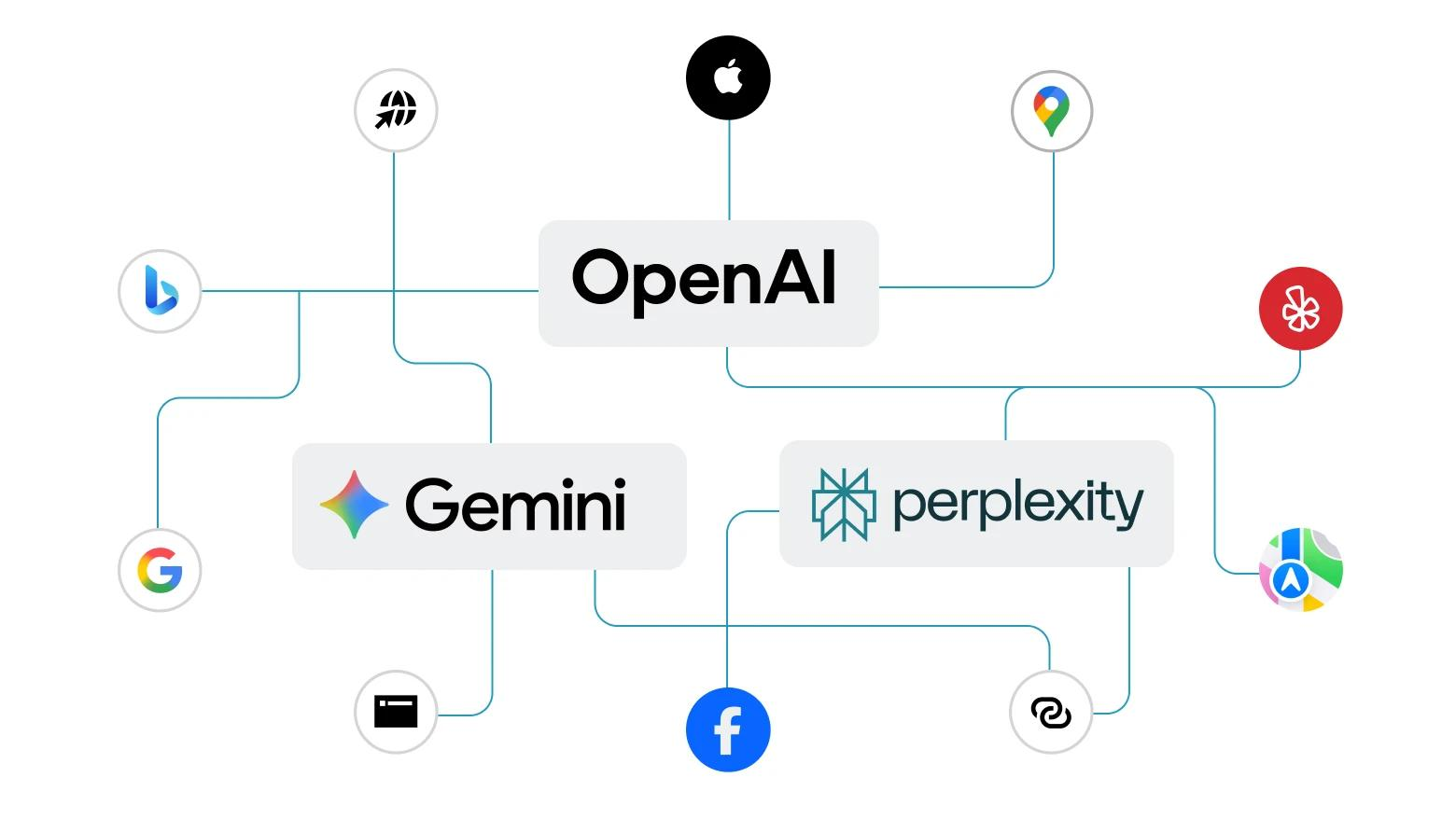
If you’re only optimizing for Google in 2026, you’re already losing market share to competitors who understand that search has fragmented across multiple platforms. The days when Google commanded 92% of search traffic are over. Today’s users search on ChatGPT for research, Perplexity for fact-checking, YouTube for how-to content, Reddit for authentic recommendations, and LinkedIn for B2B insights—often before they ever touch Google.
For growth marketers building SEO strategy from scratch, this reality isn’t a complication—it’s an opportunity. While legacy brands scramble to adapt decades-old Google-centric strategies, you can build a diversified search presence from day one that captures visibility wherever your audience looks for answers.
Act 1: The New Search Landscape Demands Multi-Platform Presence
The Fragmentation of Search Intent
Search behavior has evolved beyond the simple Google query. Your potential customers now follow distinct patterns:
Research phase: They ask ChatGPT or Perplexity complex questions like “What are the key differences between SEO platforms for B2B SaaS companies with limited content teams?” These AI engines provide synthesized answers drawn from multiple sources.
Validation phase: They append “reddit” to Google searches or go directly to Reddit to find unfiltered opinions from real users who’ve tried the solutions.
Visual learning phase: They search YouTube for “[product] tutorial” or “how to implement [strategy]” to see solutions in action.
Professional context phase: They search LinkedIn for thought leadership, case studies, and peer recommendations within their professional network.
Transactional phase: Only then do they return to traditional Google search with high-intent commercial queries.
If your content only exists in Google’s index, you’re invisible during the first four phases—the exact stages where trust builds and preferences form.
Why AI Search Changes Everything
ChatGPT, Perplexity, Claude, and Gemini don’t just reorganize existing search results. They fundamentally alter what content gets surfaced:
Citation over ranking: Traditional search ranks pages 1-10. AI search cites 3-8 sources in a synthesized answer. Being cited is binary—you’re either in or you’re out.
Authority over optimization: AI models preferentially cite recognized authorities, academic sources, and established publications. A perfectly optimized blog post from an unknown domain often loses to a less-optimized piece from a recognized industry leader.
Depth over keywords: AI search rewards comprehensive coverage of topics. A 3,000-word definitive guide outperforms ten 300-word keyword-targeted posts.
Freshness matters differently: AI models cite recent sources for time-sensitive topics but favor evergreen authoritative content for foundational questions.
For growth marketers starting fresh, this means your strategy must prioritize building genuine authority and comprehensive resources over traditional keyword manipulation tactics.
The Risk of Single-Platform Dependence
Google algorithm updates have historically wiped out businesses overnight. The 2023 Helpful Content Update destroyed traffic for thousands of sites. The 2024 AI Overviews rollout reduced clicks for informational queries by 18-25%.
Diversification isn’t just about reaching more users—it’s about risk management. When you build presence across Google, YouTube, Reddit, LinkedIn, ChatGPT, and Perplexity, no single algorithm change can eliminate your visibility.
Act 2: How AI Search Platforms Change Ranking Factors
The Citation Algorithm vs. The Ranking Algorithm
Traditional SEO optimizes for ranking algorithms that evaluate individual pages against 200+ factors. AI search uses citation algorithms that evaluate sources for trustworthiness and relevance to synthesize answers.
Key differences:
Traditional Google ranking factors:
– Keyword presence in title, headers, body
– Backlink quantity and quality
– Page speed and Core Web Vitals
– Mobile optimization
– User engagement signals
AI search citation factors:
– Domain authority and topical expertise
– Content comprehensiveness and accuracy
– Structured data and entity relationships
– Publication recency for time-sensitive queries
– Citation by other authoritative sources
– Clear, unambiguous information presentation
The overlap is significant but not complete. You can rank #1 on Google and never get cited by ChatGPT, or vice versa.
Understanding Entity-Based Search
AI search engines think in entities and relationships, not keywords. An entity is any distinct concept—a person, company, product, methodology, or idea.
When someone asks ChatGPT “What are the best project management tools for remote teams?”, the AI doesn’t search for pages containing those keywords. It queries its knowledge graph for entities categorized as “project management software” with attributes including “remote team features,” then cites sources that established those entity relationships.
Implications for content strategy:
1. Establish your brand as an entity: Ensure your company appears in Wikipedia, Crunchbase, industry directories, and receives mentions across authoritative sources.
2. Create entity-rich content: Write about specific products, methodologies, people, and companies with proper nouns and clear definitions.
3. Build entity relationships: Explicitly connect your product/service to relevant use cases, industries, and problems in your content.
4. Implement structured data: Use Schema.org markup to help AI systems understand entity relationships on your pages.
Conversational Query Patterns
AI search users ask complete questions in natural language rather than keyword phrases:
– Traditional: “best CRM software small business”
– AI search: “What CRM would you recommend for a 15-person sales team that needs to integrate with Gmail and track complex B2B sales cycles?”
Your content must answer these specific, nuanced questions comprehensively. Generic “10 Best CRM Tools” listicles won’t get cited when users ask detailed questions.
Content implications:
– Write FAQ sections addressing specific use cases
– Create comparison content that evaluates solutions across multiple dimensions
– Develop in-depth guides that answer follow-up questions within the same resource
– Use conversational headers that mirror how people actually ask questions
The Authority Accelerator Effect
AI models exhibit strong preference for established authorities, creating a rich-get-richer dynamic. A Harvard Business Review article gets cited over an identical analysis from an unknown blog.
For new growth marketers, this seems like an insurmountable barrier. However, authority building follows predictable patterns:
1. Demonstrate expertise: Publish original research, case studies, and data-driven insights.
2. Earn citations: Get mentioned and linked by existing authorities in your space.
3. Build author authority: Establish individual thought leaders, not just company brands.
4. Leverage platform authority: Publish on high-authority platforms (LinkedIn, Medium, industry publications) while building your own.
5. Create linkable assets: Develop resources others naturally cite—original data, comprehensive guides, free tools.
Act 3: Platform-Specific Optimization Tactics for Maximum AI Visibility
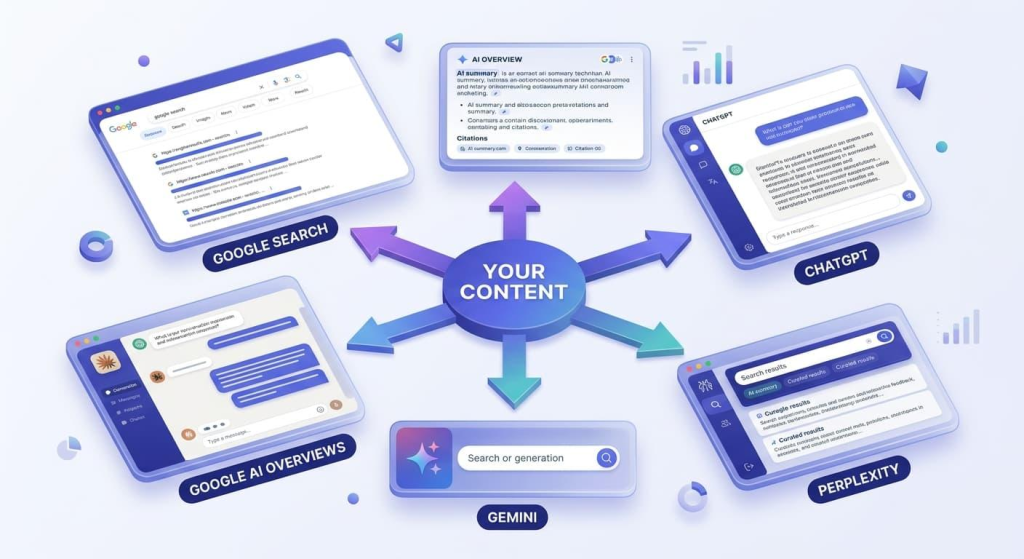
Google: The Foundation Still Matters
Google remains the largest search platform and feeds data to many AI systems. Your Google optimization creates the foundation for multi-platform success.
Priority tactics:
– Structured data implementation: Use Schema.org markup for articles, FAQs, how-tos, products, and organizations. This helps both Google and AI systems understand your content.
– E-E-A-T optimization: Demonstrate Experience, Expertise, Authoritativeness, and Trustworthiness through author bios, credentials, citations, and transparent sourcing.
– Topic cluster architecture: Organize content into pillar pages and supporting clusters to establish topical authority.
– Featured snippet optimization: Format content to capture position zero with concise definitions, tables, and lists.
ChatGPT & Claude: Optimizing for LLM Citations
Large language models cite sources based on their training data and, increasingly, real-time web searches.
Priority tactics:
– Create definitive resources: Publish the most comprehensive guide on your target topics. LLMs cite authoritative single sources over aggregated information.
– Maintain accuracy: Errors destroy citability. Fact-check rigorously and update content when information changes.
– Use clear structure: Headers, bullet points, and tables make information easily extractable for AI synthesis.
– Build citations: Get linked and mentioned by sources LLMs recognize as authoritative—academic sites, major publications, industry leaders.
– Publish on recognized platforms: While building domain authority, also publish insights on Medium, LinkedIn, and industry sites that LLMs already trust.
Perplexity: Real-Time Search Citation
Perplexity performs real-time web searches and cites recent, authoritative sources for each query.
Priority tactics:
– Optimize for freshness: Regularly update cornerstone content with publication dates clearly visible.
– Create news-angle content: Publish timely analysis of industry trends, events, and developments.
– Build domain authority: Focus on consistent, high-quality publishing and earning backlinks from recognized sources.
– Use descriptive titles: Perplexity often cites sources with titles that directly answer the query.
YouTube: Visual Search Dominance
YouTube is the second-largest search engine and increasingly appears in Google results and AI recommendations.
Priority tactics:
– Keyword-rich titles and descriptions: YouTube still uses traditional keyword matching for search.
– Comprehensive video content: Create in-depth tutorials and guides, not just promotional content.
– Transcripts and captions: These make content searchable and accessible to AI systems.
– Playlist architecture: Organize videos into topic clusters that demonstrate expertise.
– Engagement optimization: Comments, likes, and watch time signal quality to YouTube’s algorithm.
Reddit: The Authenticity Platform
Google now heavily features Reddit results, and users explicitly search “[query] reddit” for authentic opinions.
Priority tactics:
– Genuine participation: Engage authentically in relevant subreddits. Provide value before promoting.
– Address specific questions: Reddit users ask detailed, specific questions. Provide detailed, specific answers.
– Build reputation: Consistent helpful participation builds authority that makes your contributions more visible.
– Create resources worth sharing: When you publish definitive guides, they’ll naturally get shared on Reddit by others.
– Never spam: Reddit communities aggressively downvote promotional content. Focus on helping.
LinkedIn: B2B Authority Building
For B2B growth marketers, LinkedIn functions as a search platform where decision-makers research solutions and thought leaders.
Priority tactics:
– Thought leadership content: Publish original insights, not promotional material.
– Consistent publishing: LinkedIn’s algorithm rewards frequent, engaging content.
– Engage authentically: Comment meaningfully on others’ posts to build network visibility.
– Use LinkedIn Articles: Long-form articles get indexed by Google and establish expertise.
– Employee advocacy: Multiple team members publishing creates distributed authority.
The Multi-Platform Content Workflow
Optimizing for six platforms doesn’t mean creating six separate content pieces. Build an efficient workflow:
1. Create comprehensive pillar content: Publish definitive guides on your owned blog with full SEO optimization.
2. Extract platform-specific assets: Turn sections into LinkedIn posts, key insights into Reddit comments, visual processes into YouTube tutorials.
3. Build citation loops: Reference your pillar content from platform-specific assets to build backlinks and authority.
4. Update and expand: Regularly refresh pillar content based on questions and discussions from platform engagement.
5. Track multi-platform performance: Monitor traffic, citations, and conversions from each platform to refine strategy.
Implementation Roadmap for Growth Marketers
Months 1-2: Foundation
– Set up analytics tracking for all platforms
– Implement structured data on your website
– Create comprehensive author/company profiles establishing expertise
– Identify your 10 core topics for authority building
– Audit competitor presence across platforms
Months 3-4: Content Core
– Publish 5-10 definitive pillar guides (2,000+ words each)
– Optimize each for traditional SEO and AI citability
– Create supporting content clusters
– Begin consistent YouTube publishing (weekly)
– Establish genuine Reddit participation
Many businesses accelerate results by working with professional SEO services that specialize in multi-platform visibility and AI search optimization.
Months 5-6: Authority Building
– Pitch guest posts to authoritative industry sites
– Conduct and publish original research
– Build relationships with industry thought leaders
– Increase LinkedIn publishing frequency
– Optimize existing content based on performance data
Months 7-12: Scale and Refine
– Track citation rates in AI search platforms
– Expand to secondary topics
– Build platform-specific content workflows
– Test and optimize based on multi-platform analytics
– Develop thought leadership initiatives (webinars, podcasts)
Measuring Multi-Platform Success
Traditional SEO metrics focus on rankings and organic traffic. Multi-platform SEO requires expanded measurement:
AI citation tracking: Manually search your target queries in ChatGPT, Perplexity, and Claude monthly. Track when your content gets cited.
Platform-specific analytics:
– Google: Rankings, organic traffic, featured snippets
– YouTube: Views, watch time, subscriber growth
– Reddit: Upvotes, comments, subreddit karma
– LinkedIn: Post impressions, engagement rate, follower growth
Cross-platform attribution: Use UTM parameters and multi-touch attribution to understand how platforms work together in the customer journey.
Share of voice: Track brand mentions across platforms compared to competitors.
Authority signals: Monitor domain authority, backlink growth, and mentions from recognized industry sources.
The Competitive Advantage of Starting Fresh
If you’re building SEO strategy from scratch in 2026, you have a significant advantage over established competitors: no legacy strategy to unwind. You can build for the multi-platform reality from day one while competitors struggle to adapt.
Legacy brands are stuck maintaining thousands of thin content pages optimized for outdated keyword strategies. You can focus exclusively on comprehensive, authoritative resources that perform across all platforms.
Established companies have teams siloed by platform—separate people for SEO, social, and content. You can build integrated workflows from the start.
Traditional SEO agencies still sell keyword rankings and backlink packages. You can measure success by actual visibility across the entire search ecosystem.
Conclusion: Building for Search Diversity
The question isn’t whether AI search will replace Google. The question is whether your growth strategy accounts for the fragmented, multi-platform reality of how people search today.
Optimizing exclusively for Google made sense when it controlled search. Today, that strategy leaves you invisible during crucial early-stage research, validation, and education phases where your competitors are building trust.
Multi-platform SEO isn’t about doing more work—it’s about doing the right work once and ensuring that work creates visibility everywhere your audience searches. Comprehensive, authoritative content performs across platforms. Genuine expertise builds authority that AI systems recognize.
Start with the foundation: structured data, clear expertise demonstration, and comprehensive topic coverage. Then systematically expand presence across YouTube, Reddit, LinkedIn, and AI platforms. Track performance across all channels and refine based on real visibility data.
The marketers winning in 2026 aren’t optimizing for Google or ChatGPT. They’re optimizing for search itself—wherever it happens.
Frequently Asked Questions
Q: Do I really need to optimize for AI search engines if I’m just starting out?
A: Yes, especially because you’re starting fresh. Building for multi-platform visibility from day one is easier than adapting later. The same high-quality, comprehensive content that performs in AI search also ranks well in traditional search. You’re not creating extra work—you’re ensuring the work you do creates visibility across all platforms where your audience searches.
Q: How do I know if my content is being cited by ChatGPT or Perplexity?
A: Currently, you need to manually test by searching your target queries in these platforms and checking if your content appears in citations. Create a spreadsheet of your 20-30 most important queries and test them monthly in ChatGPT, Perplexity, and Claude. Some emerging tools are beginning to track AI citations, but manual testing remains the most reliable method.
Q: What’s the single most important factor for getting cited by AI search engines?
A: Demonstrated authority and expertise in your topic area. AI models preferentially cite recognized authorities, so focus on building genuine expertise through original research, comprehensive guides, earning citations from other authoritative sources, and establishing clear author credentials. A well-optimized article from an unknown source loses to less-optimized content from a recognized expert.
Q: Should I still focus on traditional keyword research?
A: Yes, but with a different approach. Use keyword research to understand what questions people ask and what topics matter, not just to stuff keywords into content. Focus on conversational, question-based queries that reveal user intent. Then create comprehensive content that answers those questions naturally, rather than optimizing for specific keyword density.
Q: How long does it take to see results from multi-platform SEO?
A: Timelines vary by platform. LinkedIn and Reddit can drive engagement within weeks. YouTube typically shows traction in 2-3 months with consistent publishing. Traditional Google SEO takes 4-6 months for competitive queries. AI search citations often appear after you’ve built sufficient authority through other channels, typically 6-12 months. The key is that platforms reinforce each other—authority built on LinkedIn accelerates Google results, which increases AI citations.