B2B vs B2C: Choose the Right Model for Growth
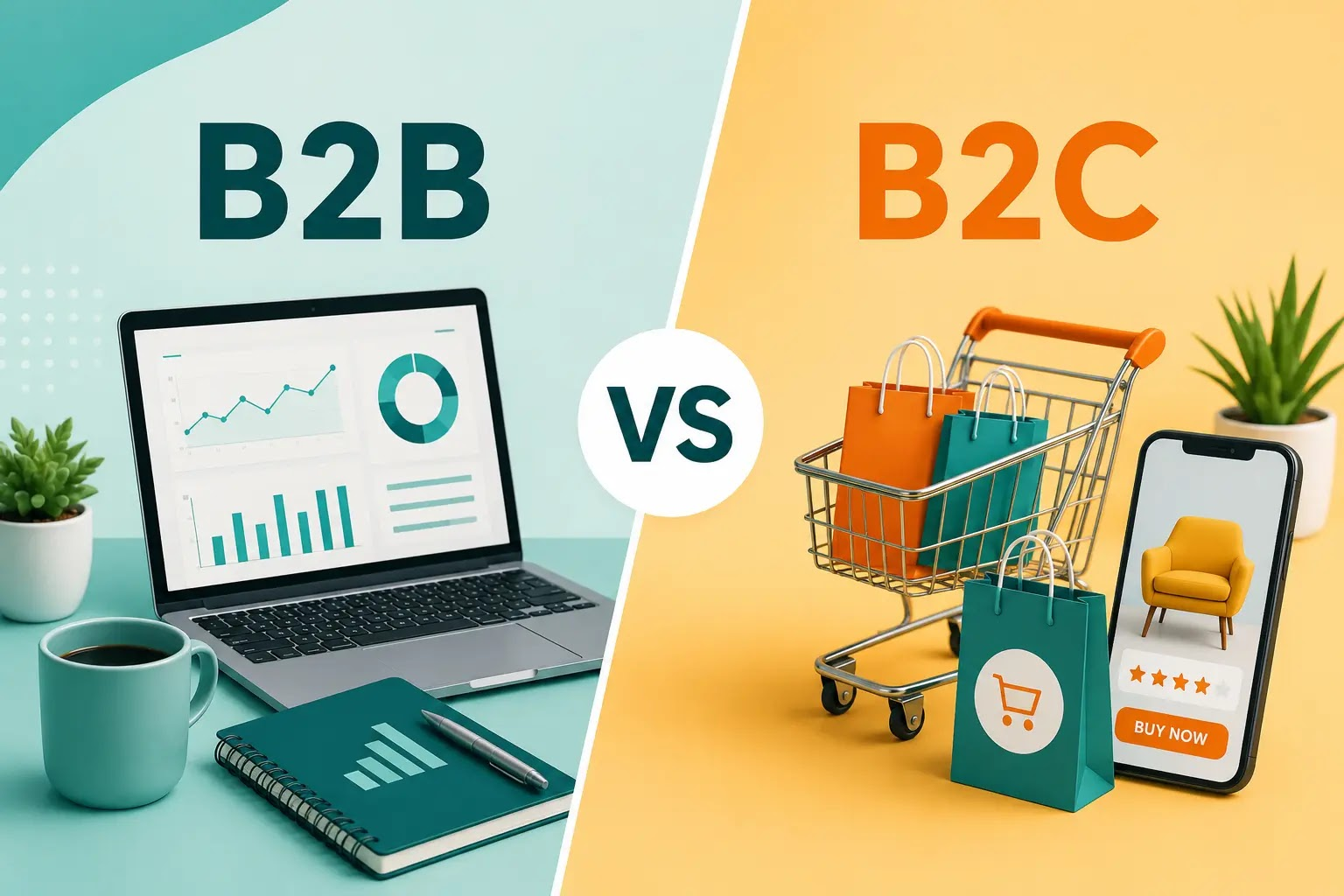
Every business fits into one of two worlds: B2B vs B2C. Understanding how they differ helps you build the right strategy for growth. At RoarEye, we help business owners navigate both models through clear insights, smart campaigns, and measurable results.
This article compares B2B vs B2C marketing, explains how their sales cycles differ, and breaks down the customer journey for each. You’ll see what works, where to focus, and how to apply it to your own brand.
B2B vs B2C Marketing
Marketing for B2B and B2C audiences looks similar at first, but their goals and methods differ completely.
Audience and Goals
- B2B marketing targets businesses or professionals. The goal is to show value, efficiency, and return on investment.
- B2C marketing focuses on individuals. The goal is to trigger emotion and instant action.
A B2B buyer looks for logic. A B2C buyer looks for connections. That’s why tone, design, and delivery matter so much.
Marketing Channels and Content
For B2B, you’ll find results on LinkedIn, industry blogs, and through email nurturing. Whitepapers, case studies, and webinars build trust and attract high-value leads.
For B2C, go visual. Use Instagram, TikTok, and YouTube to grab attention. Short videos, reviews, and influencer campaigns drive fast conversions.
Tone and Messaging
B2B uses data and professionalism. It speaks to decision-makers who think long term.
B2C uses friendly, emotional language. It speaks directly to feelings, saving time, enjoying life, or looking good.
Measuring Success
In B2B, focus on lead quality, conversion rate, and customer lifetime value.
In B2C, measure traffic, engagement, and immediate sales.
B2B vs B2C Sales Cycle
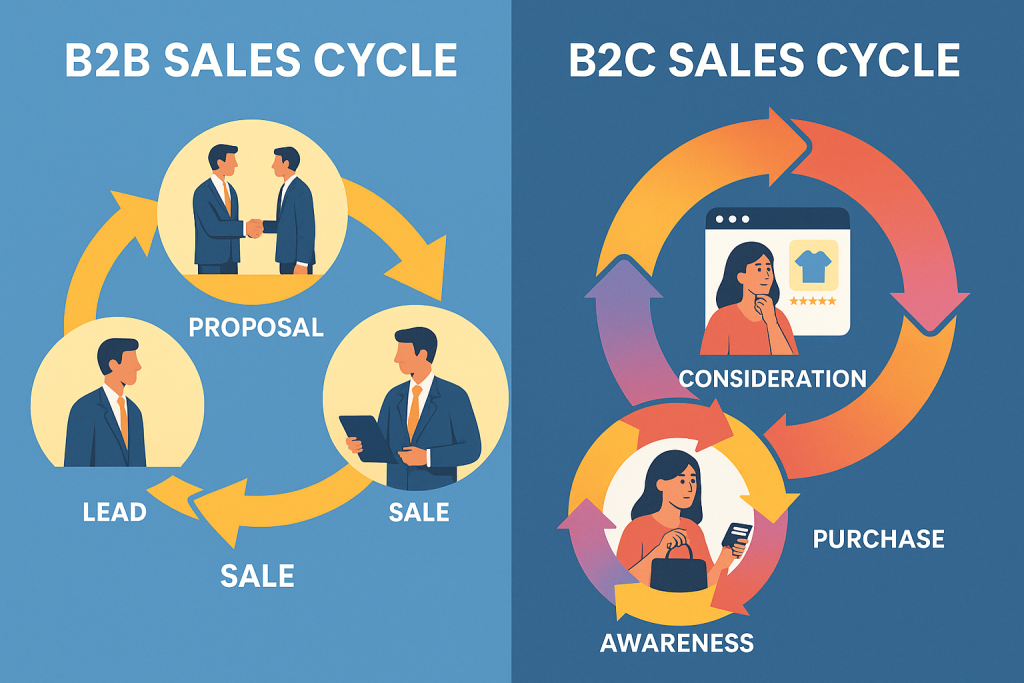
The B2B vs B2C sales cycle defines how long it takes to close a deal.
Decision-Making Process
B2B decisions involve multiple stakeholders, including finance, operations, and management. Each needs proof before approval.
B2C decisions are quick. Most consumers make decisions within minutes, driven by emotions, urgency, or discounts.
Length and Complexity
A B2B sales cycle may take weeks or months. It includes product demos, proposals, and negotiations.
A B2C sales cycle is short and direct. It ends with a click on “Buy Now.”
Conversion Triggers
B2B buyers convert when they see ROI. Case studies, whitepapers, or free trials help.
B2C buyers react to sales, limited offers, or engaging visuals.
Retention and Loyalty
B2B brands keep customers through long-term contracts and consistent service.
B2C brands rely on loyalty programs, personalization, and strong community presence.
B2B vs B2C Customer Journey
Understanding the B2B vs B2C customer journey helps you target the right stage with the right content.
Awareness Stage
B2B customers start with education. They read whitepapers, join webinars, or follow thought leaders.
B2C customers discover products through social ads, influencer videos, or word of mouth.
Consideration Stage
B2B buyers compare solutions and check reviews or demos.
B2C buyers read comments, look at reviews, or check if others recommend it.
Decision Stage
In B2B, decisions follow budget approval and internal meetings.
In B2C, it’s often one step, add to cart or checkout.
Post-Purchase Stage
B2B builds long-term partnerships through after-sales support and regular check-ins.
B2C focuses on retargeting, personalized emails, and repeat offers.
Internal Linking Suggestion:
Add a link to RoarEye’s B2B Marketplace article to show how mapping customer journeys helps create targeted funnels.
Conclusion
The B2B vs B2C debate isn’t about which is better; it’s about which fits your business. B2B demands logic, depth, and trust. B2C thrives on speed, emotion, and reach. Knowing where you belong helps you plan the right marketing, sales, and customer experience.
At RoarEye, we help businesses master both. If you want data-backed strategies that attract leads and drive conversions, talk to us today.
FAQs
1. What is the difference between B2B and B2C marketing?
B2B marketing targets businesses and focuses on logic, value, and ROI. B2C marketing targets consumers and focuses on emotion, experience, and instant satisfaction.
2. How long does a typical B2B sales cycle take?
A B2B sales cycle can last from a few weeks to several months, depending on the number of decision-makers and deal size. It usually involves research, demos, and negotiations.
3. Why is B2C marketing more emotional?
B2C marketing speaks to personal desires and lifestyles. It triggers emotions that make buyers act faster, often using visuals, storytelling, or influencer content.
4. Which model gives a higher ROI?
B2B often has a higher return per sale because of larger contracts and long-term clients. B2C can produce a quick ROI through volume sales and repeat purchases.
5. Can one brand serve both B2B and B2C markets?
Yes. Many brands run both models. For example, a software company might sell licenses to businesses (B2B) and personal plans to individuals (B2C).