Multi-Platform SEO: Winning Across AI Search Engines in 2026

If you’re only optimizing for Google in 2026, you’re already losing.
The search landscape has fractured. ChatGPT now handles over 1 billion queries weekly. Perplexity has become the research tool of choice for professionals. Reddit appears in more Google results than ever before, while LinkedIn has evolved into a legitimate search destination for B2B buyers. Meanwhile, traditional Google organic results occupy less screen real estate than at any point in the company’s history.
For growth marketers building SEO strategies from scratch today, the uncomfortable truth is this: Google SEO alone won’t deliver the visibility your business needs. The winners in 2026 are those who’ve embraced multi-platform optimization—treating each discovery channel as its own ecosystem with unique ranking factors, user intent, and content requirements.
This isn’t about abandoning Google. It’s about expanding your definition of what SEO actually means.
Act 1: The New Search Reality
Why AI Search Engines Matter Now
The statistics tell a clear story. According to recent data from Similarweb, AI search platforms collectively handle approximately 15-20% of all search queries that previously went exclusively to Google. For certain demographics—particularly users under 30 and technical professionals—that number exceeds 30%.
But raw traffic numbers only tell part of the story. AI search engines attract users at different stages of the buying journey:
ChatGPT and Claude capture users seeking synthesized answers, comparisons, and explanations. These users want understanding, not just links. They’re often in early research phases, forming opinions about solutions before they ever click through to a vendor website.
Perplexity attracts users who want source-backed answers with citations. These are higher-intent researchers who value transparency and want to verify claims. They’re closer to decision-making and looking for authoritative sources.
Google (still) remains dominant for navigational queries, local search, and transactional intent. Users who know what they want often still start here.
Reddit has become the de facto platform for authentic reviews and community consensus. B2C buyers in particular now append “reddit” to their Google searches to bypass marketing content.
LinkedIn serves B2B buyers researching solutions, vendors, and thought leaders. It’s where professional credibility gets established before purchase conversations begin.
The Visibility Calculus Has Changed
Here’s what growth marketers need to understand: being invisible on any single platform now creates a credibility gap across all platforms.
When AI search engines compile answers, they favor sources that appear authoritative across multiple channels. A company mentioned positively on Reddit, cited on LinkedIn, and ranking on Google carries more algorithmic weight than one that only exists in Google’s index.
This is multi-platform credibility arbitrage—and it’s the new foundation of SEO strategy.
User Behavior is Platform-Specific
Different users start their research on different platforms based on intent:
– Exploratory research: ChatGPT, Claude (“Explain the difference between…”)
– Source-verified research: Perplexity (“What are the best…with sources”)
– Authentic opinions: Reddit (“Is X actually worth it?”)
– Professional validation: LinkedIn (“Who are the experts in X?”)
– Ready to buy: Google (brand names, product comparisons)
If your content only exists where users end their journey, you’ve already lost the opportunity to shape their consideration set.
Act 2: How AI Search Changes Everything
Ranking Factors in AI Search Engines
AI search platforms don’t rank content the same way Google does. Understanding these differences is critical:
Citation Preferences
AI models favor sources that:
– Have clear authorship and credentials
– Provide original data, research, or insights
– Are frequently referenced by other authoritative sources
– Contain structured, parse-able information
– Update content regularly with timestamps
Unlike Google’s PageRank-descended algorithm, AI search engines evaluate content more like academic researchers evaluate papers. They look for citation-worthy material, not just keyword-optimized pages.
Conversational Context Matters
AI search engines understand queries as conversations, not isolated keywords. A user might ask: “What’s the best project management tool for remote teams under 20 people who don’t want to use Asana?”
This query contains:
– Category (project management)
– Context (remote teams)
– Constraint (under 20 people)
– Exclusion (not Asana)
Your content needs to address these multi-dimensional queries. Single-keyword optimization fails here. AI models prefer content that naturally addresses various contexts, use cases, and constraints within comprehensive resources.
Real-Time Synthesis vs. Static Indexing
Google indexes pages and serves them based on query match. AI search engines synthesize answers from multiple sources in real-time. This means:
1. Being cited is more valuable than being clicked
2. Clear, quotable statements outperform marketing fluff
3. Unique perspectives get weighted heavily
4. Source diversity in your own content helps (citing others makes you more cite-worthy)
The Authority Multiplier Effect
AI models develop persistent “memory” about source authority. Once your content gets cited repeatedly for a topic, the model begins treating your domain as an authority, increasing the likelihood of future citations.
This creates a flywheel: early citations → perceived authority → more citations → stronger authority.
What AI Models Actually “See”
Understanding how AI models process your content reveals optimization opportunities:
Structured Data is Premium Fuel
AI models parse structured data (schema markup, tables, lists, clearly labeled sections) more effectively than prose. A comparison table is infinitely more useful to an AI synthesizing an answer than three paragraphs describing differences.
Factual Density Matters
Content with high factual density (specific claims, data points, statistics, named methodologies) gets preferentially cited. Vague marketing content gets ignored.
Update Frequency Signals Authority
Regularly updated content with visible timestamps signals active maintenance. AI models favor sources that stay current, particularly for rapidly evolving topics.
Act 3: Platform-Specific Tactics for AI Visibility
Optimizing for ChatGPT and Claude
Create Citation-Worthy Content Assets
Build comprehensive guides that AI models want to reference:
– Original research and data
– Detailed how-to guides with specific steps
– Framework documentation
– Comparison matrices
– Industry benchmarks
Use Clear Attribution
Include:
– Author names and credentials
– Publication dates prominently
– Last updated timestamps
– Organization/company affiliation
Structure for Extraction
Format content so AI can easily extract key points:
– Use descriptive headers (H2, H3)
– Include TL;DR summaries
– Add comparison tables
– Create bulleted lists for key points
– Define terms clearly
Optimizing for Perplexity
Source-Back Your Claims
Perplexity values transparency. Include:
– Citations to original sources
– Links to data sources
– References to studies and research
– Attribution for methodologies
Create Primary Sources
Become the source others cite:
– Publish original research
– Release industry surveys
– Document unique methodologies
– Share proprietary data
Optimizing for Reddit
Participate Authentically
Reddit rewards genuine engagement:
– Answer questions in relevant subreddits
– Share insights without overt promotion
– Build comment history before sharing your content
– Focus on providing value
Create Reddit-Friendly Content
When you do share content:
– Make it genuinely useful (not sales-y)
– Share unique insights or data
– Write conversationally
– Engage with comments
Monitor Brand Mentions
Use tools like F5Bot or Notifier for Reddit to track when your brand/topics get mentioned. Participate in these conversations early.
Optimizing for LinkedIn
Build Personal Brands
LinkedIn surfaces people, not just companies:
– Executives and founders should publish regularly
– Share unique perspectives on industry trends
– Comment meaningfully on others’ posts
– Build thought leadership systematically
Create Native Content
LinkedIn favors native posts over links:
– Write articles directly on LinkedIn
– Share insights in posts, not just links
– Use documents for lead magnets
– Leverage LinkedIn newsletters
Engage Your Network
LinkedIn’s algorithm prioritizes engagement:
– Respond to comments quickly
– Tag relevant people (appropriately)
– Ask questions to drive discussion
– Share employee-generated content
The Google Foundation Still Matters
Technical SEO Basics Enable Everything
Proper technical SEO helps all platforms:
– Fast page load speeds
– Mobile optimization
– Clean URL structures
– Proper redirects
– SSL certificates
Schema Markup Feeds AI Understanding
Structured data helps both Google and AI search:
– Article schema
– Organization schema
– FAQ schema
– HowTo schema
– Product schema
E-E-A-T Signals Transfer Across Platforms
Google’s emphasis on Experience, Expertise, Authoritativeness, and Trust aligns with what AI models value:
– Clear authorship
– Credentials and background
– Editorial standards
– Fact-checking processes
The Integrated Multi-Platform Strategy
Content Hub Architecture
Build your strategy around content hubs:
1. Core Asset (Your website): Comprehensive, authoritative content with proper structure and citations
2. Distribution Layer (LinkedIn, Reddit): Platform-native content that drives awareness and links back to core assets
3. Engagement Layer (Comments, discussions): Participate where your audience gathers
4. Citation Network: Earn mentions from other authoritative sources
The Content Cascade
Maximize every content investment:
1. Publish comprehensive guide on your site
2. Extract key insights for LinkedIn article
3. Share unique data point on Reddit (with context)
4. Reference your research when answering questions
5. Update content as you gather more data
6. Promote updates across channels
Measurement Across Platforms
Track visibility metrics for each channel:
– Google: Rankings, traffic, conversions (traditional SEO metrics)
– AI Search: Brand mentions, citation tracking (use tools like Brand24, mention tracking in AI platforms)
– Reddit: Comment karma, post upvotes, traffic referrals
– LinkedIn: Post impressions, engagement rate, follower growth
Resource Allocation for New Strategies
For growth marketers starting from zero:
Months 1-3: Foundation
– Build technically sound website (40% effort)
– Create 10-15 comprehensive content pieces (40% effort)
– Set up author profiles and social presence (20% effort)
Months 4-6: Distribution
– Continue content creation (30% effort)
– Active Reddit participation (20% effort)
– LinkedIn thought leadership (30% effort)
– Begin outreach for citations (20% effort)
Months 7-12: Scale
– Content refresh and updates (25% effort)
– Community engagement across platforms (25% effort)
– Original research/data projects (25% effort)
– Strategic partnerships for citations (25% effort)
The Multi-Platform Imperative
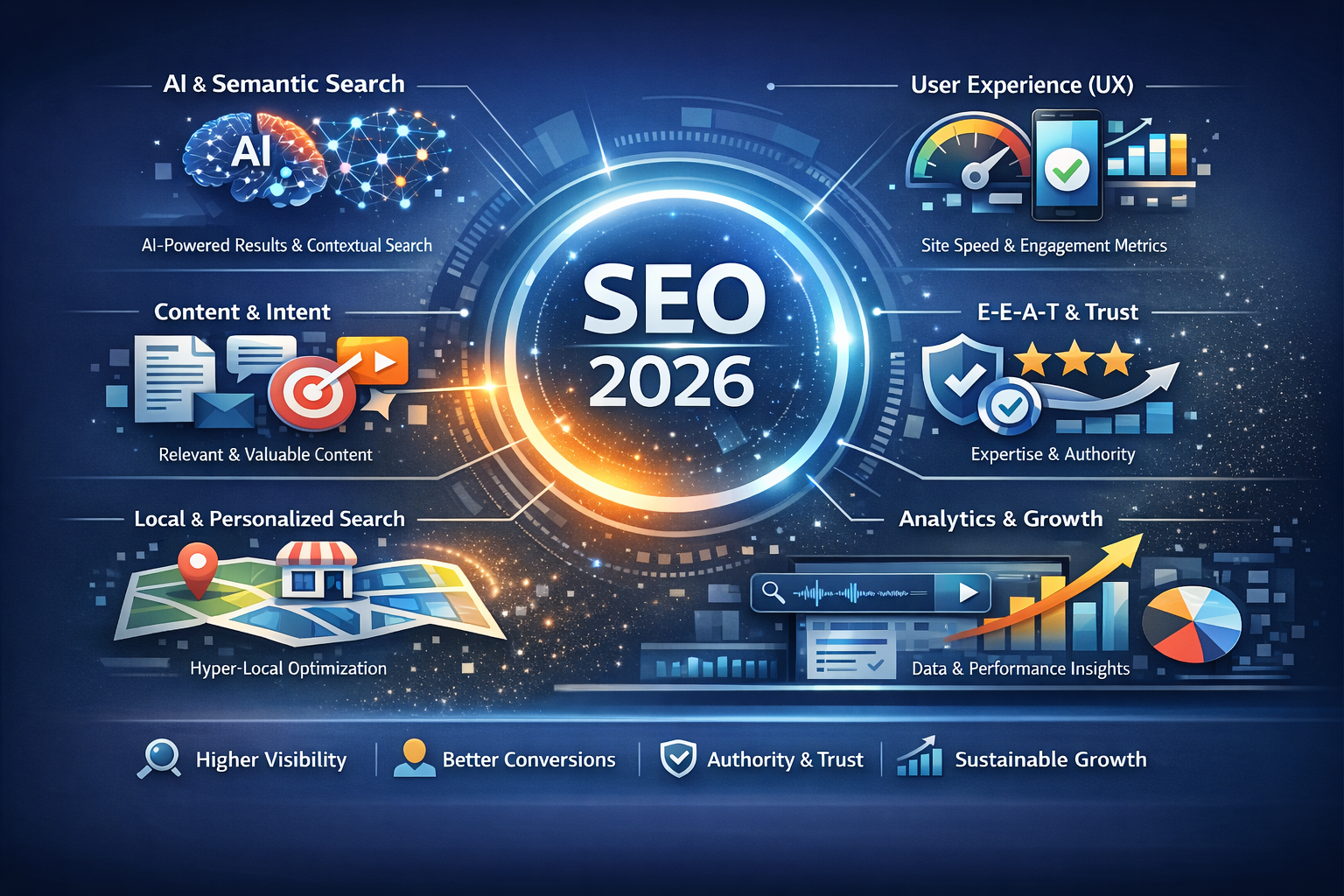
The SEO landscape of 2026 rewards marketers who understand a fundamental truth: search is no longer a single destination. It’s a constellation of platforms, each serving different user intents and favoring different content signals.
AI search engines haven’t replaced Google—they’ve expanded the territory that SEO must cover. The companies winning visibility are those treating each platform as a distinct channel requiring tailored optimization while maintaining consistency in their core value proposition.
For growth marketers building strategies from scratch, this actually represents an opportunity. You’re not competing against decades of accumulated PageRank. You’re entering a more level playing field where content quality, multi-platform presence, and genuine authority matter more than historical domain metrics.
The question isn’t whether to diversify beyond Google. That decision has been made by user behavior and AI adoption curves. The question is how quickly you can build integrated, multi-platform visibility before your competitors do.
Start with quality, ship across platforms, and optimize for citation-worthiness. The algorithms—all of them—will follow.
Frequently Asked Questions
Q: Do I need to optimize for AI search engines if I already rank well on Google?
A: Yes. Strong Google rankings don’t automatically translate to AI search visibility. AI platforms like ChatGPT and Perplexity evaluate content based on citation-worthiness, factual density, and structural clarity rather than traditional SEO signals like backlinks. Users are increasingly starting their research on AI platforms before ever reaching Google, so being absent from these channels means you’re missing early-stage consideration.
Q: What’s the single most important thing to optimize for AI search engines?
A: Create citation-worthy content with clear structure and factual density. AI models favor content they can confidently reference—original research, comprehensive guides with specific data, comparison tables, and well-documented methodologies. Focus on being the source others cite rather than just ranking for keywords.
Q: How do I track if my content is being cited by AI search engines?
A: Use a combination of methods: Set up Google Alerts for your brand and key phrases, use brand monitoring tools like Brand24 or Mention, manually test queries in ChatGPT/Perplexity/Claude related to your topics, track referral traffic from AI platforms in analytics, and monitor increases in direct/branded traffic which often indicates AI citations driving awareness.
Q: Should I create separate content for each platform or repurpose existing content?
A: Both. Start with comprehensive cornerstone content on your website, then adapt it for each platform’s native format and audience expectations. LinkedIn prefers native articles and personal perspectives, Reddit values authentic discussion and unique insights, while AI search engines need structured, citation-worthy content. The core insights remain consistent, but presentation should match platform norms.
Q: How long does it take to see results from multi-platform SEO?
A: Expect 3-6 months for initial traction. Google SEO typically shows results in 4-6 months, but AI platform visibility can happen faster if your content is citation-worthy and gets shared in relevant communities. Reddit and LinkedIn can drive traffic within weeks. The key is consistency—regular content publication, authentic engagement, and continuous optimization compound over time across all platforms.