How to Create High-Converting AI Ads
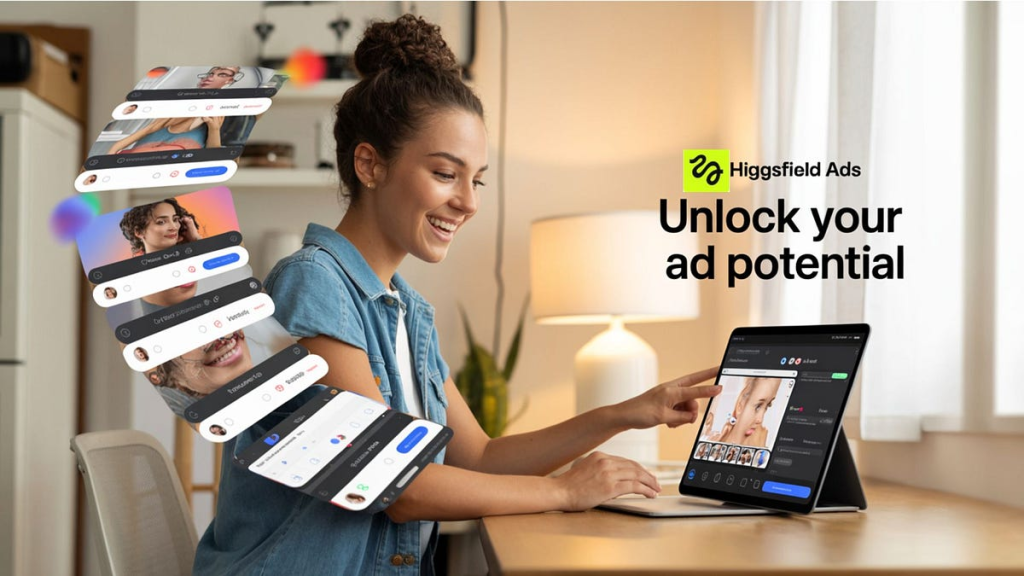
Stop paying thousands for ad production—create AI ads that convert in under 20 minutes.
The era of expensive video production teams, multi-day shoots, and weeks-long turnaround times is ending. Digital marketers and e-commerce sellers are discovering that AI-powered tools like Higgsfield can generate professional, high-converting video ads in a fraction of the time and cost. But here’s the real question: do these AI-generated ads actually perform?
The answer is yes—when done correctly. This comprehensive guide will walk you through exactly how to use Higgsfield AI to create ultra-realistic user-generated content (UGC) style ads that drive sales, complete with workflows that let you test multiple variations quickly and real examples of campaigns that delivered measurable results.
Act 1: How to Use Higgsfield AI to Generate Ultra-Realistic UGC Ads
Understanding Higgsfield’s Core Technology
Higgsfield AI uses advanced machine learning models to generate realistic video content featuring AI avatars that can speak any script you provide. Unlike traditional video editors or simple animation tools, Higgsfield creates what appears to be authentic UGC—the type of content that consistently outperforms polished brand videos on platforms like Facebook, Instagram, and TikTok.
The platform’s strength lies in its ability to:
– Generate human-like avatars with natural movements and expressions
– Sync lip movements perfectly with your script
– Produce multiple variations from a single input
– Create content that passes the “scroll test” on social feeds
For digital marketers drowning in production costs, this represents a fundamental shift. A typical UGC creator charges $200-500 per video, with turnaround times of 3-7 days. Higgsfield can generate comparable content in minutes for a fraction of the cost.
Getting Started: Your First Higgsfield Ad
The key to successful AI ads isn’t just the technology—it’s understanding how to use it strategically. Here’s the step-by-step process:
Step 1: Write a Performance-Focused Script
Your script is everything. AI can’t fix a weak message. Follow the UGC formula that works:
– Hook (3 seconds): State a problem or make a bold claim
– Agitate (5-10 seconds): Deepen the pain point
– Solution (10-15 seconds): Introduce your product
– Proof (5-10 seconds): Show results or testimonials
– Call-to-action (3-5 seconds): Clear next step
Example script for a skincare product:
“I spent $300 on department store serums that did nothing for my dark spots. Then I found this brand on Instagram for $29, and honestly? My skin hasn’t looked this good in years. The before and after speaks for itself. They’re running a sale right now—link is in my bio.”
Step 2: Select Your Avatar Strategically
Not all avatars perform equally. Your selection should match your target audience demographics and the platform where you’ll advertise. For Facebook ads targeting women 35-55, choose an avatar that reflects that age range. For TikTok campaigns targeting Gen Z, go younger and more casual.
Higgsfield offers diverse avatar options. The best performers tend to be:
– Relatable rather than model-perfect
– Ethnically diverse (test different avatars for different audience segments)
– Expressing genuine emotion, not overly enthusiastic
Step 3: Generate and Review
Once you input your script and select your avatar, Higgsfield processes the video typically within 2-5 minutes. Review carefully for:
– Lip sync accuracy (occasionally needs regeneration)
– Natural facial expressions during key emotional beats
– Appropriate background settings
– Overall authenticity—does it pass the “real person” test?
If something feels off, regenerate. The marginal cost is minimal compared to the performance impact of a low-quality ad.
The Reality Check: Where AI Ads Excel and Where They Don’t
Honesty matters here. AI-generated ads work exceptionally well for:
– Direct response campaigns where messaging matters more than production quality
– Rapid testing of multiple angles and scripts
– Products where the transformation or result is the star (not the presenter)
– Supplement, software, and digital product categories
They’re currently less effective for:
– Luxury brand positioning requiring high production value
– Products where physical interaction demonstration is crucial
– Campaigns where brand authenticity is questioned and transparency is paramount
The smart approach? Use AI ads for the 80% of your testing and scale budget, reserving traditional production for proven winners and high-stakes brand campaigns.
Act 2: Setting Up Workflows That Produce Multiple Ad Variations Quickly
The Volume Advantage
The true power of Higgsfield isn’t creating one good ad—it’s creating 20 variations in the time it used to take to produce one. This volume unlocks superior performance through systematic testing.
Here’s the workflow that top e-commerce brands are implementing:
The 3x3x3 Testing Framework
1. Three script angles: Problem-focused, transformation-focused, social proof-focused
2. Three avatars: Different demographics, ages, or presentation styles
3. Three hooks: Different opening lines for each script
This creates 27 unique ad variations. In traditional production, this would cost $5,400-13,500 and take weeks. With Higgsfield, you can generate all 27 in under two hours for a subscription cost under $100.
Batch Production Strategy
Organize your production days around batch creation:
Monday: Script Development Day
– Write 6-9 script variations
– Test them internally for message clarity
– Finalize the top performers
Tuesday: Generation Day
– Input all scripts into Higgsfield
– Generate primary versions
– Review and regenerate any issues
Wednesday: Platform Optimization Day
– Export videos in proper formats (9:16 for Stories/Reels, 1:1 for Feed, 16:9 for YouTube)
– Add captions (85% of video ads are watched without sound)
– Create thumbnail variations
Thursday-Friday: Campaign Launch
– Upload to ad platforms
– Set up proper tracking and attribution
– Begin systematic testing
Advanced Workflow: Dynamic Script Variables
Once you’ve identified winning frameworks, create script templates with variables:
“I was struggling with [PROBLEM] until I discovered [PRODUCT]. Within [TIMEFRAME], I noticed [RESULT]. The best part? It’s [PRICE POINT] and [UNIQUE BENEFIT].”
Swap variables systematically:
– Different problems your product solves
– Various timeframes (3 days, 1 week, 2 weeks)
– Multiple unique benefits
This allows you to generate dozens of conceptually different ads while maintaining proven structure.
Integration with Ad Platforms
Higgsfield videos integrate seamlessly with major advertising platforms, but optimization matters:
Facebook/Instagram Ads:
– Upload as organic posts first to generate initial engagement
– Use actual engagement as social proof when boosting
– Test Reels placement separately from Feed—they often require different pacing
TikTok Ads:
– Native feel is everything—avoid overly polished content
– Use trending sounds underneath (when appropriate)
– Test Spark Ads using the organic post format
YouTube:
– Extend successful short-form content to 30-60 seconds for pre-roll
– Front-load the hook even more aggressively
– Include clear branded elements by the 5-second mark
Quality Control Checklist
Before launching any AI-generated ad, run through this checklist:
– [ ] Script is under 45 seconds (optimal for most platforms)
– [ ] Hook delivers value or intrigue within 3 seconds
– [ ] Avatar matches target demographic
– [ ] Lip sync is accurate throughout
– [ ] Facial expressions match emotional content
– [ ] Call-to-action is crystal clear
– [ ] Captions are accurate and properly timed
– [ ] Video exports in correct aspect ratio for platform
– [ ] Thumbnail (if applicable) is attention-grabbing
Act 3: Real Examples of AI Ads That Actually Perform and Drive Sales
Case Study 1: Supplement Brand Achieves 3.2x ROAS
A men’s health supplement brand was spending $800 per video with UGC creators and struggling to maintain testing velocity. They switched to Higgsfield for their testing phase.
The Approach:
– Generated 15 variations testing different pain points (energy, focus, performance)
– Used three different male avatars ages 28-45
– Ran all variations simultaneously with $50/day budgets
The Results:
– Identified two winning angles within 72 hours
– Winning ads achieved 3.2x ROAS on cold traffic
– Scaled winners to $5,000/day profitably
– Total production cost: $97 (Higgsfield subscription)
– Production time: 4 hours
The Winner: The “focus and productivity” angle with a 38-year-old professional avatar outperformed “energy” angles by 47%. They never would have tested this angle with traditional production due to cost constraints.
Case Study 2: E-commerce Fashion Brand Tests 47 Variations
A direct-to-consumer fashion brand selling versatile travel clothing needed to identify which product benefits resonated most.
The Approach:
– Created scripts highlighting: comfort, style, versatility, packability, durability
– Used six different female avatars representing their customer demographic
– Generated 47 total variations over two weeks
The Results:
– “Packability” angle outperformed all others by 2.1x
– Best-performing avatar was not who they expected (mid-40s vs their assumption of 30s)
– Invested in high-production version of winning concept
– AI testing saved estimated $18,800 in production costs
Key Insight: They discovered their target customer cared far more about practical travel benefits than style—something their brand positioning didn’t emphasize. This insight reshaped their entire marketing strategy.
Case Study 3: Software Company Reduces CAC by 41%
A B2C software company selling productivity tools was facing rising customer acquisition costs on Facebook.
The Approach:
– Rapid-tested 25 different problem statements
– Used conversational, relatable avatars (not corporate)
– Focused on specific use cases rather than feature lists
The Results:
– CAC dropped from $73 to $43
– Conversion rate improved 28%
– Testing cycle shortened from 4 weeks to 5 days
The Winner: “Specific problem to specific solution” format: “I was using seven different apps to manage my projects. Now I use one, and my team actually knows what’s happening. Game changer.”
Performance Benchmarks Across Industries
Based on aggregate data from brands using AI-generated UGC ads:
Average Performance Metrics:
– Hook rate (3-second view): 32-45%
– Click-through rate: 1.8-3.2%
– Cost per click: 15-30% lower than traditional ads
– ROAS: Comparable to traditional UGC when properly optimized
Top Performing Categories:
1. Supplements and health products (3.1x average ROAS)
2. Digital products and courses (2.8x average ROAS)
3. Fashion and accessories (2.4x average ROAS)
4. Software and apps (2.2x average ROAS)
What Makes These Ads Convert
Analyzing winning AI ads reveals consistent patterns:
1. Authenticity Over Polish
The best-performing ads don’t try to look like professional productions. They embrace the UGC aesthetic—slightly imperfect, conversational, and real.
2. Problem-First Storytelling
Winners lead with a specific, relatable problem. Not “looking for better skincare” but “I was embarrassed by my acne at my sister’s wedding.”
3. Speed and Specificity
General claims lose. Specific timeframes and concrete results win. “My energy improved” loses to “I stopped needing afternoon coffee within 4 days.”
4. Conversational Language
Writing how people actually speak matters. Read your script aloud. If it sounds like marketing copy, rewrite it.
5. Native Platform Feel
The best ads don’t look like ads. They look like organic content that happens to mention a product.
Common Mistakes to Avoid
Mistake #1: Over-Explaining
You have 30 seconds. Make one point well rather than three points poorly.
Mistake #2: Wrong Avatar Selection
Match your actual customer, not your aspirational customer. A 22-year-old model won’t sell to 45-year-old suburban moms effectively.
Mistake #3: Weak Hooks
“Hey guys, today I want to talk about…” is death. Start with a problem, a bold claim, or an unexpected statement.
Mistake #4: No Clear CTA
“Check it out” isn’t enough. Tell viewers exactly what to do and why to do it now.
Mistake #5: Testing Too Conservatively
AI ads are cheap. Test aggressively. Wild angles sometimes win.
The Future of AI Ad Production
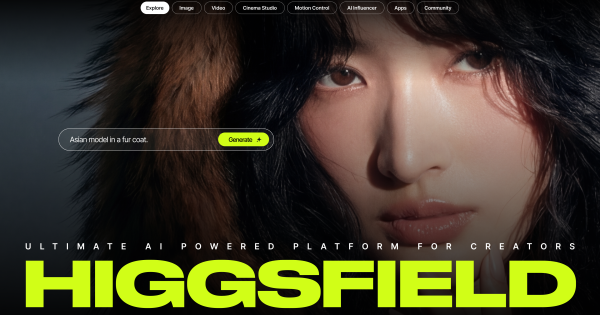
Higgsfield and similar tools represent just the beginning. We’re moving toward a future where:
– Real-time performance data automatically generates new ad variations
– AI analyzes winning patterns and suggests script improvements
– Dynamic personalization creates unique ads for individual viewers
– Production and testing cycles compress from weeks to hours
For marketers, this means the competitive advantage shifts from production resources to strategic creativity—understanding your customer deeply enough to test the right messages.
Implementation Checklist: Your First 30 Days
Week 1: Foundation
– Subscribe to Higgsfield
– Analyze your three best-performing existing ads
– Write 10 script variations based on successful patterns
– Generate first batch of test ads
Week 2: Testing
– Launch ads with systematic tracking
– Monitor performance daily
– Identify early winners and losers
– Generate second iteration based on learnings
Week 3: Optimization
– Scale winning variations
– Test new angles on different audience segments
– Refine avatar selection based on performance data
– Document what’s working
Week 4: Systematization
– Create templates for winning script structures
– Establish weekly production schedule
– Set up automated reporting
– Plan month two expansion
Final Thoughts: The New Competitive Landscape
AI ad generation isn’t about replacing creativity—it’s about democratizing execution. Small brands can now test ideas that previously only companies with six-figure production budgets could afford to explore.
The winners in this new landscape won’t be those with the biggest production budgets. They’ll be marketers who understand that velocity and volume of testing matter more than perfection. Those willing to generate 50 variations to find the three winners. Those who use AI tools like Higgsfield to spend less time on production logistics and more time understanding what messages truly resonate with their customers.
Stop paying thousands for ad production. Start testing systematically, learning quickly, and scaling what works. The tools are here. The question is whether you’ll use them faster than your competition.
Frequently Asked Questions
Q: Do AI-generated ads actually convert as well as real UGC creators?
A: When properly optimized, AI-generated ads can achieve comparable or even better performance than traditional UGC. The key advantage is volume—you can test 20+ variations for the cost of one traditional video, allowing you to identify winning messages faster. Case studies show brands achieving 2.2-3.2x ROAS with AI ads, though performance varies by industry and execution quality.
Q: How long does it actually take to create an ad with Higgsfield?
A: A single ad typically takes 15-20 minutes total: 5-10 minutes to write the script, 2-3 minutes to set up in Higgsfield, 2-5 minutes for processing, and 3-5 minutes for review and export. However, batch production is more efficient—you can create 10-15 variations in under 2 hours once you have your scripts prepared.
Q: What types of products work best with AI-generated ads?
A: AI ads perform exceptionally well for supplements, digital products, software, and fashion/accessories—essentially any product where the message and transformation matter more than physical demonstration. They’re currently less effective for luxury positioning or products requiring detailed physical interaction demonstrations. The best approach is using AI for rapid testing, then investing in traditional production for proven winners if needed.
Q: Can Facebook or TikTok detect that these are AI-generated and penalize them?
A: Current AI-generated ads from tools like Higgsfield are sophisticated enough that platforms don’t typically flag them as AI content. They’re evaluated based on the same ad quality metrics as any other content—relevance, engagement, and user experience. As long as your ads provide value and don’t violate platform policies, the generation method doesn’t impact delivery or cost.
Q: How many ad variations should I test before deciding what works?
A: Start with the 3x3x3 framework: 3 script angles, 3 avatars, and 3 hooks (27 total variations). Run each with a minimum $50 daily budget for 3 days before making decisions. This gives you sufficient data while remaining cost-effective. Once you identify winning patterns, create 5-10 additional variations around those themes. Most brands find their winning ads within 30-50 total tes