
TV Ad Format Evolution: The 30-Second Standard in 2026
Every major brand in 2026 is using this exact ad length—here’s why it still works.
The Format That Refuses to Die
In an age where TikTok’s six-second captures dominate social feeds and YouTube’s skippable pre-rolls barely get three seconds of attention, the 30-second television commercial remains the undisputed champion of brand advertising. This isn’t nostalgia or institutional inertia—it’s cold, calculated media strategy backed by decades of performance data and billions in ad spend.
For media buyers, creative directors, and advertising students trying to understand optimal ad length in 2026, the persistence of this format reveals fundamental truths about human attention, message architecture, and cross-platform campaign efficiency.
Why 30 Seconds? The Economic Foundation
The 30-second spot occupies a sweet spot in media economics that shorter and longer formats struggle to match. At its core, this length represents the optimal balance between three competing pressures: cost per impression, message completeness, and audience tolerance.
Cost Efficiency at Scale: Across major markets, 30-second spots offer the best CPM (cost per thousand impressions) relative to message delivery. While 15-second spots might seem more budget-friendly at half the price, they rarely achieve half the recall rates. Conversely, 60-second formats double your costs but seldom double your impact—particularly for single-product campaigns.
In 2026’s fragmented media landscape, where buyers juggle linear TV, streaming inventory, and connected TV placements, the 30-second format provides crucial standardization. A single creative asset works across NBC’s primetime, Hulu’s ad-supported tier, and Samsung TV Plus’s FAST channels without reformatting or re-editing.
Inventory Availability: Broadcasting infrastructure globally still operates on 30-second increments. Ad pods are structured around this unit, making it the path of least resistance for both sellers and buyers. Premium inventory during sports events, tentpole entertainment, and news programming predominantly offers 30-second slots as the baseline.
The Global Convergence: Evidence from International Brands
Perhaps the most compelling evidence for the 30-second standard comes from observing brand behavior across radically different markets and cultures. When companies operating in Japan, Germany, Brazil, and the United States all independently converge on the same format, it suggests something deeper than regional preference.
UNIQLO’s Consistent Approach: The Japanese retail giant has maintained 30-second spots as their primary TV format across their global expansion. Their campaigns in Tokyo, London, and New York all utilize this length to communicate their “LifeWear” philosophy—functional, minimalist clothing presented through carefully composed visual narratives. The format gives them exactly enough time to show a product in context, demonstrate a key feature, and deliver their brand promise without rushing or dragging.
EDEKA’s Storytelling Within Constraints: Germany’s largest supermarket chain has become famous for emotionally resonant 30-second narratives that feel complete despite their brevity. Their holiday campaigns and sustainability messaging demonstrate how skilled creative teams can build genuine emotional arcs within this timeframe. The constraint forces precision: every second must justify its inclusion.
Pattern Across Categories: From automotive (Toyota, Volkswagen) to technology (Samsung, Apple) to consumer packaged goods (Procter & Gamble, Unilever), the convergence is unmistakable. These companies employ different agencies, operate in different regulatory environments, and target different demographics—yet they’ve independently determined that 30 seconds is optimal.
This isn’t coincidence. It’s the result of continuous testing, optimization, and competitive intelligence over decades. When your competition globally uses this length, deviation requires extraordinary justification.
The Creative Mandate: Constraints Breed Excellence
The most underappreciated aspect of the 30-second standard is how it functions as a creative forcing mechanism. Far from limiting imagination, the format demands disciplined thinking that typically produces stronger advertising.
Single Product Focus: You cannot effectively sell multiple unrelated products in 30 seconds. This limitation forces brand managers to make strategic choices about campaign focus. Rather than cluttering an ad with product line extensions and sub-messages, successful 30-second spots identify one clear hero product and build everything around it.
This clarity benefits consumers as much as brands. Viewers can process and retain a single clear message far better than multiple competing messages. The cognitive load stays manageable, increasing the likelihood of recall and purchase intent.
Immediate Call-to-Action: With limited time, there’s no room for delayed gratification. The best 30-second spots build toward an immediate, obvious call-to-action. Whether it’s “Visit our website,” “Available now at retailers,” or “Test drive this weekend,” the CTA arrives with enough time for viewers to register it but not so early that it feels rushed.
This structural requirement—introduction, demonstration, and call-to-action within 30 seconds—creates a natural narrative rhythm that audiences have internalized over decades of TV viewing. It feels right because it matches learned expectations about how commercial storytelling unfolds.
Visual Efficiency: Extended dialogue becomes impossible. Creative teams must communicate primarily through visuals, which typically create stronger, more memorable impressions than talking heads or voiceover-heavy approaches. Product demonstrations become visceral and immediate. Brand worlds get established through carefully chosen mise-en-scène rather than explicit explanation.
The 2026 Media Environment: Why the Standard Persists
Several factors specific to the current media landscape reinforce the 30-second standard rather than undermining it:
Streaming Maturation: As ad-supported streaming tiers have matured across Netflix, Disney+, and other platforms, they’ve largely adopted television’s format standards rather than creating new ones. The technical infrastructure, ad serving technology, and buyer expectations all favor compatibility with existing 30-second inventory.
Cross-Platform Campaign Integration: Modern campaigns span linear TV, streaming, digital video, and social platforms. The 30-second master asset becomes the creative foundation from which 15-second cutdowns, 6-second bumpers, and extended 60-second versions are derived. Starting with this length provides maximum flexibility for adaptation.
Attention Research: Contemporary research on attention spans reveals a more nuanced picture than “everyone’s attention is shrinking.” While tolerance for boring content has decreased, engagement with compelling content remains strong. Thirty seconds provides enough runway to earn attention through strong creative without requiring the sustained commitment of longer formats.
Measurement Standardization: Decades of performance data exist for 30-second spots across every conceivable product category, demographic target, and daypart. This historical benchmarking makes campaign evaluation straightforward. Buyers know what “good” looks like at this length, making success metrics clear and defensible.
When to Deviate: Exceptions That Prove the Rule
Understanding when brands successfully use other lengths illuminates why 30 seconds dominates:
15-Second Spots: Work best for simple reminder campaigns, promotional price messaging, or supporting roles within larger campaigns. They lack time for storytelling but excel at frequency building when budget is constrained.
60-Second Spots: Reserved for product launches requiring extensive demonstration, brand manifestos during major events (Super Bowl), or complex messages (pharmaceutical disclosures). The doubling of cost limits their use to moments of strategic importance.
2-Minute+ Long-Form: Effectively brand films rather than traditional commercials, deployed digitally where viewers opt-in rather than interrupting programming. These serve different strategic purposes—building brand mythology rather than driving immediate action.
The existence of these formats doesn’t diminish the 30-second standard; instead, they occupy specific niches that reinforce why the middle length dominates general brand advertising.
Practical Implications for Media Buyers and Creatives
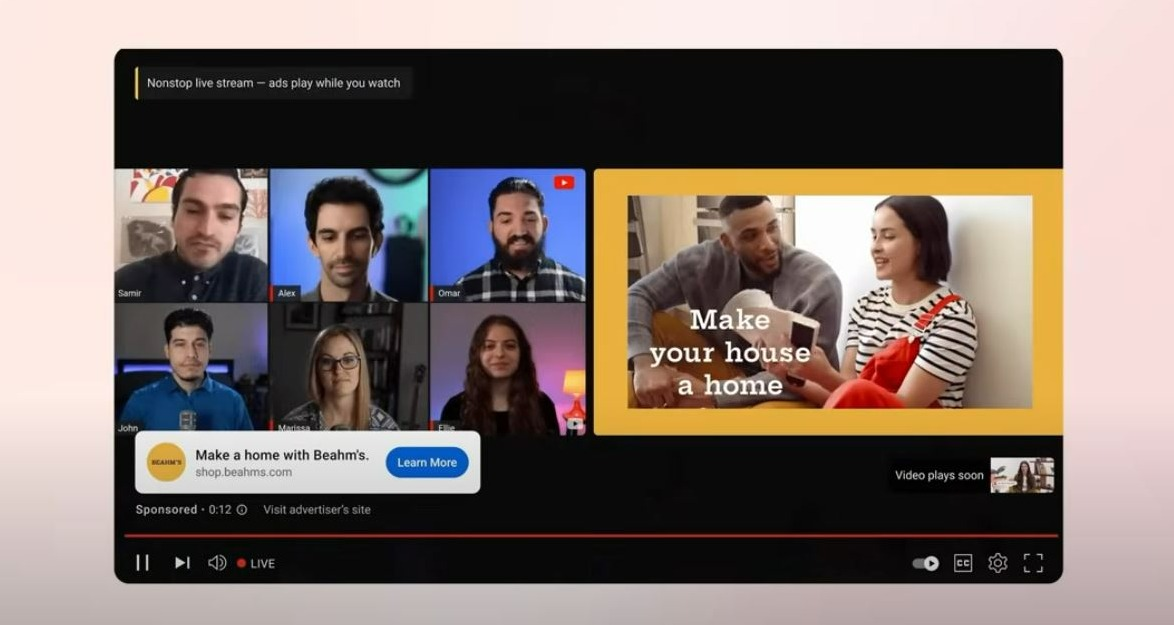
For professionals planning campaigns in 2026, several strategic principles emerge:
Budget Allocation: Prioritize 30-second creative development. This asset will deliver the most flexible deployment across platforms and the strongest performance benchmarks for evaluation.
Creative Briefing: Brief for single-message clarity. Resist the temptation to add secondary messages or multiple product features. Discipline in strategy enables creativity in execution.
Testing Frameworks: When testing ad variations, maintain the 30-second length as a constant while varying creative approach, tone, or featured benefit. This isolates creative effectiveness from format effects.
Global Campaigns: Leverage the international standardization. A strong 30-second concept can scale across markets with localized adaptations, maximizing creative investment efficiency.
Format Mix Strategy: Use 30-second spots as your campaign foundation, then strategically deploy 15-second cutdowns for frequency and 60-second extensions for tentpole moments.
The Future of the Format
While media landscapes will continue evolving, several structural factors suggest the 30-second standard will persist:
The format is embedded in technical infrastructure, pricing models, creative workflows, and audience expectations. Displacing it would require simultaneous transformation across multiple interconnected systems—a coordinated change far more difficult than decentralized innovation at the edges.
More fundamentally, 30 seconds appears to represent something close to a cognitive optimum for commercial communication: enough time to tell a complete story, short enough to maintain attention, and standardized enough to enable efficient production and measurement.
For advertising professionals in 2026, this isn’t a limitation to overcome but a discipline to master. The brands achieving breakthrough creative within this constraint aren’t succeeding despite the format—they’re succeeding because of it.
The 30-second spot remains the gold standard because after decades of experimentation with alternatives, nothing has proven systematically superior across the dimensions that matter: cost efficiency, message completeness, creative flexibility, and measurable performance.
Every major brand uses this length because, quite simply, it still works.
Frequently Asked Questions
Q: Why don’t brands just use shorter ads to save money?
A: While 15-second spots cost less to air, they rarely achieve proportional effectiveness. A 30-second ad typically delivers far more than double the message recall and purchase intent of a 15-second spot, making the longer format more cost-efficient per outcome. Additionally, 15-second ads lack sufficient time for complete storytelling or product demonstration, limiting their strategic applications to simple reminder campaigns rather than brand building or product launches.
Q: How do streaming platforms affect the 30-second standard?
A: Rather than disrupting the format, ad-supported streaming services have largely adopted it. Platforms like Hulu, Netflix’s ad tier, and Disney+ use 30-second spots as their standard unit because it allows compatibility with existing advertiser creative assets, maintains familiar viewer expectations, and leverages decades of performance benchmarking data. This convergence actually strengthens the format by extending its reach beyond traditional television.
Q: Can you really tell a complete story in just 30 seconds?
A: Yes, with disciplined creative strategy. The key is focusing on a single product or message rather than trying to communicate multiple points. Successful 30-second spots follow a clear structure: establish context quickly (5-8 seconds), demonstrate the product benefit or brand idea (15-18 seconds), and deliver a clear call-to-action (5-7 seconds). This constraint actually improves creative quality by forcing teams to identify what truly matters and eliminate everything else.
Q: Why do international brands like UNIQLO and EDEKA use the same format despite different markets?
A: The convergence reflects underlying similarities in how human attention and memory work across cultures, combined with global standardization of broadcasting infrastructure. Television systems worldwide operate on 30-second increments, and cognitive research shows similar patterns in message retention across demographics. When companies independently arrive at the same format through testing in different markets, it suggests they’ve discovered an optimal solution rather than following arbitrary convention.
Q: Is the 30-second format relevant for digital-first brands?
A: Absolutely. Even brands that began digital-native increasingly adopt 30-second creative as they mature and seek broader reach. This length provides a master asset that can be adapted into shorter cutdowns for social platforms (15, 6, or 3-second versions) while maintaining enough substance for premium streaming inventory and traditional TV. The format offers maximum flexibility across channels rather than locking brands into a single distribution strategy.