
Are Humanoid Robots the Future of AI Agents? Alfred Lin Says No
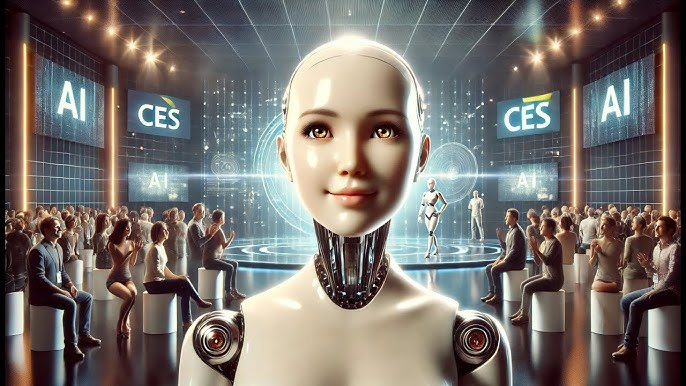
Everyone says humanoid robots will win, but Sequoia’s Alfred Lin disagrees.
The argument for humanoid robots has become almost religious in Silicon Valley. “The world is built for humans,” proponents argue, “so robots need to be human-shaped to navigate it.” Companies like Figure AI, Tesla with Optimus, and a dozen well-funded startups are racing to build bipedal machines with arms, hands, and human-like proportions. The logic seems ironclad: doorknobs, staircases, workbenches—everything is designed for our form factor.
But Alfred Lin, the legendary Sequoia Capital partner who helped scale companies like Airbnb, DoorDash, and Zappos, is pushing back against this orthodoxy. His contrarian take challenges one of the foundational assumptions driving billions in robotics investment: that mimicking human form is the path to useful AI agents in the physical world.
The Seductive Trap of Anthropomorphism
The humanoid robot argument rests on a seemingly unassailable premise. Humans built the world, so robots shaped like humans should navigate it most effectively. Doorways are six to seven feet tall. Light switches sit at chest height. Tools from hammers to keyboards assume five-fingered hands.
This thinking has deep roots in robotics history. The term “robot” itself comes from Karel Čapek’s 1920 play about artificial workers—human-shaped, of course. Honda’s ASIMO, Boston Dynamics’ Atlas, and countless research projects have pursued the humanoid dream for decades.
But Lin sees a fundamental flaw in this reasoning: the world wasn’t optimized for humans; it was compromised by human limitations.
We climb stairs because we can’t efficiently ascend vertical surfaces. We use doorknobs because we lack better security mechanisms. We arrange warehouses with aisles wide enough for human bodies because we had no alternative. These aren’t features—they’re constraints we’ve learned to work around.
Lessons from the Amazon Robotics Revolution
Lin draws his most compelling evidence from Amazon’s transformation of warehouse logistics—a revolution he witnessed firsthand through Sequoia’s investments and his operational experience.
When Amazon acquired Kiva Systems in 2012 for $775 million, they didn’t buy humanoid robots that walked around picking items like humans. They bought squat, orange machines that looked nothing like people. These robots didn’t navigate human-designed warehouses; they enabled warehouse redesign around robotic capabilities.
The Kiva approach (now Amazon Robotics) inverted the problem. Instead of asking “how do we make robots fit human spaces?” Amazon asked “how do we redesign spaces when humans aren’t the constraint?” The answer: bring shelves to stationary human pickers rather than sending humans walking through aisles.
The results were transformative:
– 50% reduction in operating costs
– 2-3x improvement in productivity
– Better ergonomics for human workers who stayed stationary
– Warehouse designs impossible with human-only labor
Lin’s insight: Amazon didn’t win by making robots more human-like. They won by making the system less constrained by human limitations.
The Zappos Warehouse Insight
Lin’s direct experience at Zappos (where he served as COO and CFO) reinforced this lesson. The shoe retailer’s warehouses were initially designed for human workers—predictably inefficient, with workers walking miles per shift.
When automation came, it wasn’t humanoid robots striding through aisles. It was conveyor systems, automated sorting, and eventually robotic solutions that looked nothing like humans. The warehouse evolved around the technology’s strengths rather than its ability to mimic human movement.
“We kept asking the wrong question,” Lin has noted in discussions. “We asked ‘how do robots work in our warehouse?’ when we should have asked ‘what’s the optimal warehouse when we’re not limited by human mobility?'”
This reframing unlocked orders of magnitude more value than incremental improvements in human-shaped automation ever could.
Why Humanoid Form Factor May Be Limiting
Lin’s argument against humanoid robots centers on several key limitations:
1. Bipedal Locomotion Is Inefficient
Humans walk on two legs because our evolutionary ancestors freed their hands for tool use. It’s a compromise, not an optimal solution. Wheels, tracks, or quadrupedal designs are more stable, faster, and energy-efficient for many applications.
2. Human Proportions Aren’t Universal Advantages
Yes, the world has human-sized doorways, but most work doesn’t require going through doors. Warehouses, factories, and agricultural settings can be redesigned. Even in existing buildings, specialized form factors often work better—consider how rolling carts outperform humans carrying boxes.
3. Dexterity Doesn’t Require Five Fingers
The human hand is versatile but not optimal for specific tasks. Industrial grippers, suction systems, and specialized end-effectors often outperform humanoid hands for particular jobs. General-purpose humanoid hands may be mediocre at everything rather than excellent at anything.
4. The Real World Is Rapidly Changing
The strongest argument against humanoid necessity: the physical world is increasingly designed for automation from the start. New warehouses, factories, and fulfillment centers are greenfield opportunities to optimize for robotic systems rather than accommodate human form factors.
The Digital-First Alternative
Lin sees the most transformative AI agents operating in digital environments where physical form is irrelevant. Consider:
– Software agents that automate workflows, manage schedules, and process information
– Robotic process automation that handles digital paperwork and data entry
– Autonomous systems that optimize supply chains and logistics
These agents create enormous value without any physical embodiment. When physical interaction is necessary, purpose-built solutions often suffice—specialized arms for specific tasks, drones for delivery, or non-humanoid mobile robots for transport.
The humanoid form factor may be most useful in the narrow domain of human-facing service roles: healthcare assistance, hospitality, or eldercare where the human shape provides psychological comfort. But these represent a fraction of potential AI agent applications.
Alternative Embodiment Approaches
Lin advocates for task-specific embodiment rather than general-purpose humanoid forms:
Modular Robotics
Systems with swappable components optimized for specific tasks—agricultural robots that reconfigure between planting, maintenance, and harvesting rather than humanoid farmhands.
Collaborative Redesign
Human-machine systems where environments evolve to leverage both human and robotic strengths. Rather than robots adapting to human spaces, spaces adapt to human-robot collaboration.
Digital-Physical Hybrids
AI agents that primarily operate in software but can invoke specialized physical systems when needed—like autonomous logistics software that commands various purpose-built robots.
Swarm Approaches
Multiple simple robots accomplishing complex tasks through coordination rather than individual humanoid capability—inspired by ant colonies rather than human workers.
The Investment Implications
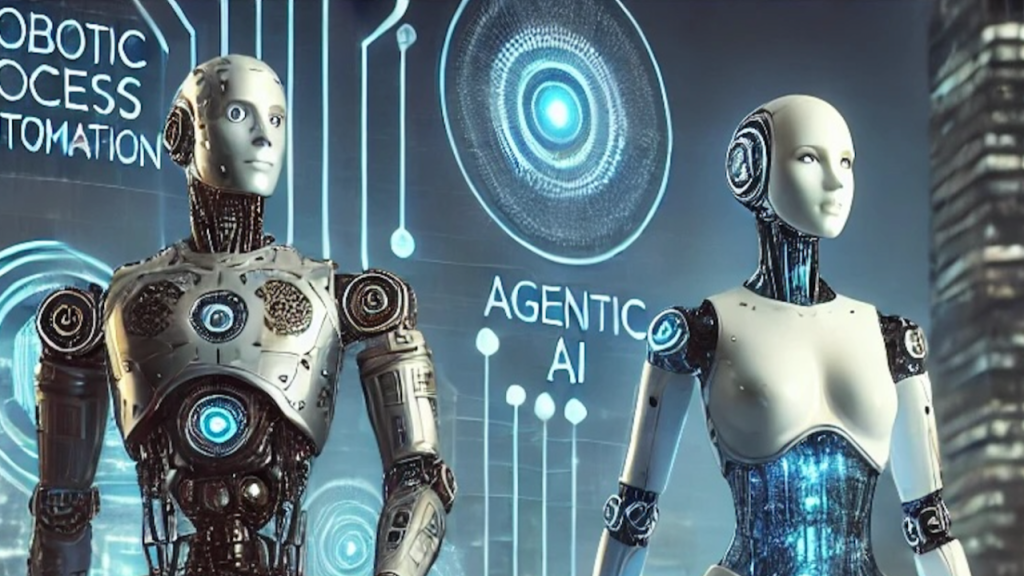
Lin’s perspective has significant implications for investors evaluating robotics companies:
Red flags:
– Solutions that require expensive humanoid hardware to replicate human tasks
– Business models assuming existing infrastructure can’t change
– Technology roadmaps focused on human-mimicking rather than task optimization
Green flags:
– Systems that enable infrastructure redesign
– Purpose-built solutions for specific high-value applications
– Software-first approaches with minimal specialized hardware
– Companies that understand when humanoid form does and doesn’t matter
Where Humanoids Might Still Win
To be fair, Lin isn’t arguing humanoid robots have zero use cases. There are scenarios where human form factor provides genuine advantages:
– Legacy infrastructure that truly can’t be modified (historic buildings, residential homes)
– Human-facing roles where appearance matters for comfort and trust
– Extreme generality requirements where deploying multiple specialized robots is impractical
But these may be smaller markets than the hype suggests. The trillion-dollar opportunities in logistics, manufacturing, and agriculture likely don’t require humanoid solutions.
The Verdict: Rethinking Embodiment
Alfred Lin’s contrarian position challenges the robotics industry to question its assumptions. The world being “built for humans” isn’t an argument for humanoid robots—it’s a constraint waiting to be overcome.
The companies that win the AI agent revolution may not be those building the most convincing artificial humans. They may be those that recognize human form as a limitation we can finally transcend.
As Lin’s experience at Amazon and Zappos demonstrates, the real breakthroughs come from redesigning systems around technology’s strengths rather than forcing technology into human-shaped constraints.
The future of AI agents in the physical world might look nothing like us—and that might be exactly why it succeeds.
Frequently Asked Questions
Q: Why does Alfred Lin think humanoid robots aren’t the future?
A: Lin argues that the world wasn’t optimized for humans but rather constrained by human limitations. Drawing on lessons from Amazon’s robotics revolution, he believes purpose-built solutions that enable system redesign are more effective than robots that simply mimic human form. The most valuable opportunities come from transcending human constraints rather than replicating them.
Q: What is the main argument for humanoid robots?
A: Proponents argue that since the world is built for humans—with doorways, stairs, tools, and workspaces designed for human proportions and capabilities—robots need humanoid form to navigate and work in existing infrastructure effectively. This logic has driven billions in investment into companies developing bipedal, human-shaped robots.
Q: What lessons does Lin draw from Amazon’s warehouse robotics?
A: Amazon’s Kiva robots succeeded not by mimicking humans but by enabling warehouse redesign around robotic capabilities. Instead of robots walking through human-designed aisles, the system brought shelves to stationary pickers. This resulted in 50% cost reductions and 2-3x productivity improvements—achieved by removing human constraints rather than replicating human form.
Q: Are there any use cases where humanoid robots make sense?
A: Yes, humanoid form may be valuable in legacy infrastructure that can’t be modified (like historic buildings or homes), human-facing service roles where appearance provides psychological comfort (eldercare, hospitality), and scenarios requiring extreme task generality where deploying multiple specialized robots is impractical. However, these may be smaller markets than current hype suggests.
Q: What alternative approaches does Lin suggest for AI agents?
A: Lin advocates for task-specific embodiment including modular robotics with swappable components, collaborative redesign where environments evolve for human-robot collaboration, digital-physical hybrids where AI primarily operates in software, and swarm approaches using multiple simple robots. The focus should be on optimizing for tasks rather than mimicking human form.