Multi-Platform SEO: Winning Across AI Search Engines in 2026
If you’re only optimizing for Google in 2026, you’re already losing.
The search landscape has fragmented beyond recognition. While you’ve been perfecting your title tags and building backlinks, your potential customers have been asking ChatGPT for recommendations, browsing Perplexity for research, and trusting Reddit threads over traditional search results. Google still commands significant traffic, but the monopoly is crumbling—and with it, the effectiveness of single-platform SEO strategies.
For growth marketers building SEO from the ground up, this presents both a challenge and an unprecedented opportunity. The game hasn’t just changed; the playing field has multiplied. Let’s break down why multi-platform optimization isn’t optional anymore, how AI search fundamentally alters ranking dynamics, and exactly what tactics you need to deploy across each platform.
Act 1: The New Search Ecosystem—Why One Platform Isn’t Enough
The Traffic Fragmentation Reality
The numbers tell a stark story. AI search platforms collectively handle over 2 billion queries monthly as of early 2026. ChatGPT’s search feature captures 12% of research-intent queries in tech verticals. Perplexity has become the default research tool for knowledge workers. Reddit’s integration into Google results has made community discussions as valuable as traditional articles.
This isn’t about Google dying—it’s about attention dispersing. Your ideal customer might:
– Start research on Perplexity for objective comparisons
– Ask ChatGPT for personalized recommendations based on their context
– Check Reddit for authentic user experiences
– Finally land on Google to verify specific details
– Watch YouTube reviews before making decisions
– Consult LinkedIn for B2B validation
If you’re invisible on any of these platforms, you’ve lost that customer at that touchpoint. Traditional SEO focused on capturing the bottom-of-funnel Google search. Multi-platform SEO recognizes that the customer journey now traverses multiple search ecosystems, each with different discovery mechanisms.
Why AI Search Platforms Matter Differently
AI search engines don’t just return links—they synthesize answers. When someone asks ChatGPT “What’s the best CRM for a 20-person sales team?” they don’t get ten blue links. They get a curated answer drawing from multiple sources, with recommendations tailored to the context they’ve provided.
This fundamental difference changes everything:
Citation over ranking: Instead of competing for position #1, you’re competing to be cited as a credible source within synthesized answers. Being mentioned alongside two competitors in an AI response might deliver more value than ranking #3 in traditional search.
Context-aware visibility: AI platforms understand query intent and user context far better than keyword matching ever could. Your content gets surfaced when it genuinely matches the nuanced question being asked, not just when it contains the right keyword density.
Cross-platform authority signals: AI models train on the entire internet. Your Reddit karma, LinkedIn engagement, YouTube subscriber count, and traditional backlinks all contribute to your perceived authority. Siloed SEO strategies miss this interconnected reality.
The Early-Mover Advantage Window
Here’s the opportunity: most companies are still optimizing exclusively for traditional search. The growth marketers who establish multi-platform presence now will build compounding advantages as these AI platforms mature.
Every piece of content you publish on LinkedIn builds authority that ChatGPT considers when citing sources. Every helpful Reddit comment establishes credibility that Perplexity factors into recommendations. Every YouTube video creates multimedia assets that AI search increasingly prioritizes.
The companies waiting for “best practices” to emerge will be playing catch-up while early movers accumulate months or years of authority signals across platforms.
Act 2: How AI Search Changes the Ranking Game
From Keywords to Concepts and Entities
Traditional SEO taught us to target keywords. AI search operates on conceptual understanding and entity recognition.
When you write about “project management software,” AI models don’t just match those words—they understand you’re discussing a category that includes specific entities (Asana, Monday.com, ClickUp), related concepts (task management, team collaboration, workflow automation), and user intents (comparing features, finding alternatives, solving specific problems).
This semantic understanding means:
Comprehensive coverage matters more than keyword density: AI search rewards content that thoroughly addresses a topic’s full conceptual landscape. A 2,000-word article covering every angle of remote team management will outperform five 400-word keyword-optimized posts.
Entity associations build topical authority: Consistently discussing related entities and concepts establishes you as an authority. If you write about marketing automation, and regularly mention HubSpot, Marketo, and Salesforce while discussing lead scoring, segmentation, and attribution, AI models recognize your domain expertise.
Natural language wins over optimization tricks: AI models trained on human conversation prefer naturally written content. The old tricks—keyword stuffing, awkward phrasing to hit exact match terms—actively hurt your chances of being cited by AI search.
Source Credibility Signals in AI Search
AI platforms evaluate source credibility differently than traditional search engines. Understanding these signals is crucial:
Authorship and expertise: AI search heavily weights demonstrated expertise. Articles with author bios, LinkedIn profiles showing relevant experience, and consistent publishing history in a niche get prioritized. Anonymous or poorly attributed content gets filtered out.
Cross-platform consistency: AI models check if information is consistent across sources. If your website claims one thing, but your LinkedIn posts suggest something different, credibility drops. Inconsistency signals unreliability.
Recency and maintenance: AI search strongly favors recently published or updated content. A 2024 article that hasn’t been updated gets deprioritized versus a regularly maintained resource. This rewards ongoing content investment over one-time publishing.
Engagement and social proof: While traditional backlinks still matter, AI platforms also consider engagement signals—comment quality, share rates, discussion depth. A LinkedIn post with thoughtful comments from industry experts builds more authority than a silent blog post.
Primary sources and originality: AI search increasingly identifies and rewards primary sources. Original research, first-hand case studies, and unique data get prioritized over rewritten aggregations. If everyone’s citing the same stat, be the source of that stat.
The Conversational Context Advantage
AI search’s conversational nature creates new optimization opportunities. Users provide more context in AI queries than traditional search:
– Traditional: “best crm software”
– AI search: “I’m looking for a CRM for a 15-person B2B sales team selling enterprise software with 6-month sales cycles, need strong pipeline visibility and forecasting”
This richer context means your content can be more specific and still get discovered. Instead of competing for generic high-volume terms, you can create content addressing specific scenarios, use cases, and customer profiles that AI search matches to nuanced queries.
The implication: long-form, scenario-based content that addresses specific situations performs exceptionally well in AI search, even if it would be considered “too niche” for traditional keyword-based SEO.
Act 3: Platform-Specific Tactics for Maximum Visibility
Google: Still the Foundation, But Evolved
Google remains critical, but your approach needs updating:
Optimize for Google’s AI Overviews: Structure content to be quotable in AI-generated summaries. Use clear headers, concise definitions, and bulleted key points that can be extracted cleanly.
Enhanced structured data: Implement comprehensive schema markup—not just basic article schema, but detailed entity markup, FAQ schema, how-to schema, and review schema. This helps both traditional Google and AI understanding.
Answer-focused architecture: Structure content around specific questions your audience asks. Use H2s as questions, provide direct answers in the first paragraph below each, then expand with supporting detail.
E-E-A-T signals: Strengthen Experience, Expertise, Authoritativeness, and Trust signals through author bios, credentials, cited sources, and regular content updates.
ChatGPT & AI Citation Optimization
Getting cited by ChatGPT and similar AI assistants requires specific approaches:
Create definitive resources: Comprehensive guides that AI models can reference as authoritative sources. Think “The Complete Guide to [Topic]” that genuinely covers everything.
Structured data for AI parsing: Use clear hierarchical structure, tables for comparisons, and lists for step-by-step processes. AI models extract and cite well-structured information more reliably.
Establish authorship: Always attribute content to named authors with credentials. Include LinkedIn profiles. AI models favor citable experts over anonymous content.
Update regularly: Maintain a content refresh schedule. AI models prioritize recent information and actively note when content was last updated.
Be quotable: Write sentences that stand alone as complete thoughts. AI citations often pull specific sentences, so make key points self-contained and clear.
Perplexity & AI Research Engines
Perplexity and similar AI research platforms favor certain content characteristics:
Source diversity: These platforms synthesize multiple sources. Position yourself as one credible voice among several by creating content that complements rather than duplicates existing resources.
Data and statistics: Original research, proprietary data, and well-sourced statistics get prominently featured. If you can’t create original research, thoroughly cite and compile data from multiple credible sources.
Comparative content: AI research engines excel at comparison queries. Create detailed comparison articles, feature matrices, and pros/cons analyses that these platforms can reference.
Technical depth: Perplexity users often want deeper information than casual searchers. Don’t shy away from technical detail, industry jargon, and sophisticated analysis.
Reddit & Community Platforms
Reddit’s integration into search results and AI training data makes community engagement crucial:
Genuine participation: Build karma and credibility through authentic participation. Answer questions, share insights, and contribute value before promoting content.
Content seeding: Share your best content in relevant subreddits when genuinely helpful to discussions. The key is relevance and value, not self-promotion.
Monitor brand mentions: Use tools to track when your brand or industry gets discussed, then engage thoughtfully. These interactions build authority that AI models recognize.
Create discussion-worthy content: Publish content that sparks discussion—controversial takes (backed by data), original research, or contrarian insights that communities want to debate.
LinkedIn for B2B Authority
For B2B growth marketers, LinkedIn has become essential for AI search authority:
Consistent publishing: Post 3-5 times weekly with substantive insights. LinkedIn’s algorithm rewards consistency, and AI models factor engagement into authority assessments.
Document format posts: LinkedIn’s document feature gets indexed and cited by AI search. Repurpose your best content into LinkedIn documents for additional visibility.
Engage with industry leaders: Thoughtful comments on influential posts build network effects and association with recognized authorities.
Employee amplification: Encourage team members to share and engage with company content. Collective authority compounds individual efforts.
YouTube for Multimedia Authority
Video content increasingly influences AI search results:
Tutorial and how-to content: AI assistants often reference or recommend YouTube tutorials. Create comprehensive how-to videos that serve as definitive resources.
Transcripts and closed captions: Ensure accurate transcripts exist for all videos. AI models parse video transcripts for context and citations.
Structured video content: Use chapters, clear titles, and descriptions with key terms. Make videos easy for AI to understand and reference.
Cross-reference written content: Link YouTube content to written guides and vice versa. This cross-platform presence strengthens overall authority.
The Integration Strategy: Making Multi-Platform SEO Manageable
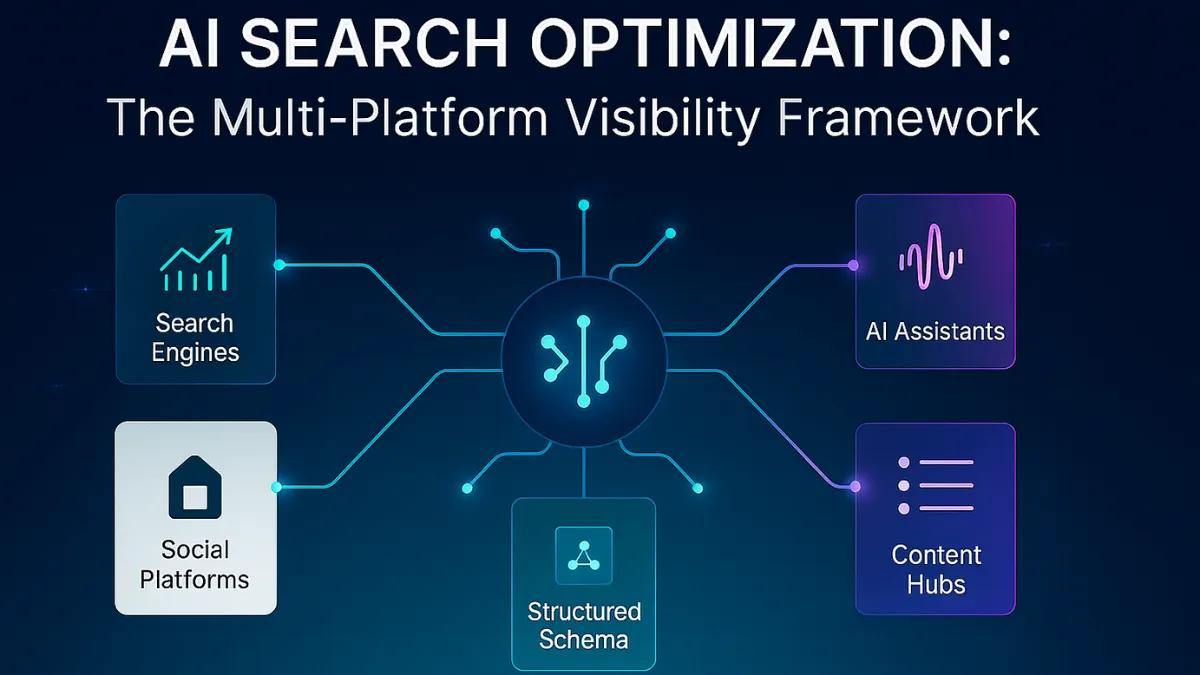
The prospect of optimizing for six platforms simultaneously sounds overwhelming. Here’s how to make it manageable:
Content Hub Approach
Create comprehensive content hubs on your owned properties, then strategically distribute and adapt for each platform:
1. Core content: Publish definitive guides on your website with full SEO optimization
2. LinkedIn documents: Adapt key sections into LinkedIn native content
3. YouTube videos: Create video versions of tutorials and how-tos
4. Reddit participation: Share insights and link to resources when relevant
5. Thread summaries: Distill key points into Twitter/X threads
6. Community engagement: Answer questions across platforms, linking back to detailed resources
Authority Building Workflow
Establish a workflow that builds authority across platforms simultaneously:
– Weekly publishing: One comprehensive article on your site
– Daily engagement: 20-30 minutes engaging on LinkedIn, Reddit, or relevant communities
– Bi-weekly video: Alternate between YouTube tutorials and LinkedIn videos
– Monthly research: Original data or analysis that positions you as a primary source
– Continuous updates: Quarterly refresh of top-performing content
Measurement Across Platforms
Track success differently for each platform:
– Google: Traditional rankings, organic traffic, conversion rates
– AI citations: Brand mentions in ChatGPT/Perplexity responses (manual checking, emerging tools)
– Reddit: Karma, post engagement, traffic referrals
– LinkedIn: Engagement rate, profile views, inbound leads
– YouTube: Watch time, subscriber growth, search impressions
The key metric is collective visibility—are you showing up across the customer journey, regardless of where they start their research?
The Multi-Platform SEO Mindset

Succeeding in this new landscape requires shifting from channel-specific tactics to audience-centric strategy. Your audience doesn’t think in platforms—they flow between them naturally. Your SEO strategy should mirror that fluidity.
Stop asking “How do I rank on Google?” Start asking “How do I become the recognized authority that every platform cites?”
The answer involves:
– Creating genuinely comprehensive, authoritative content
– Building credibility through consistent expertise demonstration
– Engaging authentically across communities
– Maintaining and updating content continuously
– Establishing clear authorship and credentials
– Providing unique value through original research or insights
These principles work across every platform because they’re fundamentally about deserving visibility, not gaming algorithms.
Starting Your Multi-Platform Strategy Today
If you’re building SEO strategy from scratch, you’re actually in an advantageous position—no legacy tactics to unlearn, no single-platform focus to break.
Here’s your starter playbook:
Month 1: Foundation
– Set up proper website structure with comprehensive schema markup
– Create author profiles with credentials and social links
– Identify your 10 core topics and begin comprehensive guides
– Establish presence on LinkedIn, Reddit, and relevant communities
Month 2-3: Core Content
– Publish 2-3 definitive guides monthly on core topics
– Adapt each guide into LinkedIn articles and YouTube videos
– Begin daily engagement on one community platform
– Start original research or data collection for future content
Month 4-6: Expansion
– Increase publishing frequency to weekly
– Add second community platform to engagement routine
– Publish first original research or data-driven content
– Begin systematic content refresh cycle
– Experiment with AI search optimization tactics
Month 7-12: Optimization
– Analyze which content gets AI citations (manual checks)
– Double down on formats and topics showing cross-platform traction
– Build employee advocacy program for B2B amplification
– Establish yourself as go-to source in your niche across platforms
The growth marketers who win in 2026 and beyond won’t be the ones who mastered a single platform. They’ll be the ones who built genuine, multi-platform authority that AI search engines can’t help but cite.
The fragmented search landscape isn’t a problem to solve—it’s an opportunity to capture. Start building your multi-platform presence today, and you’ll be competing from a position of strength while others scramble to catch up.
Frequently Asked Questions
Q: How do I know if my content is being cited by AI search engines like ChatGPT?
A: Currently, tracking AI citations requires manual checking. Periodically query ChatGPT, Perplexity, and other AI platforms with questions your content answers, and see if your brand or website appears in responses. Some emerging SEO tools are beginning to offer AI citation tracking features. Also monitor referral traffic from AI platforms in your analytics. As these platforms mature, citation tracking will become more sophisticated, but for now, manual spot-checking combined with overall traffic trend analysis is your best approach.
Q: Should I abandon traditional Google SEO to focus on AI search platforms?
A: Absolutely not. Google still drives significant traffic and remains crucial for most businesses. The strategy isn’t abandoning Google—it’s expanding beyond Google-only optimization. Many tactics that help with AI search (comprehensive content, clear structure, expertise signals, regular updates) also improve traditional Google SEO. Think of it as building on your Google foundation rather than replacing it. Start with solid Google SEO fundamentals, then layer in AI-specific optimizations and multi-platform presence.
Q: What’s the most important ranking factor for AI search engines?
A: Source credibility is paramount. AI search platforms prioritize authoritative, trustworthy sources over keyword-optimized content. This means clear authorship, demonstrated expertise, cross-platform consistency, and engagement signals matter more than traditional SEO factors. Focus on establishing genuine authority in your niche through comprehensive content, original insights, and authentic community engagement. AI models are sophisticated enough to identify and reward genuine expertise while filtering out thin, optimized-but-not-authoritative content.
Q: How much time should I spend on each platform in a multi-platform SEO strategy?
A: Prioritize based on where your audience spends time and where you can demonstrate expertise effectively. A practical split for B2B growth marketers might be: 40% on owned content (website/blog with full SEO), 25% on LinkedIn engagement and publishing, 15% on YouTube or video content, 10% on Reddit or community platforms, and 10% on monitoring and optimizing for AI citations. Adjust based on your strengths—if you’re a strong writer, emphasize LinkedIn and written content; if you excel on video, weight YouTube more heavily. The key is consistent presence across at least 3-4 platforms rather than spreading too thin.
Q: Can small companies with limited resources compete in multi-platform SEO?
A: Yes, and sometimes more effectively than large companies. Multi-platform SEO rewards authentic expertise and engagement over budget. A founder sharing genuine insights on LinkedIn and thoughtfully answering Reddit questions can build more authority than a large company publishing generic content. Start focused—pick two platforms beyond your website where your audience congregates, and commit to consistent, quality participation. As you gain traction, expand strategically. The content hub approach (one comprehensive piece adapted across platforms) makes resource-constrained execution feasible. Quality and consistency beat quantity and budget in this landscape. Your Attractive Heading