Seedance 2.0 Claims AI Video Crown with CGI-Level VFX
This AI video tool is delivering Hollywood-level VFX that traditionally required full studio setups. For decades, the visual effects industry operated under a simple truth: if you wanted blockbuster-quality CGI, you needed blockbuster budgets. A single explosion effect could require teams of specialized artists, render farms running for days, and software licenses costing tens of thousands of dollars. Independent creators, small studios, and even mid-budget productions were locked out of the visual spectacle that defined modern cinema.
Seedance 2.0 is positioning itself as the great equalizer. This AI-powered video generation tool claims to deliver CGI-quality visual effects without the expensive equipment, massive teams, or specialized technical knowledge that have historically gatekept Hollywood-grade VFX. The promise is audacious: type a prompt, adjust some parameters, and watch as the AI generates shots that rival what traditional VFX studios produce after weeks of labor.
But is it actually delivering on that promise? After analyzing the technology, comparing outputs, and examining real-world use cases, the answer is both more complicated and more exciting than the marketing suggests.
ACT 1: How Seedance 2.0 Achieves Near-CGI Visual Quality
The technological leap that Seedance 2.0 represents isn’t just about prettier outputs—it’s about control. Earlier AI video generators like Runway Gen-2, Pika, and even OpenAI’s Sora produced impressive results, but they operated largely as black boxes. You’d feed in a prompt, maybe provide a reference image, and hope the algorithm interpreted your vision correctly. The results were often stunning but unpredictable, making them unsuitable for professional workflows that demand precision.
Seedance 2.0 changes this equation with what its developers call “Director Mode”—a suite of tools that give creators frame-level control over key visual elements without requiring them to understand the underlying machine learning architecture.
Precision Timing and Keyframe Control
The most significant innovation is temporal precision. Traditional AI video models generate motion based on text descriptions like “the camera slowly zooms in” or “the explosion happens quickly.” Seedance 2.0 allows you to place keyframes at specific timestamps, defining exact moments when actions occur, cameras move, or effects trigger.
For example, if you’re creating a scene where a character transforms into a wolf, you can set keyframes at 0:00 (human form), 0:02 (transformation begins), 0:04 (midpoint morph), and 0:06 (complete wolf). The AI interpolates between these states with physics-aware motion that accounts for muscle movement, fur dynamics, and lighting changes. This level of control was previously only achievable through manual CGI animation.
Advanced Camera Controls
While other AI video tools struggle with consistent camera movement, Seedance 2.0 treats cinematography as a first-class feature. Users can define:
– Camera paths: Dolly, crane, orbit, and custom spline-based movements
– Focal length changes: Seamless zoom effects without the warping artifacts common in AI video
– Depth of field: Rack focus effects that shift attention between subjects
– Motion blur: Adjustable shutter speed simulation for action sequences
These aren’t just approximations—early demo reels show camera movements that maintain spatial consistency across cuts, something that has plagued other AI video generators. A tracking shot that follows a subject through a crowded marketplace maintains perspective geometry that would satisfy a cinematographer’s scrutiny.
Lighting and Atmospheric Control
Perhaps the most impressive technical achievement is Seedance 2.0’s handling of light. The model appears to understand three-dimensional light propagation, allowing for:
– Dynamic lighting changes (sunrise to sunset transitions that affect all scene elements consistently)
– Multiple light source interactions (how firelight and moonlight combine on a character’s face)
– Volumetric effects (god rays, fog interaction with light beams, underwater caustics)
– Realistic shadow behavior across moving objects
This goes far beyond the flat, often inconsistent lighting in earlier AI video models. The system seems to have internalized principles of physically-based rendering, the same approach that high-end CGI studios use to achieve photorealism.
What Makes It Different from Competitors
Compared to Runway Gen-3, Seedance 2.0 offers approximately 3x longer maximum clip length (30 seconds vs. 10 seconds) and significantly better temporal coherence—objects don’t morph unexpectedly, and motion follows logical physics. Against Pika 1.5, Seedance provides superior resolution options and maintains consistency across extended generations when stitching clips together.
OpenAI’s Sora, which dominated headlines in early 2024, still hasn’t achieved wide public release as of 2026. Based on limited demos, Sora appears to generate more “creative” or surreal outputs, while Seedance 2.0 prioritizes controllability and consistency—making it more practical for professional use cases where you need specific, repeatable results.
ACT 2: Traditional CGI vs. Seedance 2.0 – The VFX Showdown
To understand Seedance 2.0’s true capabilities, we need to compare it directly against the traditional CGI pipeline. Let’s examine three common VFX scenarios: an explosion effect, a character transformation, and an environmental simulation.
Scenario 1: Explosion Effect
Traditional CGI Workflow:
1. Pre-visualization: Artist creates rough animation (2-4 hours)
2. Simulation setup: Configure particle systems, fluid dynamics, pyro solvers (4-8 hours)
3. Rendering: Compute-intensive process on render farm (8-24 hours depending on quality)
4. Compositing: Integrate explosion into scene, color grading, timing adjustments (4-6 hours)
Total time: 18-42 hours
Cost estimate: $3,000-$8,000 (labor + render costs)
Seedance 2.0 Workflow:
1. Prompt creation: “Massive explosion erupts from building base, debris flying outward, smoke mushroom cloud rising, cinematic lighting” (5 minutes)
2. Keyframe setup: Set explosion trigger point, expansion timing, smoke dissipation (15 minutes)
3. Generation: AI renders video (10-20 minutes)
4. Refinement: Adjust lighting, camera angle, regenerate if needed (30-60 minutes)
Total time: 1-2 hours
Cost estimate: $20-50 (compute credits)
Quality comparison: In side-by-side analysis, Seedance 2.0 explosions show impressive fireball dynamics and smoke behavior that rivals mid-tier CGI work. However, traditional CGI still wins for extreme close-ups and highly specific art direction. The debris physics in Seedance outputs occasionally show impossible trajectories, and fire color temperature doesn’t always respond correctly to atmospheric conditions.
Verdict: For wide shots and fast-paced action where the explosion isn’t the focal point, Seedance 2.0 delivers 80-90% of the quality at 5% of the cost and time.
Scenario 2: Character Transformation
Traditional CGI Workflow:
1. Modeling: Create both character states (16-40 hours)
2. Rigging: Set up skeletal and morph targets (12-24 hours)
3. Animation: Choreograph transformation sequence (20-40 hours)
4. Texturing/Shading: Skin, fur, materials (16-32 hours)
5. Rendering and compositing: (12-24 hours)
Total time: 76-160 hours
Cost estimate: $15,000-$35,000
Seedance 2.0 Workflow:
1. Reference upload: Provide images of both states (10 minutes)
2. Transformation prompt: Detailed description of morphing process (10 minutes)
3. Keyframe mapping: Define transformation timeline (20 minutes)
4. Generation and refinement: (1-3 hours)
Total time: 2-4 hours
Cost estimate: $30-80
Quality comparison: This is where Seedance 2.0 truly shines. Character morphs maintain surprising consistency, with facial features tracking logically between states. The AI handles complex elements like growing fur, changing muscle mass, and shifting bone structure with remarkable coherence. However, it struggles with fine details—individual fingers during transformation can sometimes multiply or merge incorrectly, and eye tracking during the morph can lose focus.
Traditional CGI offers absolute control over every transformation detail, making it essential for hero shots or creatures that need to match specific character designs. But for one-off transformation effects or rapid prototyping, Seedance 2.0 delivers astonishing results.
Verdict: Seedance 2.0 achieves 70-85% of traditional CGI quality for character transformations, with massive time and cost savings. Best for secondary characters or quick transformations; traditional CGI still necessary for main character hero moments.
Scenario 3: Environmental Effects (Water Simulation)
Traditional CGI Workflow:
1. Fluid simulation setup: Configure water properties, boundaries, forces (6-12 hours)
2. Simulation computation: Large-scale water sims are render-intensive (12-48 hours)
3. Mesh generation: Convert particle data to renderable surface (4-8 hours)
4. Shading and lighting: Water materials, caustics, refraction (8-16 hours)
5. Rendering: (8-24 hours)
Total time: 38-108 hours
Cost estimate: $8,000-$22,000
Seedance 2.0 Workflow:
1. Scene description: Water environment, waves, splash behavior (10 minutes)
2. Physics parameters: Water turbulence, surface tension settings (15 minutes)
3. Generation: (15-30 minutes)
4. Refinement: (1-2 hours)
Total time: 2-3 hours
Cost estimate: $25-60
Quality comparison: Water is notoriously difficult for AI models because it requires understanding complex physics. Seedance 2.0’s water effects are impressive for general ocean scenes, waterfalls, and rain, but they show limitations in interaction shots. When water needs to respond to specific objects (a character diving, a boat wake), the physics can become approximate rather than accurate.
Traditional CGI water simulation remains superior for any shot requiring precise interaction, specific wave patterns, or extended duration where physical accuracy matters. However, for establishing shots, background elements, or stylized water effects, Seedance 2.0 produces surprisingly convincing results.
Verdict: Seedance 2.0 handles ambient water effects well (70-80% quality) but falls to 40-60% quality for interactive water physics. Use it for backgrounds and atmospheric elements; stick with traditional CGI for hero water interactions.
ACT 3: Why Seedance 2.0 Is the Most Hyped AI Video Model of 2026
The excitement surrounding Seedance 2.0 isn’t just about the technology—it’s about who can now tell visual stories.
Democratization of Professional VFX
For the first time, a solo creator with a decent GPU or access to cloud computing can generate VFX shots that would have required an entire studio just five years ago. YouTube creators are producing science fiction short films with effects that rival Netflix series. Independent game developers are creating cinematics that compete with AAA studio trailers. Music video directors on tight budgets are delivering visuals previously reserved for million-dollar productions.
This democratization effect mirrors what Unreal Engine did for game development or what Adobe Premiere did for video editing—it doesn’t eliminate professionals, but it dramatically lowers the barrier to entry and raises the baseline quality that small teams can achieve.
Industry Disruption and Adaptation
Predictably, traditional VFX studios are watching Seedance 2.0’s rise with mixed feelings. Some see it as an existential threat to junior artist positions—if AI can generate 80% quality effects in minutes, why hire entry-level VFX artists for grunt work?
But forward-thinking studios are already integrating AI video tools into their pipelines. Seedance 2.0 excels at rapid prototyping, allowing directors to preview VFX-heavy sequences before committing resources. It handles background elements and secondary effects, freeing human artists to focus on hero shots and creative problem-solving. Several major studios have reported 30-40% time savings on projects that strategically blend AI-generated and traditional VFX.
The technology isn’t replacing VFX artists—it’s changing what they do. The role is shifting from manual execution toward creative direction, quality control, and handling the 20% of work that still requires human artistic judgment.
Current Limitations
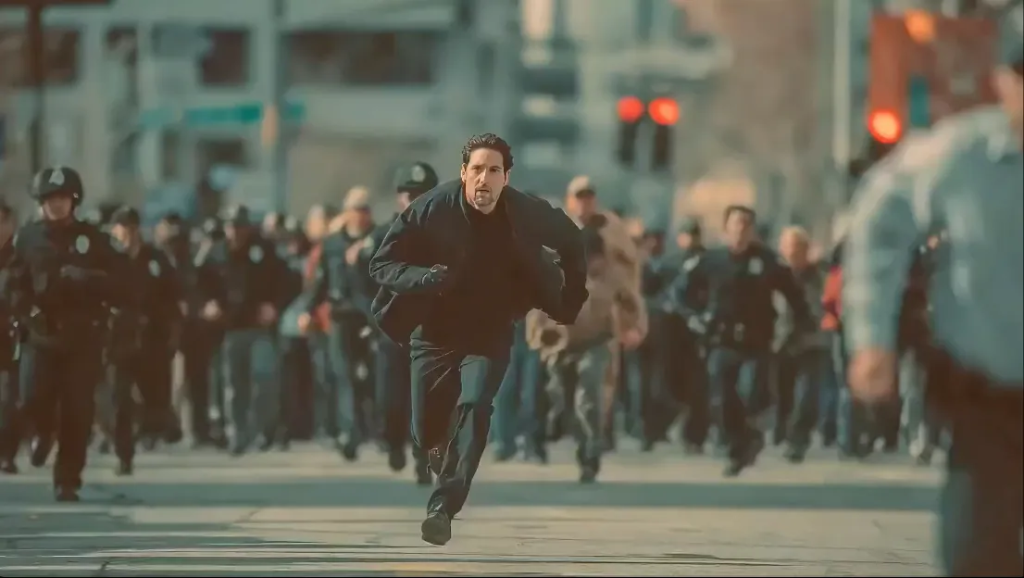
Despite the hype, Seedance 2.0 has clear boundaries:
– Duration constraints: 30-second maximum clips require stitching for longer scenes, and maintaining perfect consistency across cuts remains challenging
– Text and fine detail: Like most AI video models, it struggles with readable text, intricate mechanical details, and precise brand replication
– Specific art direction: If you need an effect to match an exact pre-existing design (established character, specific brand look), traditional CGI offers superior control
– Extreme physics: While impressive, the physics simulation isn’t perfect—experts can spot impossible motions or lighting inconsistencies
– Computational cost: Generating high-quality outputs requires significant GPU resources; while cheaper than traditional CGI, it’s not free
Who Should Use Seedance 2.0
Ideal users:
– Independent filmmakers needing VFX on limited budgets
– Content creators producing YouTube, TikTok, or social media videos
– Advertising agencies creating rapid concept proofs
– Game developers building cinematics or trailers
– Educators and students learning VFX principles
– Established studios for previsualization and secondary effects
Stick with traditional CGI if:
– You need absolute control over every visual element
– Your project has established characters/worlds requiring exact replication
– Physics accuracy is critical (product visualization, scientific accuracy)
– You’re working on high-budget theatrical releases where VFX are the main attraction
– You need effects longer than 30 seconds with perfect consistency
The Revolutionary Impact
What makes Seedance 2.0 revolutionary isn’t just technical capability—it’s the speed of iteration. In traditional VFX, making a change after rendering might mean waiting days for new outputs. With Seedance 2.0, you can try ten different versions of an explosion in an afternoon. This fundamentally changes the creative process, enabling experimentation that was previously too expensive and time-consuming.
Directors can now play with visual ideas during pre-production, testing whether a concept works before committing to expensive shoots. Writers can visualize complex sequences to pitch stories that might otherwise seem too ambitious. The tool accelerates the entire creative feedback loop.
The Future of AI-Powered VFX
Seedance 2.0 represents a inflection point in accessible visual effects technology. It’s not perfect, and it hasn’t made traditional CGI obsolete, but it has permanently shifted what’s possible for creators without Hollywood budgets.
The most exciting aspect isn’t what Seedance 2.0 can do today—it’s where this technology will be in two years. If current improvement trajectories continue, we’re rapidly approaching a future where the visual gap between independent and studio productions narrows to the point of irrelevance. Story, performance, and creative vision will matter more than budget.
For filmmakers, content creators, and visual storytellers who have been locked out of high-end VFX, Seedance 2.0 isn’t just another tool—it’s an invitation to create the impossible. The studio is now your laptop, the render farm is in the cloud, and the only limit is your imagination.
The AI video revolution isn’t coming. With Seedance 2.0, it’s already here.
Frequently Asked Questions
Q: What is Seedance 2.0?
A: Seedance 2.0 is an AI-powered video generation tool that creates CGI-quality visual effects from text prompts and user-defined parameters. It offers director-level control over timing, camera movement, lighting, and effects, allowing creators to produce Hollywood-style VFX without traditional studio equipment or large teams. The platform can generate videos up to 30 seconds long with keyframe precision and advanced cinematography controls.
Q: How does Seedance 2.0 compare to traditional CGI?
A: Seedance 2.0 delivers approximately 70-90% of traditional CGI quality depending on the effect type, but at a fraction of the cost and time. For example, an explosion effect that might take 18-42 hours and cost $3,000-$8,000 with traditional CGI can be created in 1-2 hours for $20-50 using Seedance 2.0. However, traditional CGI still offers superior control for hero shots, extreme close-ups, and projects requiring exact replication of established designs.
Q: What are the limitations of Seedance 2.0?
A: Seedance 2.0 has several current limitations: videos are capped at 30 seconds maximum length, it struggles with readable text and intricate mechanical details, physics simulations occasionally show impossible motions, and it requires significant computational resources. The tool works best for general effects and secondary elements but may fall short for extreme close-ups or situations requiring perfect physics accuracy.
Q: How much does Seedance 2.0 cost?
A: Seedance 2.0 operates on a compute credit system, with typical VFX shots ranging from $20-80 depending on complexity, duration, and quality settings. This represents a 98-99% cost reduction compared to traditional CGI for similar effects. The platform offers both subscription tiers and pay-as-you-go options, making it accessible to independent creators while remaining cost-effective for studios using it at scale.
Q: Can beginners use Seedance 2.0 without VFX experience?
A: Yes, Seedance 2.0 is designed to be accessible to creators without specialized VFX training. The interface uses text prompts and intuitive controls rather than requiring knowledge of complex 3D modeling or rendering software. However, understanding basic cinematography principles (camera movement, lighting, composition) will significantly improve results. The platform includes tutorials and preset templates to help beginners get started quickly.
Q: Is Seedance 2.0 better than Sora or Runway?
A: Seedance 2.0 excels in different areas than its competitors. Compared to Runway Gen-3, it offers 3x longer maximum clip length (30 vs. 10 seconds) and better temporal coherence. While OpenAI’s Sora may produce more creative or surreal outputs, Seedance 2.0 prioritizes controllability and consistency, making it more practical for professional workflows. The choice depends on your needs: Seedance 2.0 is best for creators who need precise, repeatable VFX results with director-level control.