MuseNet AI: How It Is Transforming Music Composition
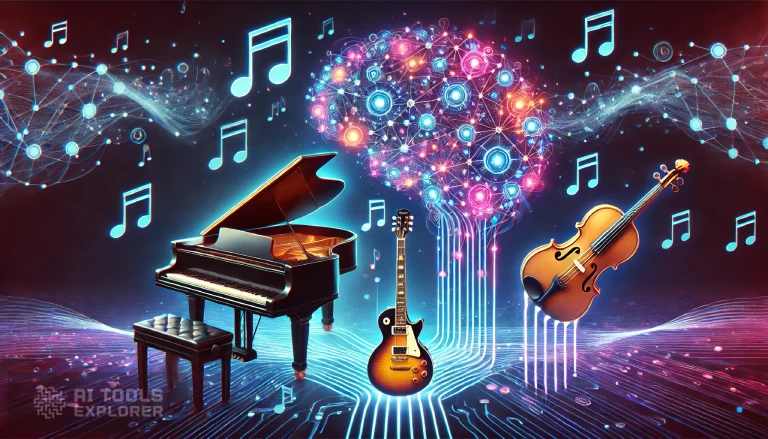
Artificial intelligence is now composing symphonies, crafting melodies, and inspiring a new wave of digital creativity. At the heart of this movement is MuseNet, OpenAI’s powerful AI music generation system. It is capable of producing multi-instrument compositions across a wide range of genres and styles.
Built on deep neural networks in music, MuseNet learns from vast amounts of musical data. Understanding rhythm, tone, and structure in ways that allow it to emulate both classical legends and contemporary artists.
This innovation doesn’t aim to replace human creativity; it enhances it.
Today, creative AI tools for composers like MuseNet offer musicians, producers, and creators the ability to experiment. Collaborate with algorithms and uncover new artistic directions that were once unimaginable.
MuseNet stands as a bridge between technology and artistry. Proving that when humans and machines compose together, the results can be truly extraordinary.
What Makes MuseNet Unique
MuseNet stands out as one of the most advanced examples of AI music generation, combining technical precision with artistic depth.
Developed by OpenAI, MuseNet is powered by deep neural networks. In music that has been trained on a massive dataset of MIDI files from various genres, composers, and eras.
This training allows the system to recognize complex musical patterns such as chord progressions, rhythm structures, and stylistic nuances.
It uses them to generate original, coherent pieces that sound remarkably human.
Unlike conventional rule-based music software, MuseNet doesn’t rely on preset templates or limited genre boundaries.
Instead, it uses a 72-layer transformer model capable of analyzing relationships between notes over long sequences. Enabling it to produce compositions that flow naturally and express emotion.
This makes it possible for MuseNet to create anything from a jazz improvisation to a cinematic soundtrack. A symphony that blends classical orchestration with modern pop harmonies.
Another key factor that makes MuseNet unique is its adaptability for creators.
As one of the most innovative creative AI tools for composers. It offers musicians an intelligent collaborator rather than a replacement.
Composers can use MuseNet to explore new melodies, test harmonies, or even co-create hybrid styles that merge different musical traditions.
For producers and educators, MuseNet serves as a tool for inspiration and learning, helping to illustrate how machine learning understands and interprets music theory in practice.
Ultimately, what makes MuseNet truly remarkable is its ability to merge data-driven learning with human-like creativity.
It doesn’t just replicate music, it imagines it, offering a glimpse into a future where artificial intelligence and artistic expression work hand in hand to expand the boundaries of sound and creativity.
How AI Music Generation Works
AI music generation is the process of teaching machines to understand and create music by analyzing patterns in large datasets of existing compositions.
Systems like MuseNet rely on advanced neural networks in music, specifically, transformer models that can process and learn relationships between notes, chords, rhythms, and instruments over time.
These models mimic sound and learn the structure of music, allowing them to generate new, coherent pieces that follow musical logic and emotional flow.
MuseNet begins by studying thousands of MIDI files, each representing musical data from different genres, composers, and instruments.
The neural network identifies statistical relationships between musical elements, such as how a certain chord might typically resolve, or how melody and harmony interact in a given style.
Once trained, it can predict and generate the sequence of notes based on the musical context it has learned.
What makes MuseNet’s AI music generation so advanced is its ability to handle long-term dependencies.
It can maintain consistency across entire compositions, keeping rhythm, harmony, and structure intact while also adapting to stylistic cues.
This allows it to create anything from a jazz solo to a full orchestral arrangement without direct human input.
For musicians and creators, this process translates into an invaluable creative AI tool for composers.
Instead of starting from a blank page, they can collaborate with MuseNet to generate ideas, reimagine familiar genres, or inspire new compositions.
Through this fusion of human creativity and machine intelligence, AI music generation transforms music-making into an interactive, limitless creative experience.
Benefits for Composers and Creators
Below are the key benefits MuseNet offers to the modern creative process:
- Endless Creative Inspiration
One of the most valuable advantages of MuseNet is its ability to inspire.
Every composer experiences creative blocks, but MuseNet can instantly generate melodies, harmonies, and complete arrangements across multiple genres.
It provides artists with fresh perspectives and unique combinations that can spark new ideas and creative directions.
- Faster Music Production
Time is often a critical factor in music production.
MuseNet dramatically improves efficiency by generating quality drafts or variations of compositions within seconds.
For film scorers, game developers, and content creators who need quick, diverse soundtracks, MuseNet’s AI music generation capabilities reduce manual effort and speed up the creative workflow.
- Collaboration Between Human and Machine
MuseNet isn’t designed to replace composers; it’s built to collaborate with them.
As one of the most advanced creative AI tools for composers, it allows users to guide the system, refine generated outputs, and build upon AI-created ideas.
This partnership results in richer, more dynamic compositions that merge human emotion with computational precision.
- Accessibility for All Skill Levels
MuseNet makes music creation easy, so much so that individuals without formal
can use it to compose, arrange, or explore new musical concepts.
By lowering the barrier to entry, MuseNet encourages experimentation and opens the world of composition to anyone with curiosity and creativity.
- Expanding the Boundaries of Music
Beyond speed and inspiration, MuseNet helps artists challenge traditional limits of genre and form.
It can blend classical motifs with electronic beats or mix jazz improvisation with cinematic scoring.
This level of innovation pushes creators to redefine what music can be, fostering a new era where human artistry and AI intelligence compose in harmony.
The Future of AI-Driven Music
The future of AI-driven music is not about machines replacing musicians but about creating new possibilities for collaboration, innovation, and accessibility.
With systems like MuseNet leading the way, the boundary between human creativity and artificial intelligence is becoming increasingly fluid, giving rise to a new generation of composers and producers who create with both instinct and algorithms.
Below are ways MuseNet is redefining the future of music.
1. Expanding Creative Collaboration
AI tools such as MuseNet will continue to evolve as creative partners, learning from each artist’s unique style and preferences.
Future versions could allow real-time interaction where musicians guide the AI during composition sessions, shaping melodies, harmonies, and arrangements on the fly.
This deeper collaboration will make AI music generation more intuitive and personalized than ever before.
2. Democratizing Music Creation
In the coming years, creative AI tools for composers will make professional-quality music production accessible to everyone, regardless of skill level.
Beginners will be able to create rich, layered compositions with minimal technical knowledge, while seasoned musicians will use AI to experiment with new genres, arrangements, and cross-cultural sounds.
This democratization will help more voices and ideas emerge in the global music landscape.
3. Evolving Music Education and Learning
AI systems built on neural networks in music will also transform how people learn music.
Students will have access to interactive platforms that analyze their compositions, suggest improvements, and generate examples in real time.
Educators can use these tools to teach complex music theory concepts through visualization and AI-assisted demonstrations, making learning more engaging and effective.
4. New Roles for Musicians and Producers
As AI becomes more integrated into creative workflows, musicians and producers will shift from being sole creators to becoming curators and collaborators with intelligent systems.
Their focus will move toward refining emotion, storytelling, and artistic direction areas where human creativity remains unmatched.
AI will handle repetitive or technical tasks, freeing artists to focus on innovation and expression.
5. Redefining the Music Industry
The future music industry will likely embrace AI as a mainstream production tool.
From soundtracks and advertisements to personalized playlists and generative soundscapes, AI-driven music will influence every corner of entertainment.
However, this growth also brings important discussions about copyright, ownership, and authenticity issues that will shape how human and machine-made art coexist ethically.
In essence, the future of AI music is a symphony of collaboration where human emotion meets artificial intelligence to create sounds that are richer, more diverse, and infinitely imaginative.
MuseNet and similar innovations are only the beginning of a musical revolution that will redefine how the world listens, learns, and creates.
Final Thoughts
The rise of MuseNet marks a turning point in the relationship between technology and creativity.
What began as an experiment in AI music generation has evolved into a powerful example of how machines can understand and contribute to one of humanity’s most expressive art forms of music.
As one of the most impactful creative AI tools for composers, MuseNet bridges the gap between data and artistry, empowering musicians to create in new, imaginative ways.
It’s not about replacing human composers but amplifying their potential, offering inspiration, collaboration, and new perspectives that push musical boundaries further than ever before.
Together, artists and AI can compose a new era of sound where innovation, emotion, and intelligence harmonize to create music that resonates across time and technology.
Frequently Asked Questions
1. What is MuseNet?
MuseNet is an advanced AI music generation system developed by OpenAI.
It uses deep learning and neural networks in music to compose original pieces across multiple genres and instruments.
MuseNet can create music that blends styles from classical symphonies to modern pop and jazz demonstrating how AI can understand and replicate complex musical patterns.
2. How Does MuseNet Create Music?
MuseNet is trained on thousands of MIDI files representing a wide range of musical styles.
Using a transformer-based neural network, it analyzes relationships between notes, chords, and rhythms.
This allows it to predict what should come next in a sequence much like how language models predict words, resulting in coherent and expressive compositions.
3. Can MuseNet Replace Human Composers?
No, MuseNet is not designed to replace musicians but to collaborate with them.
It serves as one of the most innovative creative AI tools for composers, helping artists overcome creative blocks, experiment with new sounds, and generate ideas that can be refined into full compositions.
4. What Are the Benefits of Using MuseNet?
MuseNet offers several advantages for creators, such as speeding up music production, providing fresh inspiration, and making composing accessible even to non-musicians.
It also enables musicians to explore genre-blending and cross-style compositions that might not be easily achievable through traditional methods.
4. Is AI-generated Music Original?
Yes, AI-generated music is considered original in the sense that it creates new combinations and sequences of musical elements.
However, since it learns from existing data, its compositions are inspired by patterns found in real music, not direct copies of them.